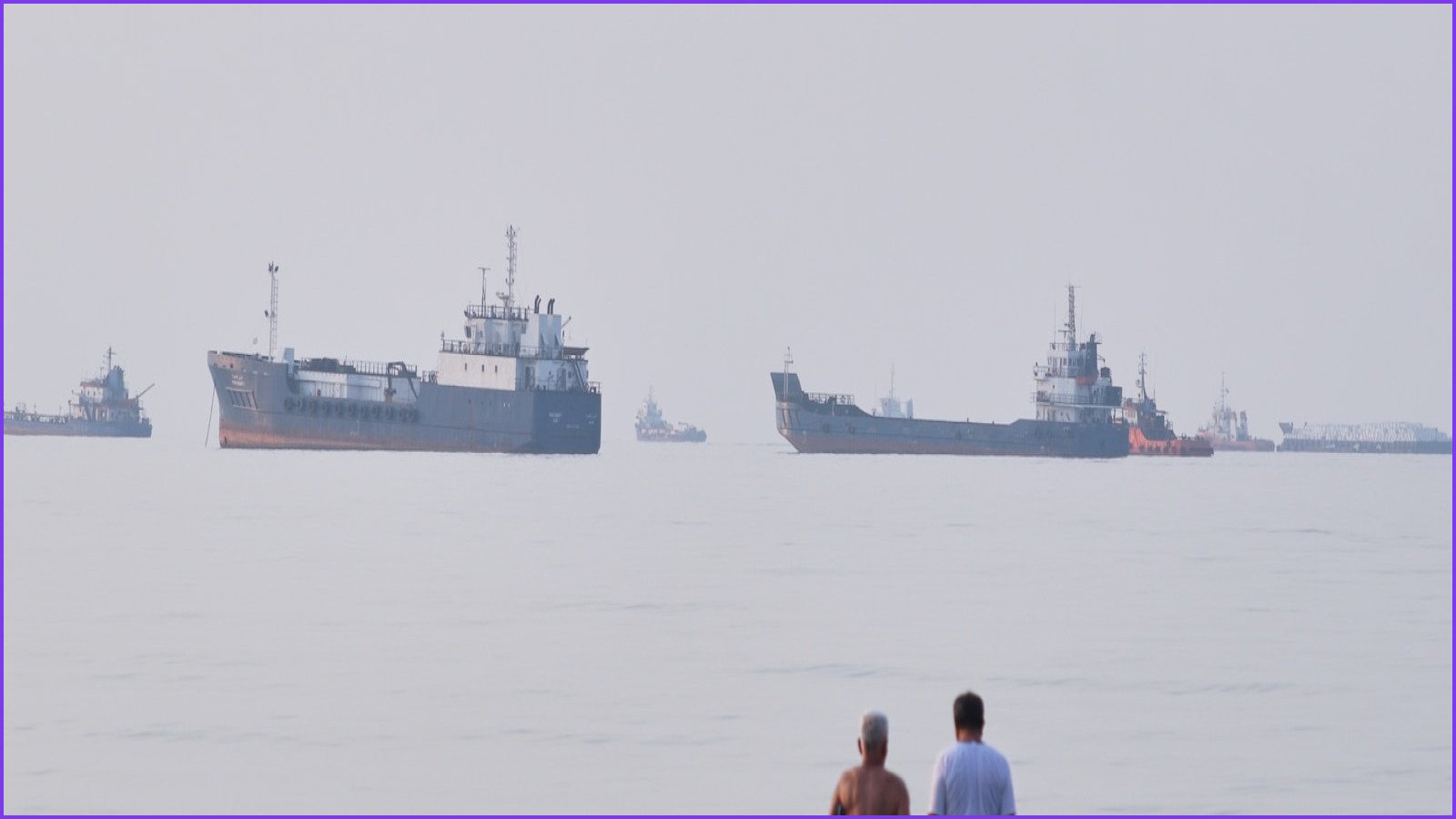
Before the war in Iran, the Strait of Hormuz served as a vital maritime artery, with approximately 15 million barrels of Persian Gulf oil shipped through the passage each day. As Iran’s influence over the strait continues to cause concern and oil prices surge, countries across the Gulf are planning to invest billions of dollars in new pipeline infrastructure. These projects aim to redirect oil supplies to ports along the Red Sea, the Suez Canal, and the Gulf of Oman, allowing producers to bypass a transit point that hugs the Iranian coast. According to government officials, oil companies, and analysts, at least seven major pipeline projects are currently under construction, in the planning stage, or being discussed as viable alternatives.
Victoria Grabenwöger, a senior researcher at the data and analysis firm Kpler, emphasized that relying so heavily on the Strait of Hormuz is no longer a prudent long-term strategy. While some of these alternative routes will inevitably result in longer and more expensive paths to market, Gulf oil producers are determined to reduce their dependence on the strait. The necessity of this shift has been underscored by recent events, including a stated blockade on Saudi-linked vessels by Iran-backed Houthi rebels in Yemen, which has highlighted the vulnerability of even alternative routes in the Red Sea.
The global economy was spared a greater shock during the current conflict largely due to infrastructure established decades ago. Saudi Arabia’s East-West pipeline, built in the 1980s during the Iran-Iraq war, carries oil from a processing facility in Abqaiq to Yanbu on the Red Sea coast. Similarly, the United Arab Emirates has been utilizing the port of Fujairah, located about 145 kilometers, or 85 miles, south of Hormuz. Before the war, these two pipelines had a combined spare capacity of approximately 3.5 million to 5.5 million barrels per day, according to the U.S. Energy Information Agency. Currently, both pipelines are operating near full capacity.
To further expand these capabilities, the state-owned oil company of Abu Dhabi is accelerating the construction of a $3 billion, 300-kilometer, or 200-mile, pipeline to Fujairah. This project, which runs parallel to an existing line, is designed to increase oil supplies to the port by more than 1.2 million barrels per day. Although construction began before the war, Kpler reports that the project is about halfway completed. While the intended completion date is early 2027, Kpler suggests mid-2027 is more realistic due to the necessary expansion of the port at Fujairah. Grabenwöger noted that this ambitious timeline has only become feasible because of the blockade of the Strait of Hormuz.
Iraq is also ramping up efforts to develop alternative export routes for its southern oil fields near Basra, as the country is currently so dependent on the Strait of Hormuz that it has been forced to scale back production. With approximately 90% of its revenue derived from oil sales, the Iraqi government is pursuing projects with U.S. companies. One proposal involves a pipeline from a Basra terminal—which exported over 3 million barrels daily before the war—to the port of Ceyhan in Turkey. This project would include a branch extending to the Syrian port of Baniyas, a route the U.S. State Department has labeled a critical energy corridor, with a potential capacity of 2 million barrels per day. Additionally, Iraqi officials have held discussions with Jordan regarding a pipeline from Basra to the Red Sea port of Aqaba for export to Asia and beyond.
Analysts at Goldman Sachs estimate that these combined projects could carry 3.8 million barrels of oil per day by the end of next year, and 7.3 million barrels per day by the end of 2028. This would effectively insulate roughly 60% of the Gulf's total pre-war exports of 23 million barrels a day from a potential Hormuz cutoff. However, these projects face significant challenges. Pipelines to the Mediterranean send oil in the wrong direction for Asian markets, requiring a much longer trip around the southern tip of Africa. Furthermore, infrastructure remains vulnerable; the Saudi East-West pipeline was shut down by a Houthi drone strike in May 2019, and the Bab el-Mandeb Strait remains a point of concern for shipping. Finally, the industry has yet to address the complex and expensive challenge of transporting liquefied natural gas, as roughly one-fifth of the world's supply, much of it from Qatar, transited the Strait of Hormuz before the war.