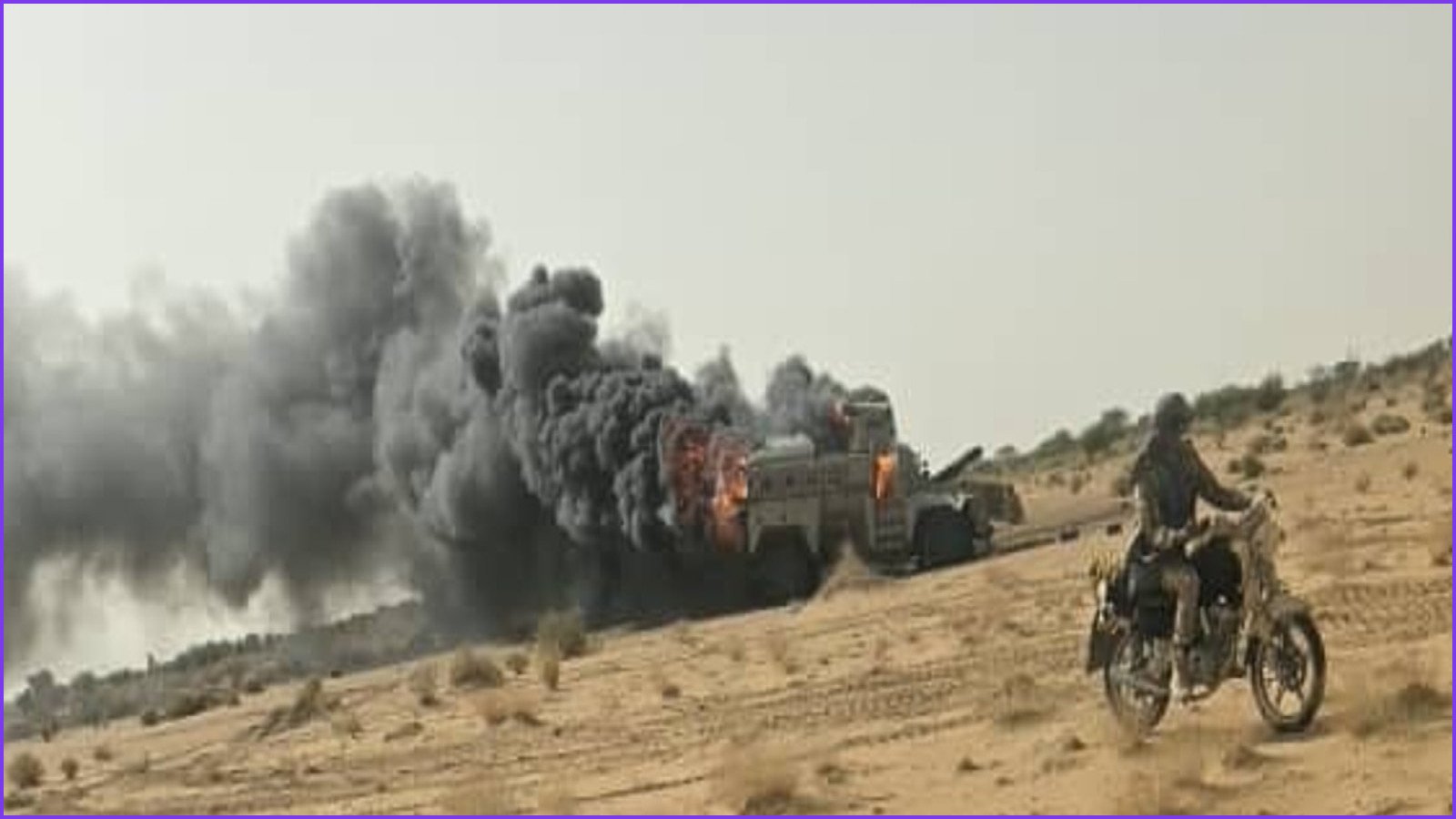
A joint operation involving Islamic militants and a separatist group resulted in the ambush of a Malian army convoy in the country’s northern Sahara desert this past Saturday. The attack, which occurred as the convoy traveled from the town of Anefis toward Gao city, led to the killing or capture of scores of soldiers. While the exact nature of the convoy remains under investigation, the presence of fuel tankers indicated it was likely a logistics mission.
Responsibility for the assault was claimed by two distinct groups: the regional al-Qaida affiliate JNIM and the Azawad Liberation Front (FLA). Both organizations released statements citing significant human losses and serious material damage inflicted upon the Malian forces. According to FLA spokesperson Mohamed Elmaouloud Ramadane, the attack resulted in numerous deaths, the capture of soldiers alive, and the destruction or seizure of various military vehicles, including armored cars. Rebel-circulated videos, which have not been independently verified, appeared to show soldiers surrendering, being transported by armed groups, and in some instances, being fired upon while on the ground.
The rebels alleged that the targeted convoy consisted of both Malian army personnel and members of Russia’s Africa Corps, a group that has been providing ground support to Mali’s military. By Sunday, the Malian army responded by stating it had conducted precision strikes against enemy positions in the region. The military claimed that three terrorist positions were successfully targeted and several militants were neutralized, asserting that these operations allowed the remaining convoy to break free from the ambush and proceed with its route.
This violent encounter marks a continuation of the intensifying conflict in the Sahel, a region south of the Sahara that has become a major hub for extremist violence. In northern Mali, Tuareg-led separatists have long fought for the establishment of an independent state known as Azawad, eventually merging into the FLA in 2024. The collaboration between the FLA and JNIM has become increasingly common, with the two groups coordinating their efforts against government forces, including a notable large-scale attack in April.