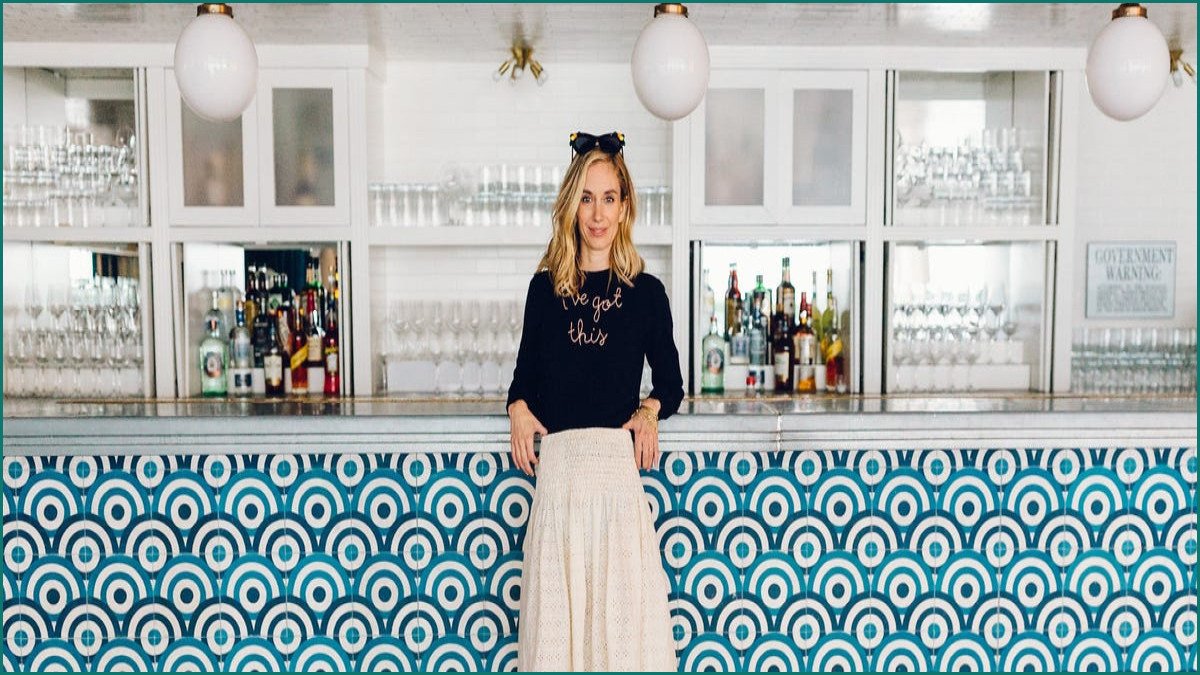
When Rachelle Hruska MacPherson founded her New York clothing company a decade ago, she did not imagine that her hand-stitched cashmere sweaters would eventually be worn by high-profile celebrities like Oprah Winfrey and Martha Stewart. The brand, Lingua Franca, was established in September 2016, just two months before Donald Trump won the presidency. While the company has since expanded into a significant operation with a 10,000-square-foot workshop in New York City's Garment District and a ready-to-wear line launched in 2020, it remains widely recognized for its "Give a Damn" collection. This series of pullovers features sassy, lowercase slogans that offer pointed commentary on the political landscape, including phrases such as "melt ICE," "i like my ICE crushed," and "impeach him."
MacPherson, a 43-year-old Nebraska native, grew up in Lincoln and spent childhood summers on her family farm. After attending Pius X High School and Creighton University in Omaha, she moved to New York in 2005 to pursue professional ambitions. However, the intense pressure of the digital landscape eventually took a toll on her mental health. Seeking a way to disconnect from her phone and the constant news cycle, she followed a therapist's recommendation to engage in manual tasks. During a visit to Montauk, she rediscovered embroidery—a skill her paternal grandmother, Rita, had taught her years earlier on the family farm. She purchased needles and thread, marking the beginning of a new creative chapter.
The brand's initial collection was entirely apolitical, featuring 2,000 sweaters sold through the luxury site Net-a-Porter. These designs were inspired by her mother-in-law, Janet MacPherson, a pioneering female surfer who famously wore a Lingua Franca "outlaw" sweater in her New York Times obituary photo. The shift toward political expression occurred after MacPherson posted a photo of an embroidered sweater dedicated to Barack Obama on Instagram. The image went viral, as she later detailed in a Business Insider essay. The garment was originally a gift for Anna Carter, who operates a digital telegram company with her husband, former Vanity Fair editor Graydon Carter.
Over the years, the brand has attracted a wide array of celebrity fans, including Jane Fonda, Reese Witherspoon, Lupita Nyong'o, Candice Bergen, Jamie Lee Curtis, Katie Couric, Andy Cohen, and America Ferrera. Screen star Connie Britton was even styled in the brand's "poverty is sexist" sweater for the 2018 Golden Globes. Despite this success, the political nature of the "Give a Damn" line has triggered high-profile backlash. MacPherson faced significant criticism for the anti-ICE sweaters, which resulted in at least one retailer dropping her brand. Furthermore, the company has consistently faced complaints regarding its price point, with sweaters retailing between $150 and $380.
Addressing these concerns, MacPherson noted that the cost of goods is relative, drawing on her own experience as a Midwesterner adjusting to East Coast prices. She emphasized that the pricing reflects the brand's commitment to ethically sourced materials and domestic production. "We want to bring people into our community and our conversation," MacPherson said, explaining that the company strives to maintain the dignity of its workers, who all receive full benefits and salaried positions. Lingua Franca has also donated nearly $2 million to charitable causes and partnered with NPR and PBS following funding cuts to public media. The company's factories in Peru and Portugal are pre-screened to ensure they meet high ethical standards.
Industry experts view the brand's success through the lens of both fashion and political communication. Karen Kedrowski, an Iowa State professor who studies the intersection of these fields, described the "Give a Damn" collection as an "elevated political T-shirt." She noted that the sweaters communicate multi-layered messages about both political stance and personal status. Similarly, Lori Poloni-Staudinger, dean of the University of Arizona’s college of social and behavioral sciences, argued that the pricing is not necessarily outrageous given the ethical, hand-stitched nature of the production, though she noted she would not personally purchase a sweater at that rate. While millions of people wear political T-shirts, MacPherson’s use of cashmere differentiates her brand from lower-cost competitors like Raygun, a Des Moines-based company that produces shirts for under $30.
As the brand matures, MacPherson is looking toward the future. While she acknowledged that the company has "tamped down" the politics as it has grown, she views the country's 250th anniversary as a natural time to re-engage with the broader conversation. Ultimately, she aims to build a timeless brand that transcends the specific political slogans that first brought her widespread attention, while continuing to focus on the quality and longevity of her products, which many customers pass down to their daughters.