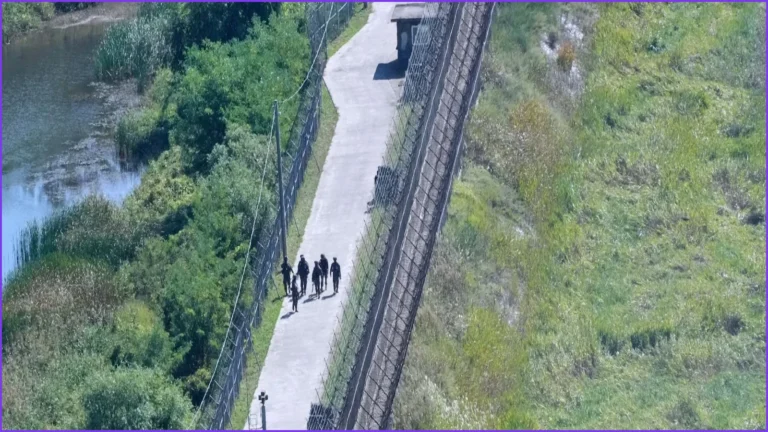
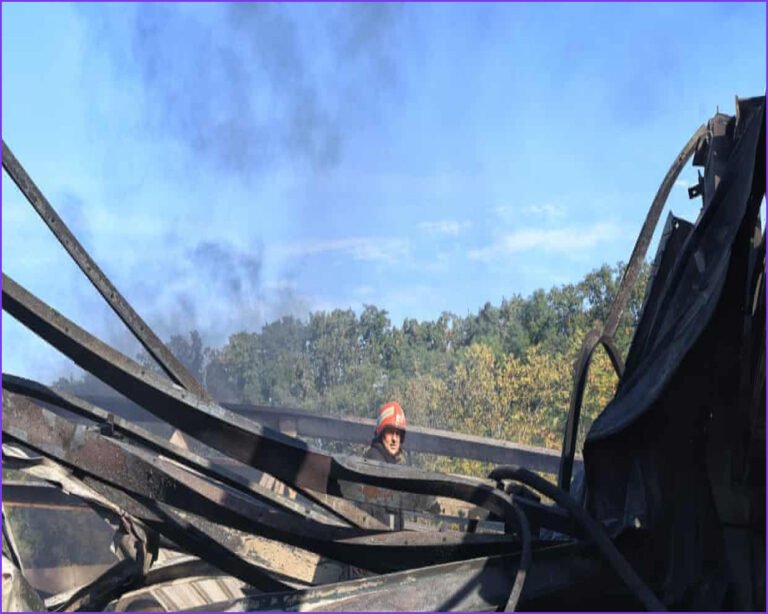
Residents displaced by the ongoing conflict between Israel and Hezbollah are resorting to purchasing commercial satellite images to monitor the condition of their homes in southern Lebanon. Many have been forced to flee their villages, including the Christian section of Yaroun, and are prevented from returning, even for brief visits. The images, though sometimes fuzzy, offer a glimpse into the destruction wrought by renewed fighting that began in March.
Mazen Farah, a resident of Yaroun, shared satellite views on his phone that showed his father's two-story stone house, built after 25 years of work abroad, had been destroyed. "This is what it shows from the satellite — it shows that it has been destroyed," Farah said, pointing to the images of his family home.
In March, amid renewed fighting with the Iranian-backed militant group Hezbollah, Israel launched airstrikes that displaced hundreds of thousands of residents from more than 100 villages. Following an April 17 ceasefire, Israel sent in bulldozers to demolish more buildings in southern Lebanon. Israel states it is targeting Hezbollah infrastructure but rarely provides details or evidence to support these claims. Israeli Defense Minister Israel Katz had previously stated in March that his country intended to depopulate all Lebanese villages near the border with Israel to form what Israel calls a "buffer zone" and permanently remove threats to citizens in northern Israel.
With return to their homes prohibited and fear of Israeli retaliation for documenting damage, residents of Yaroun and other communities are pooling their money to buy commercial satellite images to determine if their houses are still standing. "Either somebody each time will buy it or we have to get the funds in a certain account and buy it," Farah explained of the effort. Each image costs at least $112. However, satellite providers often decline requests for specific locations, eventually refunding the money. In April, some satellite companies reportedly declined to provide images of Lebanon and other countries at the request of the U.S. government.
Geryes Saloum, a municipal employee who built a three-bedroom home in Yaroun 10 years ago, expressed his daily anxiety. "Every day, I wait for a picture to arrive from Yaroun," he said. "When Mazen's house was destroyed three days ago I didn't sleep." He recalled the millions of dollars spent by the U.N. and other aid groups to restore the water supply and electrical systems after a November 2024 ceasefire, believing the conflict was over, only for it to widen again in March.
The war between Israel and Hezbollah began in October 2023, a day after Hamas-led militants launched a deadly attack from Gaza on southern Israel that triggered the Gaza war. By the following year, when a ceasefire was agreed upon, Israeli airstrikes had destroyed most of Yaroun's infrastructure. Riad al-Ridha, another village official, detailed the destruction of landmarks, including a convent, a church, three mosques, and another Shiite Muslim religious center, stating, "All the cultural landmarks in our village were destroyed — they have erased it."
Even after the Greek Catholic Saint George church was destroyed in an airstrike, leaving only two outer walls still standing, displaced villagers still returned to pray in a nearby church hall. However, they are no longer allowed back. In early May, Israel reportedly demolished a convent and a Catholic school that had educated Christians and Muslims for the last five decades. Israel repeatedly denied the military had destroyed the convent, despite satellite images and video evidence, and provided images of another building it argued was the convent.
Yaroun, part of the geographic Galilee region which stretches into present-day Israel, is described as one of Lebanon's prettiest villages. It features a mix of old and new stone houses set against a hillside green with olive and citrus trees, and an oak forest that has since been demolished. The village, situated 2,600 feet above sea level, looks down into collective farming settlements in northern Israel.
The history of the region includes Israel's invasion of south Lebanon in 1982, staying for 18 years until it was driven out by Hezbollah. During those years, many young men left the country to avoid compulsory military service in Israel's proxy Lebanese militia, known as the South Lebanon Army. Many emigrated to the U.S., Canada, and Australia but maintained ties to Yaroun, building homes there and returning in the summers with their families.
Mazen Farah's father, Hanna, who lives in New York state, expressed his longing to see his rebuilt home. His son Mazen had a photo of the family's home mounted on a stone plaque for him. The garden, with its profusion of roses, lemon and olive trees, and a statue of the Virgin Mary, was also razed according to the satellite images. Hanna Farah, who worked as a construction company supervisor in the Gulf, lamented the effort put into building the house and raising their children. After the November 2024 ceasefire, he had the damage to his house repaired and returned to live there until the war restarted in March.
Villagers strongly reject accusations that their homes are being used by Hezbollah. Mazen Farah stated that his property's eight security cameras, operational for almost a year before Israel cut off the internet in March, never registered any intruder alerts other than a wolf that stole his father's shoes from the porch. "Provide one piece of proof one — piece — that this house was used in any manner," he challenged. "There is no proof because there is nothing there."
Many property owners in Yaroun and other villages are American citizens. Hanna Farah, from his home in New York state, where he and his brother Nehmi run a construction firm, learned through a satellite photo that his 92-year-old mother's home had been razed. He noted the detailed knowledge Israel possesses about these properties, their inhabitants, phone numbers, and families. His mother had moved back into her repaired home in February, but the house was destroyed again. The next satellite image they received showed two more houses destroyed, with a bulldozer still present at the site.
Hanna Farah had recently spent $30,000 on a foundation and stone wall for a small house of his own, which the satellite images revealed was also leveled. "You get this image and you see it for the first time and your heart sinks," he said, reflecting on the lost dream of returning home and sharing his heritage with his children. He and other Americans with destroyed property in south Lebanon feel it is a bitter irony that "American bombs and American bulldozers" are involved in destroying properties of American taxpayers, noting that no one builds their dream home and uses it to store weapons. The U.S. provides an average of around $3.8 billion in military aid to Israel every year, according to the Council on Foreign Relations.
Qasem Fares, who lives in Panama, discovered his 12-bedroom home in the village of Bint Jbeil, on the edge of Yaroun, had been destroyed. Fares, 68, who left southern Lebanon penniless at the age of 15 and eventually made a fortune in Central America in the clothing business, had spent more than $10 million building the four-story house. It featured a swimming pool, a cinema, gyms, and guest chalets, serving as tangible proof of his success. He tearfully recounted his son sending him a picture of the destruction, saying, "I said 'what can we do?' But I cried. I cried all day when I saw it." Fares considers Yaroun sacred ground and hopes for peace and security for all countries.
Hanna Farah hopes young people will be able to eventually return to the village. However, his son Mazen worries about the elderly majority who made up the population and left when the war began, questioning if they will live to see Yaroun again. Among Mazen Farah's photos is one of a desk drawer filled with sets of house keys, kept by a cousin for people in Yaroun. They evoke the image of house keys still kept by Palestinians forced from their homes with the creation of Israel in 1948 and never allowed to return. While acknowledging the somber parallel, Farah maintains hope for Lebanon, citing its status as a country with borders and international laws, and the possibility of rebuilding.
In upstate New York, Hanna Farah expresses conflicting emotions, oscillating between the resolve to rebuild and the despair of the ongoing threat. "At times we wake up and we say 'We're gonna rebuild. We're gonna go back and we're gonna show that we're not gonna let go and life will not stop,'" he said. "And then some days honestly we wake up and we say, 'It's done, it's finished.' I mean how do you build with a drone over your head? How do you build with the risk of it being destroyed again?"