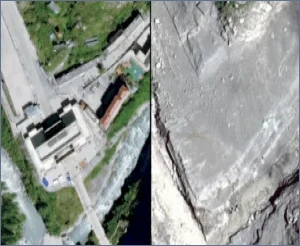
The devastating floods that hit the China-Nepal border on August 26, 2026, represent more than a temporary humanitarian catastrophe. While search and rescue efforts continue, the destruction of the China-Nepal trade corridor is poised to reshape the regional economy for years to come. The disaster began around 8:40 a.m. when a glacier collapsed on the north side of the Langtang range, following a magnitude 4.4 earthquake on the Chinese side. The resulting impact, which registered as a magnitude 5.2 seismic event, sent debris into the Lhende Khola river. This blockage eventually broke, causing water levels in the Trishuli River to surge by nine meters within 30 minutes, effectively severing key transit routes.
The human toll is unprecedented, marking the deadliest flood in Nepal's history. As of September 2, the confirmed death toll stood at 987 in Nepal and 16 in Tibet, with approximately 4,500 individuals still missing. The missing include hydropower workers, security and customs personnel, trekking guides, and around 700 foreign nationals, including pilgrims traveling to Mount Kailash. UNICEF reports that 17,000 children are affected, with 18 schools destroyed and 20 others damaged. The government’s preliminary assessment places the economic cost of the destruction at 200 billion rupees, or roughly $1.3 billion, though experts suggest these figures are likely to climb.
Beyond the immediate loss of life and property, the disaster highlights the severe opportunity cost of a broken trade connection. The Rasuwagadhi crossing, which serves as a vital gateway for trade, has now been paralyzed. History suggests recovery will be slow; during a similar event in July 2025, when a supraglacial lake burst in Tibet, the resulting closure of the Rasuwagadhi crossing lasted for nearly six months. An analysis by the Stimson Center indicated that trade through this hub fell by 95 percent in the six months following that flood, dropping from $302 million to $15 million. While some trade was diverted to the Kora La crossing at high elevation, it was insufficient to offset the losses, and much of the remaining commerce was forced southward to India.
The current destruction is extensive, claiming 19 road bridges, 40 kilometers of road, and vital customs infrastructure on both sides of the border. Furthermore, the flood destroyed the 111-megawatt Rasuwagadhi hydropower project and disabled over 430 megawatts of capacity, accounting for more than a tenth of Nepal’s national grid. The vulnerability of these assets is compounded by the fact that none of Nepal’s three trade crossings with China were fully operational prior to the August 26 flood. For a landlocked nation, the inability to maintain a reliable northern trade route creates a cycle of instability that discourages business investment.
Experts argue that the prevailing approach to disaster management is flawed. The recurrence of catastrophic floods on the same tributary twice in 14 months indicates that these events cannot be treated as isolated incidents. With 144 of 545 glacial lakes along the trade corridors deemed highly susceptible to outburst floods, current rebuilding standards are inadequate. There is an urgent need for advanced warning systems that monitor glacial stability rather than just rainfall, as well as a shift in focus from merely repairing infrastructure to ensuring the long-term reliability of trade routes. Without insurance mechanisms that cover lost income during prolonged border closures, Nepal faces the risk of losing the trade viability of this essential corridor permanently.
You have reached the limit of 2 free articles this month.
Finally, Nepal keeps asking how to rebuild infrastructure when the question is how often it will close. The influx of aid in the wake of disasters like these is meant to rebuild a bridge, a customs building, a transmission line, or a school. While aid inflows can restore these assets, they do not instill confidence that they will stay open amid repeating disasters.