Kyrgyzstan has ordered an additional 19 companies to shut down, marking a further step in the government's efforts to address Western concerns regarding the potential circumvention of sanctions imposed on Russia due to the ongoing war in Ukraine. This latest action follows the exclusion of more than 140 companies from partnerships with state-owned banking institutions.
For a significant period, Kyrgyz leadership, including President Sadyr Japarov, maintained a stance of denial regarding allegations that the nation was facilitating sanctions evasion. In August 2025, Japarov asserted to state media outlet Kabar that not a single case of sanctioned goods reaching Russia through Kyrgyzstan had been reported. He further characterized sanctions targeting Kyrgyz banks as politicized during that same month. By September 2025, during his address to the U.N. General Assembly, Japarov described the sanctions as being based on false information provided by non-governmental organizations and dishonest individuals.
Despite this rhetoric, the Kyrgyz government has shifted its operational approach, moving from denial to active measures, largely driven by pressure from the European Union. In February, EU sanctions envoy David O'Sullivan visited Kyrgyzstan, noting that trade flows indicated certain goods were being imported specifically for re-export to Russia, thereby breaching EU sanctions. O'Sullivan clarified that the EU does not seek to end trade relations between Kyrgyzstan and Russia but specifically aims to halt the deliberate transmission of sanctioned EU goods.
Trade data provided by the EU highlights the scale of the issue, showing an 800 percent increase in Kyrgyzstan’s imports of goods on the Common High Priority (CHP) list—which includes dual-use and advanced technology items—during the first 10 months of 2025. Exports of these same items from Kyrgyzstan to Russia saw a 1,200 percent increase over the same period.
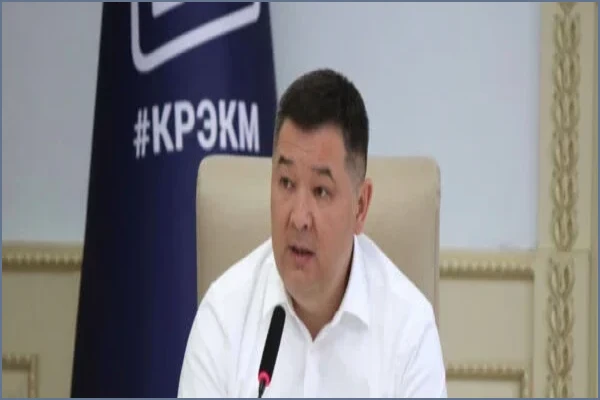
In response, the Kyrgyz Ministry of Justice announced in May that 50 companies involved in high-risk sanctions operations were being closed. Following this, Economy and Commerce Minister Bakyt Sydykov was appointed as a special representative for sanctions policy. By late June, Eldik Bank and ABank terminated partnerships with over 130 companies. Following an August 18 meeting, officials confirmed that of 40 high-risk entities identified in June, 19 have been ordered to liquidate. Furthermore, between July and August, Eldik Bank ended relationships with 109 companies, with 20 additional firms in the process of being removed, while ABank concluded relations with 35 companies and placed 40 more under due diligence. Despite these actions, the government has not publicly named the affected companies, leaving observers to await future trade data to evaluate the effectiveness of these measures.
You have reached the limit of 2 free articles this month.
Absent any information about the companies that are being ordered to close or pushed out of traditional banking, observers, it seems, are simply asked to trust Bishkek. The real proof will be in the trade data. The EU will have to decide whether to accept Kyrgyzstan’s efforts as both genuine and, more importantly, effective in stemming the flow of dual-use goods to the Russian war effort.