A Texas judge has been removed from the case of Karmelo Anthony, a teenager convicted of murder in the fatal stabbing of a high school athlete, just before a critical hearing that will determine whether to grant a retrial.
State District Judge John Roach Jr. was ordered recused on Wednesday, August 19, 2026, by visiting Judge Sid Harle during a court proceeding in McKinney, Texas. The defense team had pushed for Roach's removal following his June trial, pointing directly to a television interview in which the judge publicly endorsed the jury's guilty verdict. Judge Michael Chitty was later assigned to take over the case.
Anthony, who is now 19, is scheduled to return to the suburban Dallas courtroom on Thursday for a hearing to decide whether a new trial is warranted. He was previously sentenced to 35 years in prison for the murder of 17-year-old Austin Metcalf.
During Wednesday's hearing, Anthony's lawyers played a clip from an interview Roach gave to a Dallas television station after the trial concluded. When asked if the jury "got it right" with the conviction, Roach answered, "Yeah, they did," and added, "Whatever they say, they got it right." In the same broadcast, Roach defended his strict courtroom rules and discussed the massive wave of online commentary surrounding the case.
Visiting Judge Sid Harle explained that while he did not know Roach personally and believed Roach would remain fair during the retrial hearing, he was granting the defense's request for recusal due to how the situation might be perceived by the public. In his written order, Harle stated that the evidence was such that the judge's "impartiality might reasonably be questioned" and ordered that a different judge "preside over all further proceedings." Roach did not immediately comment on the ruling.
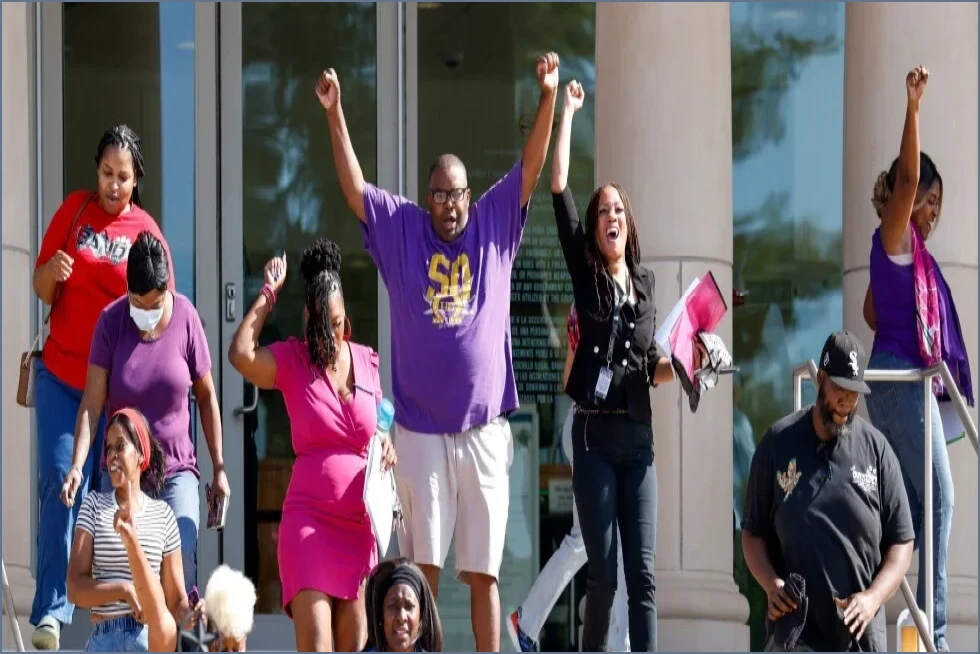
Following the decision, cheers erupted in the hallway of the Collin County Courthouse, and a crowd of Anthony's supporters gathered in the parking lot, chanting "Free Karmelo!"
"Today’s ruling answers a fundamental question: whether a reasonable fully informed observer would see Judge Roach’s conduct and believe that he could fairly and impartially consider a motion for new trial," Anthony's defense attorneys said in a statement.
Prosecutor Bill Wirskye had urged the court to deny the recusal, arguing that Roach "didn't do anything wrong" and that his strict courtroom regulations were necessary to maintain the integrity of a trial that had drawn demonstrators outside. Wirskye also noted the high level of tension surrounding the case, revealing that "we were all getting death threats" and that the families of both Metcalf and Anthony had been targeted by harassment as national attention intensified last year.
The conviction stems from a fatal confrontation last year in the stadium bleachers during a high school track meet where several schools were competing. Anthony was sitting under a tent belonging to Memorial High School on a rainy spring day. Witnesses testified that Metcalf and other students repeatedly told Anthony to leave the tent, sparking an escalating argument.
According to a police report, Anthony reached inside a bag at one point and warned, "Touch me and see what happens." Witnesses testified that Metcalf then pushed Anthony, who responded by pulling out a knife and stabbing Metcalf in the chest. Prosecutors argued that Anthony was the aggressor and had provoked Metcalf.
During the trial this summer, jurors rejected Anthony's claims of self-defense. Anthony chose not to testify during the proceedings. The case drew significant national attention and sparked a flood of social media posts that framed the killing in racial terms. Anthony is Black, and Metcalf was white. However, attorneys for both the prosecution and the defense emphasized to jurors that the tragedy was not motivated by race.
In addition to Roach's television interview, Anthony's legal team has argued that a retrial is necessary because Roach enforced strict courtroom rules that they claim unfairly limited public access to the trial proceedings.