Jordan's air defenses successfully intercepted and destroyed five missiles launched from Iran early Wednesday, according to the country's military. This defensive action occurred just hours after the U.S. military reported that it had neutralized an Iranian missile barrage aimed at American forces in the Middle East, effectively shattering a brief three-day period of relative calm in the region.
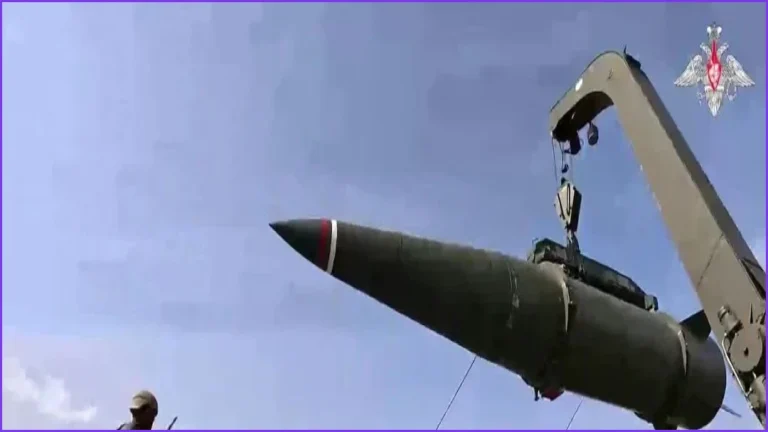
Iran's state-run IRNA news agency released a statement from the paramilitary Revolutionary Guard, confirming that the Guard's Aerospace Force had fired ballistic missiles at the Muwaffaq Salti Air Base and the headquarters of the U.S. military's Central Command in Jordan.
Earlier, U.S. Central Command announced that its forces remained at a high state of readiness and had collaborated with Saudi Arabia's military to conduct strikes against sites in Iraq. These locations had been utilized by Tehran-backed militias to launch attacks in recent days. The U.S. military stated that American and Saudi fighter aircraft struck multiple terrorist logistics and weapons sites across eastern Iraq in a strong response to over 30 IRGC-directed aerial drone attacks that occurred within the previous 72 hours. The U.S. issued a warning that any further attacks on American troops or Saudi energy infrastructure would risk additional military action, stating that the Revolutionary Guard and its proxies must cease these activities to avoid further responses.
The Saudi Defense Ministry acknowledged the strikes in a social media post, emphasizing that while the Kingdom does not seek escalation, it will respond to any aggression it faces. In response to the strikes, Iraqi Prime Minister Ali al-Zaidi convened an emergency meeting of the country's National Security Council. Al-Zaidi has ordered security agencies to conduct a thorough investigation, reiterating that the Iraqi government is committed to preventing its territory from being used as a route or launching point for attacks against friendly or brotherly nations.
The militias involved have denied responsibility for the drone attacks. The Islamic Resistance in Iraq, an umbrella group of Iran-backed factions, labeled the Saudi claims as fabrications and suggested that Monday's attacks were carried out by the Houthis. The groups making up the Popular Mobilization Forces (PMF) have been involved in the conflict since they joined the fight against the Islamic State group in 2014. Although the Iraqi government designated the PMF as an independent military formation in 2016, the member militias continue to operate with significant autonomy, and some have previously launched attacks on U.S. facilities.
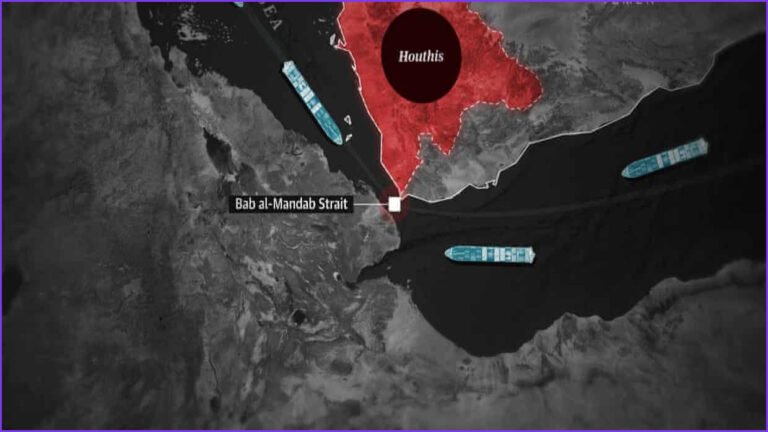
Regional tensions remain high following weeks of escalation over the Strait of Hormuz, a critical waterway through which 20% of the world's traded oil normally flows. On Tuesday, Saudi Arabia reported that it had shot down drones fired by militias in Iraq for the second consecutive day. Simultaneously, Iran-backed Houthi rebels in Yemen claimed they had forced a Saudi oil tanker to turn around as part of their announced blockade of the kingdom. Furthermore, Iran's IRNA news agency reported Wednesday that the Revolutionary Guard's Navy claimed it had stopped three oil tankers in the Strait of Hormuz for allegedly ignoring warnings and sailing along an unsafe route, though there was no immediate independent confirmation of these maritime strikes.
The fighting comes at a difficult time for U.S. President Donald Trump, as the administration faces multiple pressure points. Four U.S. troops have died during the recent fighting, and the Pentagon is currently requesting additional funding from a skeptical Congress to cover the conflict's ballooning costs. Meanwhile, the Houthi rebels have continued to threaten shipping, claiming to have fired missiles at the Saudi tanker NCC Ghazal in the Red Sea last week. The United Kingdom Maritime Trade Operations Center reported late Tuesday that a tanker in the southern Red Sea heard explosions the previous day, though the crew and vessel remained safe.
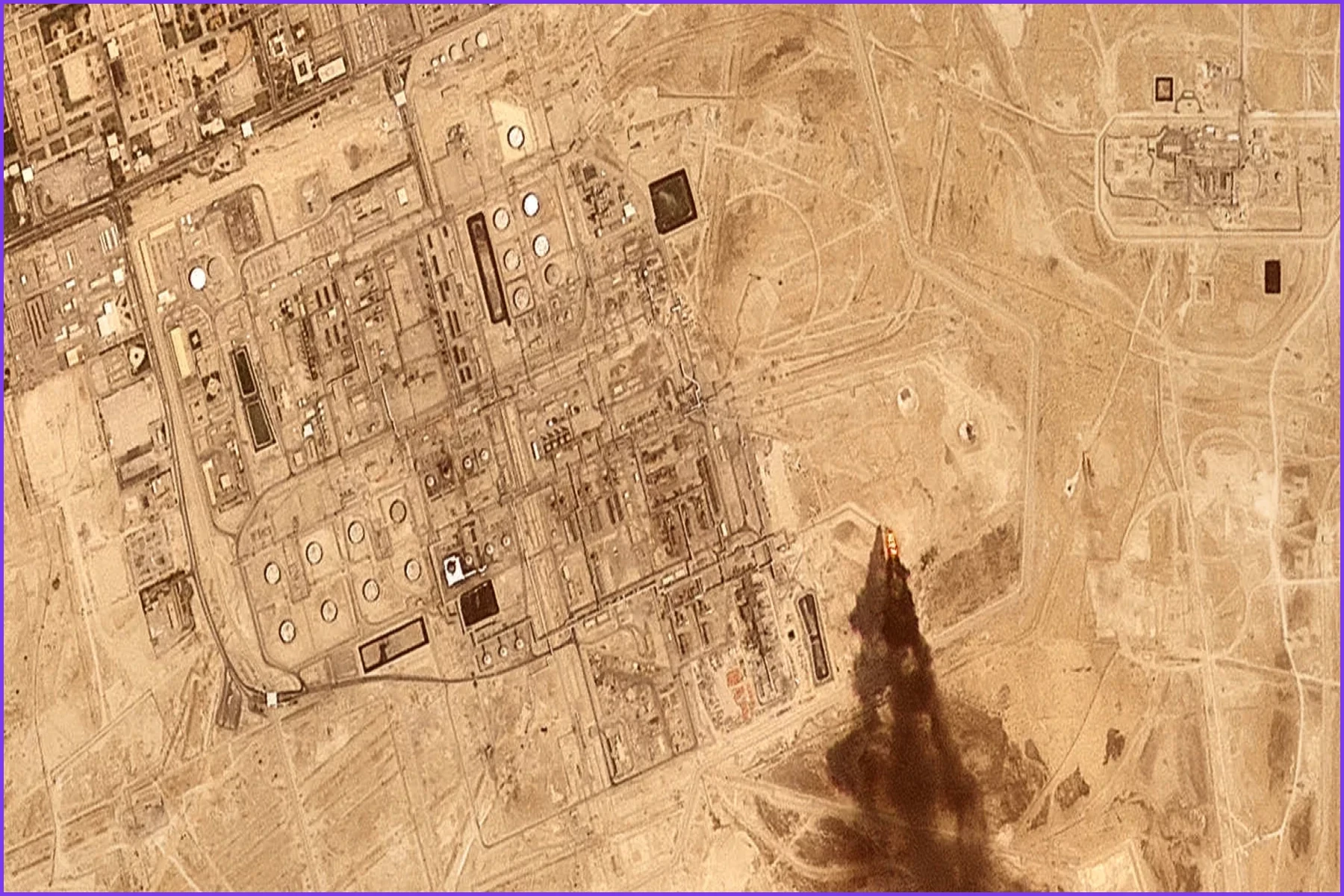
This satellite image provided by Planet Labs PBC on July 27, 2026 shows smoke rising from the Saudi Aramco oil processing facility in Abqaiq, Saudi Arabia, 2026. Planet Labs PBC/via AP hide caption
Small boats line the shore as cargo ships and other commercial vessels appear anchored in the Strait of Hormuz off Bandar Abbas, Iran, Monday, July 27, 2026. Razieh Poudat/ISNA via AP hide caption