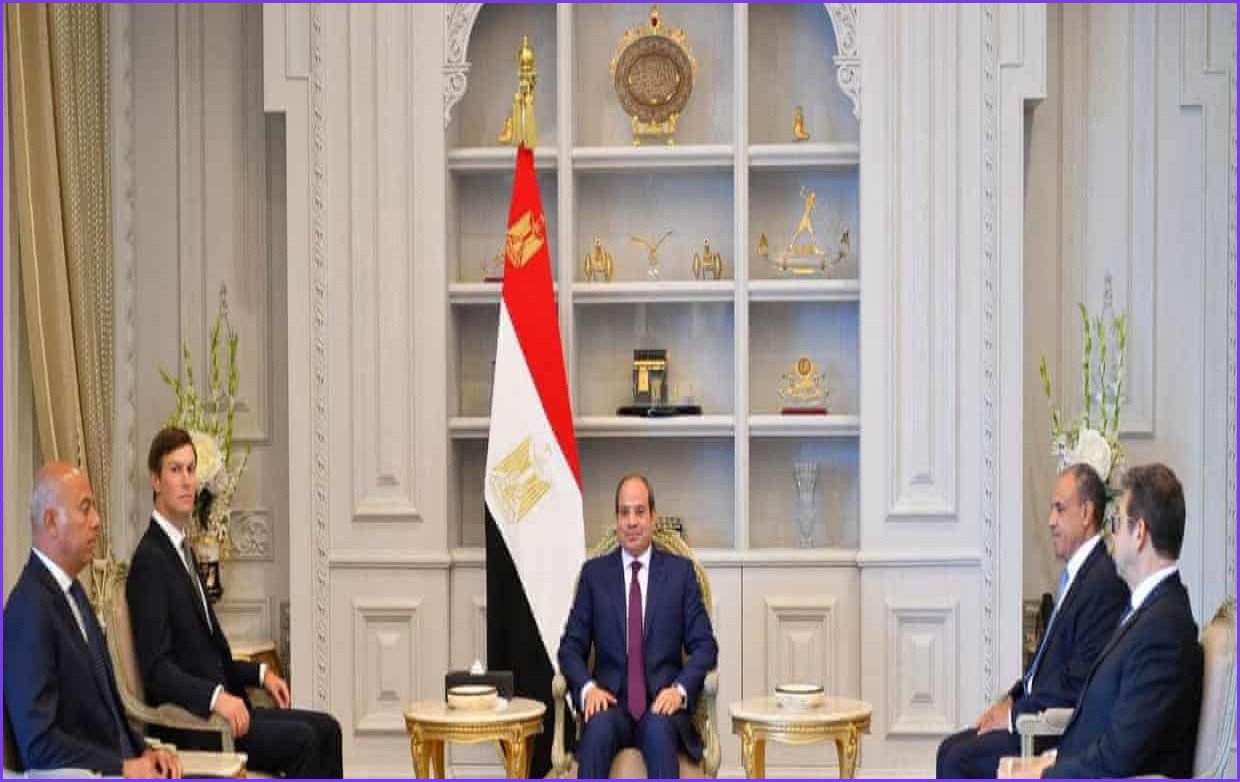
Donald Trump’s envoy and son-in-law, Jared Kushner, conducted a significant meeting with Hamas’s political chief, Khalil al-Hayya, in Egypt on Sunday. The discussion, which lasted over two hours, marked a fresh diplomatic push to address the stalled ceasefire in Gaza. Kushner was accompanied by fellow envoy Steve Witkoff and officials from mediating nations, including Egypt, Qatar, and Turkey. The meeting was confirmed by anonymous regional and Hamas sources.
The primary objective of the session was to secure Hamas's commitment to a US-backed 15-point ceasefire roadmap, specifically regarding the disarmament of the militant group. This diplomatic activity precedes a scheduled meeting on Monday between Kushner and Israeli Prime Minister Benjamin Netanyahu. Kushner is expected to be joined in those talks by former British Prime Minister Tony Blair and Nickolay Mladenov, the director of the Board of Peace.
Netanyahu recently rejected the 15-point plan in a rare public defiance of the Trump administration. In response to the rejection, a joint statement from several regional powers—including Saudi Arabia, the United Arab Emirates, Jordan, Pakistan, and Indonesia—condemned the move, stating that Israel now bears responsibility for obstructing peace efforts. The statement called on the US and the Board of Peace to take concrete measures to ensure the plan's implementation.
Hamas has expressed commitment to the roadmap, noting it is prepared to enter a 14-day negotiation period to establish an implementation timetable. However, the group has demanded that Israel halt its attacks and withdraw to a previously referenced “yellow line.” This line remains ill-defined, and Israeli forces currently maintain control over approximately 60% of Gaza. In May, Netanyahu indicated an intention to increase this control to 70% as part of a strategy to tighten pressure on Hamas.
Since the initial ceasefire agreement on October 10, 2025, Gaza’s health ministry reports that more than 1,200 Palestinians have been killed and over 4,100 wounded. The proposed roadmap envisions Hamas gradually surrendering weapons to a Palestinian technocratic committee, which has not yet entered the territory. Hamas has linked the surrender of its heaviest weaponry to the creation of a Palestinian state, a condition rejected by the current Israeli government. Netanyahu has maintained that Israel will not retreat until Hamas is completely disarmed.
With Israeli elections approaching on October 27, and the three-year anniversary of the October 7 Hamas-led attack on southern Israel nearing, the political landscape remains tense. Netanyahu’s Likud party dismissed the regional powers' criticism on Sunday, accusing Arab states of attempting to topple the prime minister to empower centrist challengers. The White House has referred inquiries regarding the meetings to the Board of Peace, which has not yet provided comment.