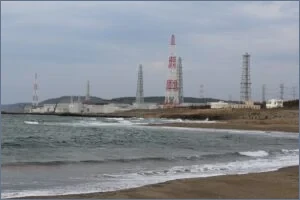
Prime Minister Takaichi Sanae has positioned the restart of Japan’s nuclear reactors as a cornerstone of the nation’s energy security strategy. However, the path toward a nuclear revival is complicated by persistent questions regarding safety, institutional accountability, and public confidence. The symbolism of the industry's return was highlighted when Tokyo Electric Power Company (TEPCO) brought Unit 6 at the Kashiwazaki-Kariwa Nuclear Power Plant back online in January, marking the first TEPCO reactor to resume operations since the 2011 Fukushima Daiichi accident. Despite an alarm causing a temporary halt shortly after, the unit entered commercial service in April. Meanwhile, Unit 7 at the same site is not projected to restart until the 2029–30 period.
The strategic urgency for these restarts was underscored by the events of February 28, when Israeli-Japan strikes on Iran led to the effective closure of the Strait of Hormuz. This disruption exposed Japan’s heavy reliance on Middle Eastern energy, which accounted for 94 percent of its crude oil imports in 2025, with 93 percent of that volume passing through the strait. While Japan’s direct LNG exposure to the Hormuz route is lower at approximately 6 percent, the country consumes over 97 percent of its LNG from imports, a fuel source that generates roughly one-third of Japan’s electricity. Prime Minister Takaichi noted in March that the operation of Kashiwazaki-Kariwa Unit 6, alongside increased coal-fired generation, could reduce LNG imports transiting through Hormuz by nearly 40 percent, reinforcing the role of nuclear power in maintaining Tokyo’s strategic autonomy.
On August 26, the Green Transformation Implementation Council adopted a policy package prioritizing nuclear power, provided safety requirements are met. The roadmap includes plans to replace two to five reactors in the 2040s and a cumulative total of 11 to 14 by the 2050s, while simultaneously investing in perovskite solar, geothermal, and offshore wind technologies. While legislative measures are expected by the end of the year, specific site locations and project details remain under development.
Despite this political momentum, recent governance failures have severely damaged the credibility of Japan's nuclear operators. In September, an independent inquiry revealed that Chubu Electric Power, the operator of the Hamaoka Nuclear Power Plant, had selectively used seismic-wave data to align results with internal parameters, ignoring previous reports of irregularities. The inquiry further found that management had pressured staff to expedite reactor restarts. Chubu subsequently announced the resignation of its president and chairman and withdrew its restart applications for Units 3 and 4. This incident has provided critics with clear grounds to question the integrity of both utility operators and government oversight, emphasizing the need for the Nuclear Regulation Authority to operate with greater transparency and independence as the government pushes for a faster energy transition.
Kashiwazaki-Kariwa Nuclear Power Plant as viewed in 2014.
You have reached the limit of 2 free articles this month.