Initial exit poll projections from Israeli television networks indicate that neither Prime Minister Benjamin Netanyahu’s right-wing bloc nor the opposition bloc led by rival Gadi Eisenkot has secured the 61-seat majority required to control the 120-seat Knesset. Three of the four major election exit polls released after voting concluded placed Eisenkot’s bloc ahead of Netanyahu’s, setting up potentially extended high-stakes negotiations to assemble a governing coalition.
According to projections by Channel 13 and Israel's public broadcaster, Eisenkot’s bloc is expected to take 53 seats, while Netanyahu’s bloc is projected to earn 50 seats, with Arab parties capturing the remaining 17 seats. Channel 12 projected a similar distribution, awarding 52 seats to Eisenkot's coalition, 50 to Netanyahu's bloc, and 18 to Arab parties. Bucking the trend, Channel 14 projected Netanyahu's bloc in the lead with 60 seats, compared to 43 for Eisenkot’s bloc and 17 for Arab parties. Because no single bloc reached the 61-seat threshold, no clear path to a parliamentary majority emerged immediately after polls closed.
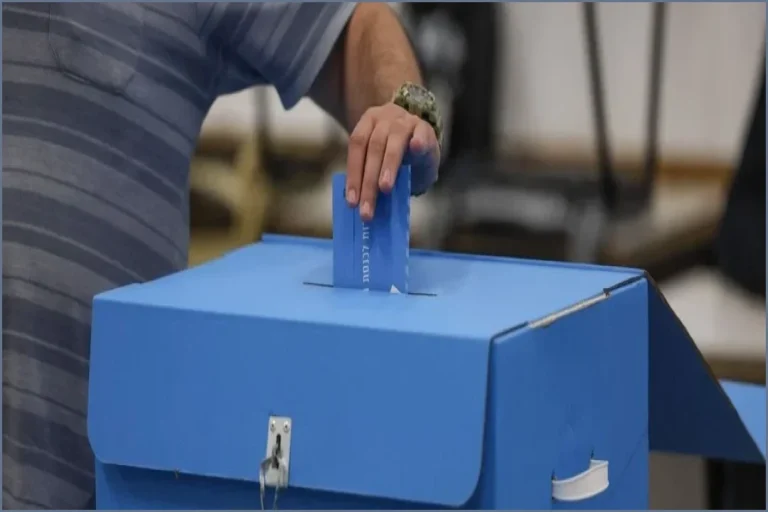
Official turnout data released by the Central Elections Committee recorded a voter turnout of 74.3 percent as of 8:00 p.m. local time (1800GMT), two hours before polling stations closed. The committee reported that 5,449,277 out of 7,331,981 eligible voters had cast their ballots. Counting began shortly after polling stations closed at 10:00 p.m. local time (2000GMT), though officials emphasized that television exit polls remain preliminary projections rather than official election results.
The exit polls highlighted significant momentum for Israeli Arab parties, which appear poised to play a crucial role in forming the next parliament. Main television networks projected the combined Arab lists winning between 17 and 18 seats in the 120-member Knesset, representing a substantial increase from the 10 seats they secured in the 2022 elections. Reacting to the projections, Arab Joint List leader Yousef Jabareen noted that his party "could win 10 seats or more" in the new parliament.
Opposition figures immediately hailed the exit poll figures as a decisive turn against the incumbent administration. Yashar party Chairman Gadi Eisenkot stated that the early numbers reflected a "complete lack of trust in Netanyahu," adding, "If these are the final results, this is a victory for the Zionist-statist majority in Israel." Eisenkot promised to "act immediately to implement the will of the people" by replacing Netanyahu's government and forming what he described as a "Zionist mobilisation government" as soon as possible.
Opposition Leader Yair Lapid similarly characterized the outcome as a major setback for the prime minister. "Don't let them confuse you: the Netanyahu bloc suffered a severe defeat. This is a complete collapse and the public told them to go home," Lapid declared. Echoing those sentiments, Democrats party leader Yair Golan claimed that "the public has spoken, it fired Netanyahu's government." Golan added, "We have received a historic opportunity to form a real change government in Israel and we do not intend to give it up."
In contrast, representatives from Netanyahu’s government dismissed the opposition’s enthusiasm. Israeli Foreign Minister Gideon Saar described the opposition’s celebrations as "premature," writing in a social media post that "Likud is the largest party in Israel. It is always good to learn something from the past." Saar also sharply criticized what he characterized as "pronouncements of biased commentators" following the broadcast of the exit polls. Meanwhile, Ushar Gabai, an assistant to extremist minister Itamar Ben-Gvir, voiced frustration to media outlets, stating, "Obviously I’m disappointed, the people of Israel are stupid."
Following the declaration of official election results, Israeli President Isaac Herzog will determine which political leader will be tasked with forming the next government, according to reports in Israeli media citing his office. With no single party achieving a parliamentary majority, politicians now face what could be several weeks of complex negotiations to construct a viable governing coalition.