U.S. and other international travelers are increasingly being turned away at Israel's borders following intense questioning about their relationships with Palestinians, planned visits to the occupied West Bank, and personal opinions regarding Israel, according to legal representatives.
Lawyers representing affected visitors report that entry denials have spiked significantly over the past year. Travelers are now being rejected for reasons that previously did not warrant a ban, such as suspected anti-Israel political views. Attorney Adi Lustigman described the shift as a major policy change, noting that legal teams now receive complaints about denied entry on an almost daily or weekly basis.
The trend was highlighted by several high-profile incidents in August. In one case, a group of international comedians, including Los Angeles-based comic Ahmed Al-kadri, traveled to Israel to perform at the annual Palestine Comedy Festival in the West Bank. Upon landing at Ben Gurion Airport near Tel Aviv, all but one member of the group were interrogated and subsequently denied entry. Denied physical access, the comedians were forced to perform live via Zoom for a Palestinian audience gathered in Bethlehem. Al-kadri later shared a video on social media detailing his questioning by Israeli border security.
During the same month, Israel blocked a U.S. multifaith delegation that intended to tour Jerusalem and the occupied West Bank alongside a Palestinian Christian organization.
In response to these allegations, the Israeli Interior Ministry stated it was not aware of any widespread pattern of targeted entry bans and maintained that all travelers are subject to the same standard regulations. However, the ministry disclosed that since 2025, it has rejected more than 21,000 requests for its Electronic Travel Authorization (ETA). This pretravel screening is mandatory for visitors from visa-exempt regions, including the United States, Canada, and the European Union.
The U.S. State Department has defended the Israeli border measures. In an official statement, the department asserted that the denials are consistent with the uniform application of Israeli law and align with the country's ongoing efforts to protect against potential security threats.
Meanwhile, similar actions have occurred within the United States. The Trump administration has deported non-U.S. citizens for participating in pro-Palestinian activism on American college campuses and for expressing criticism of Israel's military actions in Gaza. However, federal judges in Massachusetts and California have since ruled those domestic deportations to be unconstitutional.
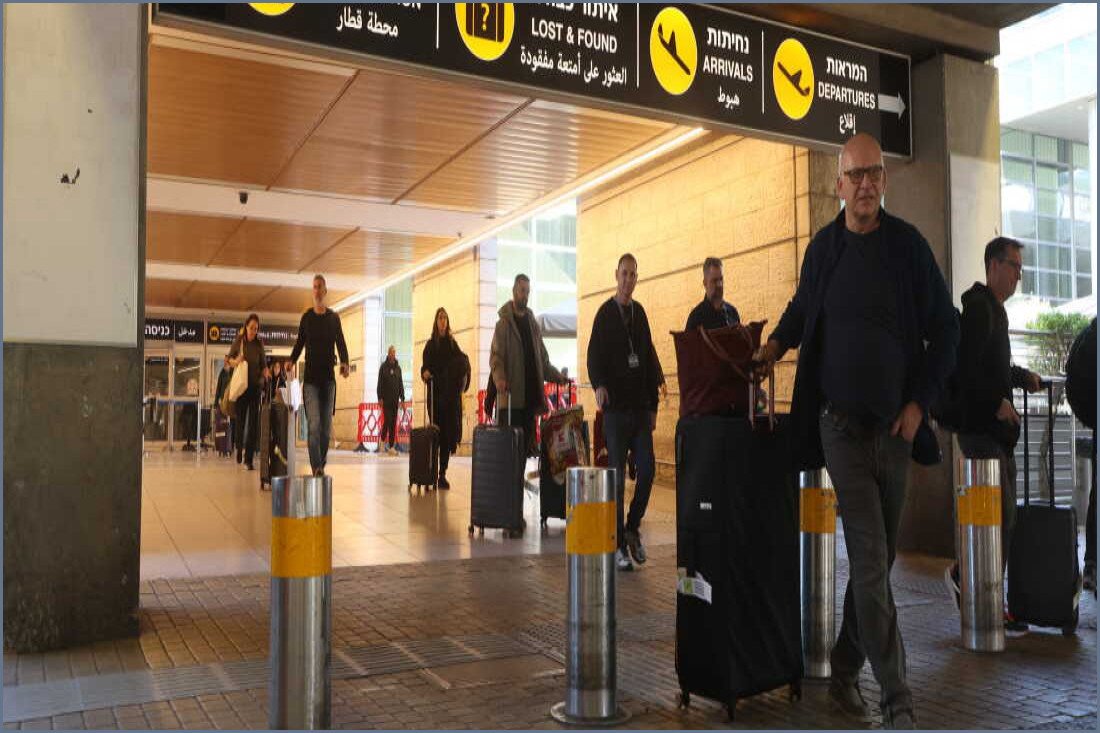
Travelers arrive at Ben Gurion Airport near Tel Aviv, Israel, on March 5. Gil Cohen Magen/Xinhua via Getty Images hide caption