Six months after the United States and Israel launched military strikes against Iran, ordinary citizens are facing a severe economic crisis characterized by skyrocketing inflation, widespread job losses, and a near-total collapse of daily livelihoods. The escalation of conflict, paired with a tightening web of international sanctions and a naval blockade, has driven up the cost of basic necessities like food, gas, and rent, forcing families to borrow money just to survive and put major life milestones on hold.
While official government statistics place Iran's unemployment rate at 9%, independent economic analysts assert that the actual number of jobless citizens is significantly higher. The desperation of the domestic workforce is reflected in data from Jobvision, a leading Iranian employment portal, which reported a massive 50% surge in resume submissions during late April. The depth of the crisis has even been acknowledged by state-sanctioned labor representatives. In May, Alireza Mahjoob, the head of Iran's primary labor organization, the Workers House, admitted on state television that the scale of unemployment has far exceeded initial expectations, expressing deep concern over how the situation would afflict an already fragile working class, leaving them helpless and powerless.
For many middle-class professionals, the economic descent was incredibly rapid. Rasoul, a 42-year-old engineer living in Tehran, had spent years building a stable career at a local technology firm. He frequently assured his wife that they had a reliable safety net, believing he could always drive for Snapp—Iran's domestic equivalent to Uber—if they ever encountered a worst-case scenario. However, the crisis unfolded faster than he anticipated. In January, amid a severe government crackdown on domestic protests, authorities heavily restricted internet access across the country. Because Rasoul's company relied on international networks to coordinate its delivery services, the state-imposed disruptions severely crippled business operations, causing a rapid loss of clients.
By mid-February, Rasoul was laid off, plunging him into a period of deep depression. Like other Iranians who shared their experiences, he spoke on the condition of anonymity, fearing government retaliation. Desperate to cover his basic living expenses, he reluctantly began driving for Snapp at night. But the strategy quickly fell apart. Following the launch of the U.S. and Israeli military campaign at the end of February, a naval blockade of the critical Strait of Hormuz and heightened sanctions caused fuel prices to soar and made vehicle repairs prohibitively expensive. Furthermore, frequent U.S. airstrikes made navigating Tehran's streets at night far too hazardous. Rasoul was ultimately forced to abandon the driving job and rely on financial help from his extended family. Major personal plans, including starting a family with his wife, have been indefinitely postponed.
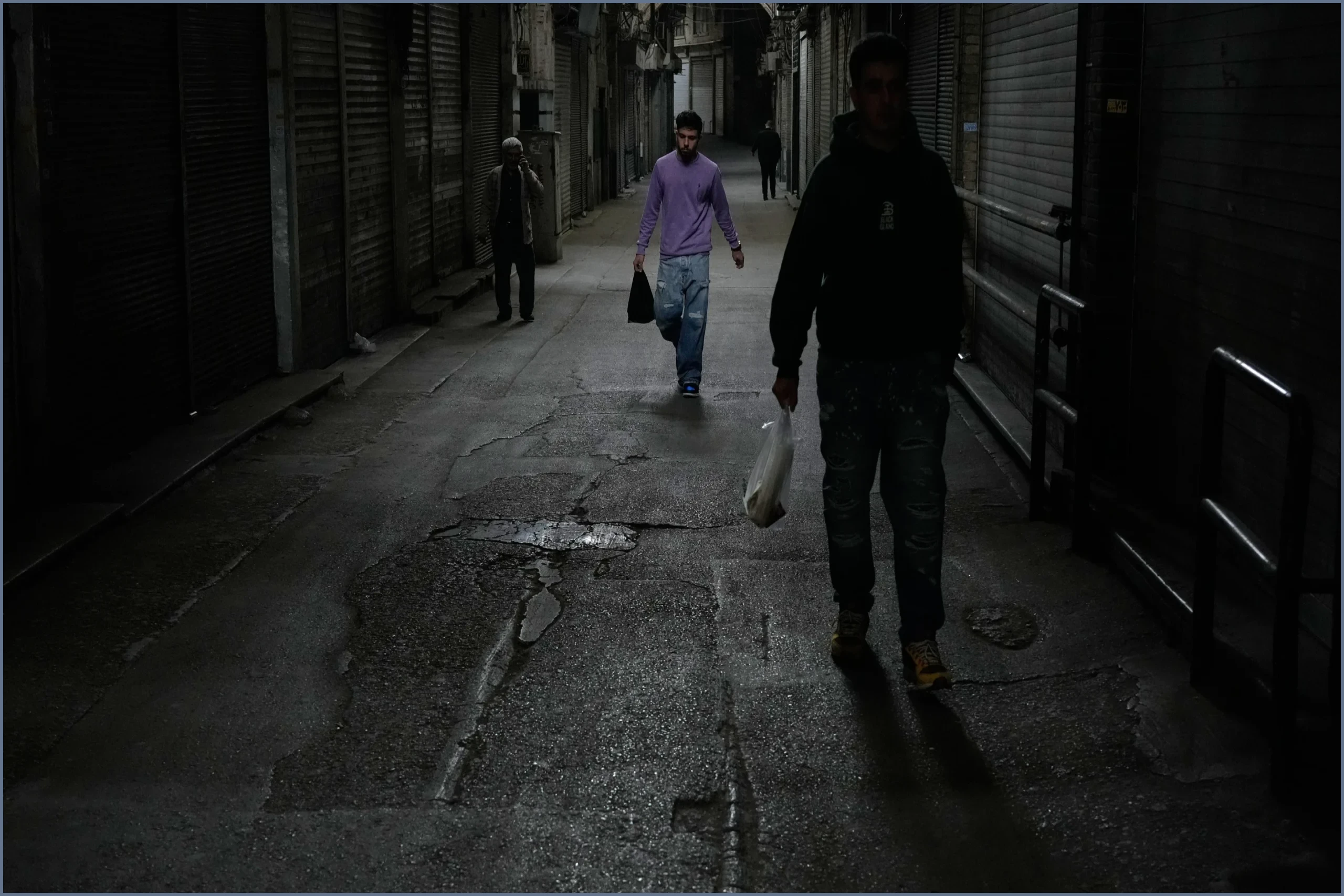
The devastation has swept through other vital sectors of the Iranian economy as well, visibly draining life from the capital's commercial hubs. During the Iranian New Year, or Nowruz, holidays in Tehran on March 29, 2026, people walked past closed shops at the nearly empty traditional main bazaar, a stark symbol of the economic paralysis. Kayvan, a 42-year-old materials engineer based in Tehran, had successfully helped a Chinese company establish a business supplying essential raw materials to Iran's oil sector. When the military conflict intensified, maritime trade in the region ground to a complete halt. Transit and shipping routes were shut down as the Strait of Hormuz was closed, rendering sea transport impossible. With domestic clients unable to secure or place orders, the business collapsed almost overnight. Kayvan recalled the suddenness of his dismissal, comparing it to scenes in American movies where employees are forced to pack their belongings into a cardboard box and immediately vacate their desks.
To survive the sudden loss of livelihood, Kayvan's family has had to rely entirely on his wife's income and their rapidly depleting personal savings, which offer little protection against relentless inflation. Both men expressed a profound sense of helplessness regarding the ongoing conflict and its economic fallout. Kayvan noted that the country is experiencing unprecedented price hikes that are causing families to fall apart, while Rasoul likened the population to passengers on a train, hurtling forward without knowing if the bridge ahead remains intact.
Then the war hit, and the worst-case scenario arrived.
"Terrifying inflation, unprecedented price hikes… we've genuinely never experienced days like these before," Kayvan said, adding that the conflict simply needs to stop. "We're all just falling apart."