Six months after the outbreak of war with the United States and Israel, ordinary Iranian families are finding themselves pushed to the absolute financial limit. Although grocery stores in the capital city of Tehran remain fully stocked, a combination of soaring unemployment, runaway inflation, and a devastating naval blockade has left basic necessities far out of reach for many. Those fortunate enough to have jobs are working longer hours for currency that is worth only half of what it was a year ago, making everything from food to medicine an agonizing financial decision.
The daily struggle is visible in the lives of citizens like Ahmad Karimi, a 52-year-old taxi driver and father of two. To keep his family afloat, Karimi now works grueling 15-hour days, including weekends. "We have virtually given up on many things," Karimi explained, detailing the severe adjustments his household has had to make. "We’re cutting out fruit, we’re cutting out protein, we’ve given up leisure, we even work on weekends."
This domestic strain is the direct result of an intensifying economic conflict. Since the war began on February 28, 2026, a strict naval blockade and sweeping international sanctions have severely crippled Iran's ability to export oil, which serves as the lifeblood of its economy. In response, Iran has launched attacks against oil-rich neighboring nations and U.S. military bases in the region, while also disrupting commercial shipping in the strategic Strait of Hormuz. Tehran hopes to leverage this retaliatory pressure—which has driven global energy prices upward—to secure sanctions relief and gain enough control over the strait to demand transit fees from passing vessels.
Despite the immense pressure, some economic experts doubt that the financial squeeze will force the Iranian government to make military or political concessions. Hadi Kahalzadeh, an expert on Iran's economy at Brandeis University, pointed out that the country has spent decades learning how to navigate Western restrictions. Iran routinely utilizes informal cross-border trade networks, purchases restricted goods through third-party nations, expands domestic production, and relies on a shadow fleet of tankers to export its oil. "Iran’s resistance capacity not only avoids collapse, it also prevents the economic pain from translating into the political pressure and changes that the U.S. expects," Kahalzadeh observed.
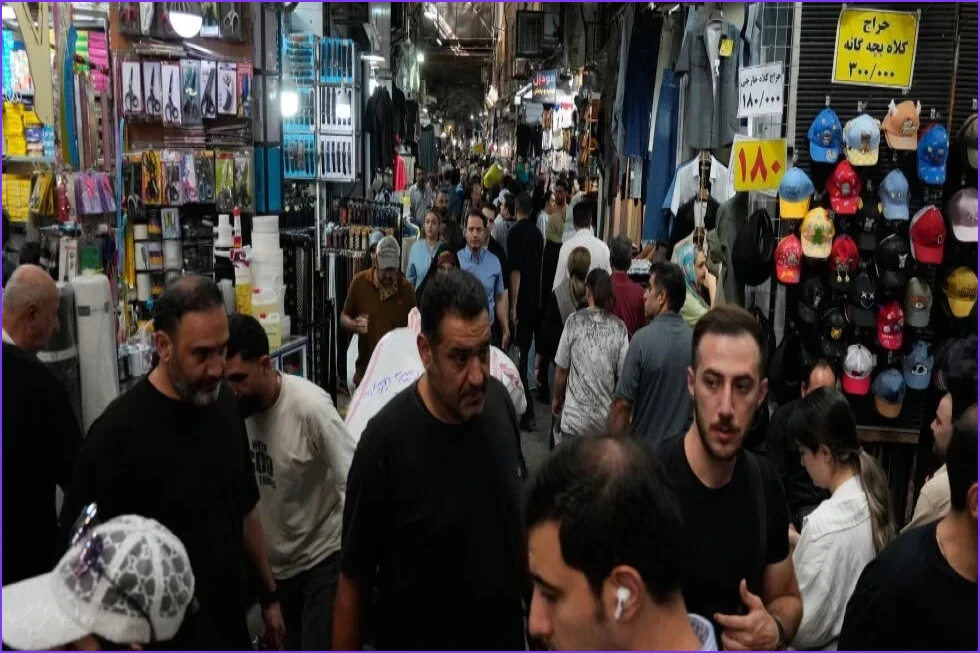
Meanwhile, the cost of living continues to skyrocket for ordinary citizens. At Tehran's traditional Grand Bazaar, crowds of shoppers gather in search of cheaper staples, but the financial reality remains grim. Compared to pre-war prices, the cost of rice has jumped by 60%, while the price of beef has surged by a staggering 150%. A mother of two from northern Iran recently shared her frustration on social media, posting a photo of a basic grocery run that included milk, eggs, and toilet paper, but lacked any meat. The small purchase cost her 89 million rials, equivalent to about $65. "The emotional toll and the pressure we’re under are another story," she wrote on X. "Every time we have to say no to our children, every time we have to go back and forth over a decision, whether it’s a class you’d love your children to take or something they really want you to buy for them, it’s genuinely exhausting."
The economic outlook for the country is projected to worsen. According to the International Monetary Fund, inflation in Iran is expected to climb near 70% by the end of the year, while the overall economy—already weakened by a decade of pre-war sanctions—is forecast to contract by more than 5%. Even heavily subsidized gasoline, which has remained cheap, may soon face price hikes. A presidential aide recently admitted on state television that Iran is consuming more gasoline daily than it produces, raising the prospect of price increases that have historically sparked violent public unrest.
Long before the conflict with the U.S. and Israel began, Iran's theocratic leadership was dealing with intense domestic discontent. Widespread protests erupted across the country earlier in the year but were met with a violent government crackdown that left thousands dead and tens of thousands arrested. Today, the government maintains a zero-tolerance policy, declaring participation in anti-government demonstrations a treasonous offense punishable by death.
However, the public's anger has partially shifted toward the foreign nations enforcing the sanctions and conducting military strikes. Hassan Golmoradi, an economist based in Tehran, noted that attacks have destroyed critical infrastructure, flattened factories, and killed scores of civilians. "Despite the hardships and difficulties, they have shown considerable patience in putting up with the resulting economic pressures," Golmoradi said of the Iranian public. Mohammad Farzanegan, a professor of Middle Eastern economics at the University of Marburg in Germany, added that citizens are wary of the risks of public dissent. "They do suffer, but they do not think that by joining violent protests they can achieve something for themselves and their families," Farzanegan said.
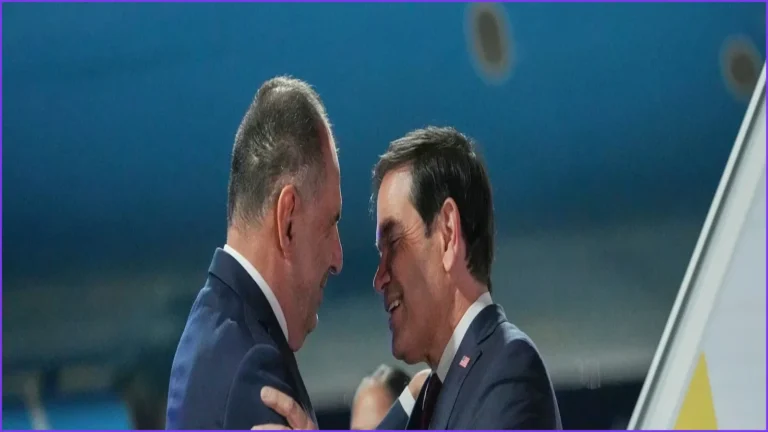
In response to the ongoing conflict, U.S. President Donald Trump has promised to escalate the economic campaign. Trump vowed on social media to execute the "most crushing economic operation ever taken against any country," threatening secondary sanctions against any nation or business that continues to trade with Iran. This pressure has already yielded results; following a phone call between Trump and Sheikh Mohammed bin Zayed Al Nahyan, the leader of the United Arab Emirates, the UAE announced it would suspend all trade with Tehran. This represents a significant blow, as the UAE had long served as a vital hub for Iran to bypass sanctions and import goods.
Within Iran, the paramilitary Revolutionary Guard remains the dominant political and military force. The Guard's influence has only grown after surviving early U.S. and Israeli airstrikes that killed several of the country's top leaders. Currently, the Guard is pushing for substantial concessions from the United States, including recognized Iranian control over the Strait of Hormuz and financial reparations for the war. Believing they can outlast their opponents economically, Iran's hard-line faction has consolidated power. This month, Supreme Leader Ayatollah Mojtaba Khamenei appointed a former Revolutionary Guard commander to lead the influential Supreme National Security Council, signaling a commitment to an unyielding stance.
While official government statistics place the national unemployment rate at 9.1%, state-affiliated media outlets suggest the actual figure is far higher. A Labor Ministry official reported that more than 1 million jobs were lost by late May, just three months into the war. In an apparent effort to manage public frustration, the government has quietly relaxed its harsh enforcement of mandatory hijab laws, granting a degree of social freedom that citizens have long demanded. Yet, for most Iranians, the primary restriction on their lives remains economic. As Ahmad Karimi, the taxi driver, warned, the current financial situation is unsustainable. "The people won't be able to continue living like this," he said. "We’re simply breathing, surviving, and trying to make it from one day to the next."