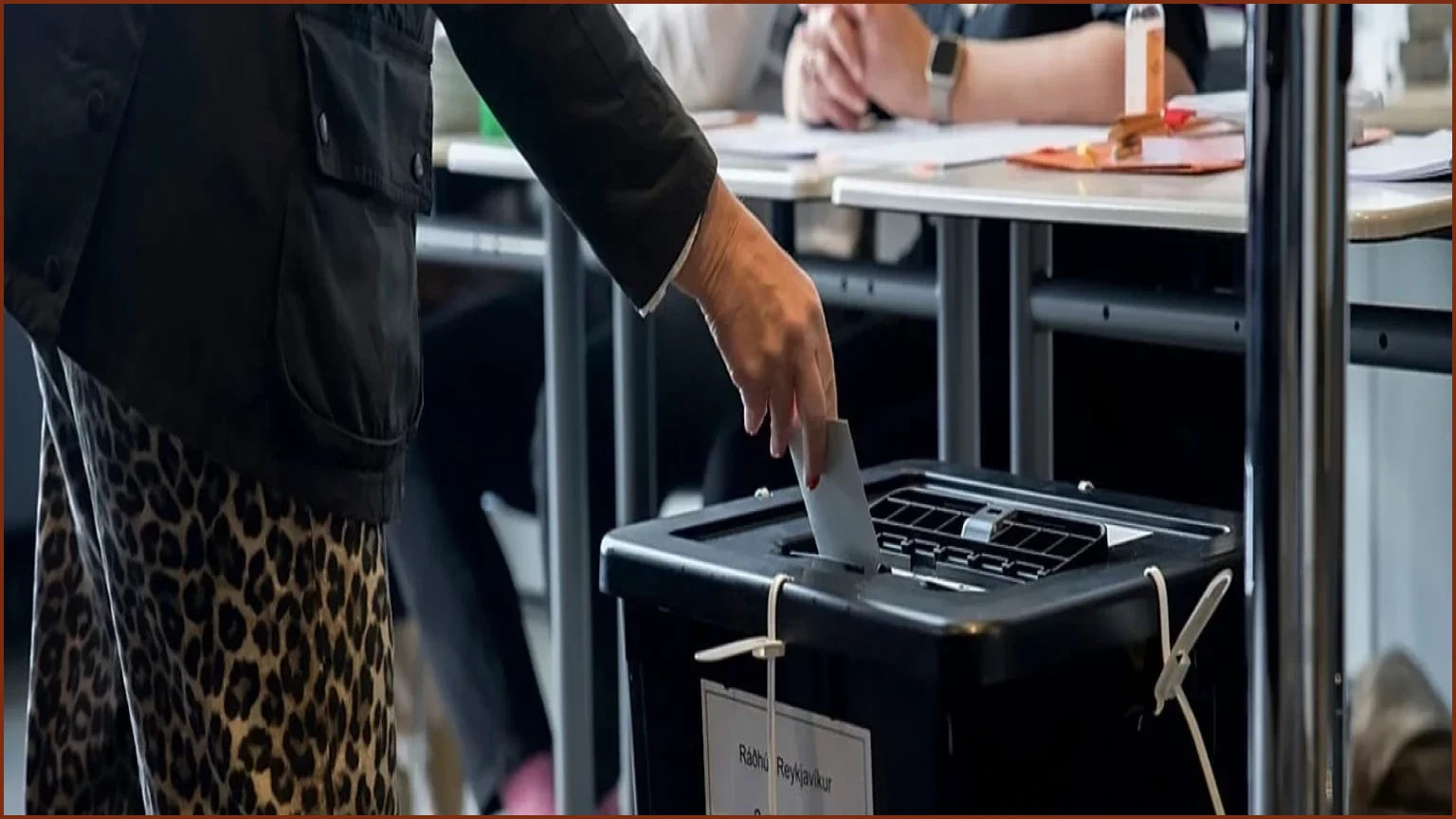
Iceland has recorded a robust preliminary voter turnout for its high-stakes referendum on whether to reopen negotiations for European Union membership. Data released on Saturday shows that by noon, participation levels in the capital, Reykjavík, had already surpassed those observed at the same time during the 2024 parliamentary elections.
In the Reykjavík North constituency, 13.7% of voters had cast their ballots by noon, a notable increase from the roughly 10% recorded in the 2024 election. Similarly, the Reykjavík South constituency saw participation reach just over 14%, compared to the 11% seen during the previous parliamentary vote. Furthermore, Iceland’s national broadcaster, RÚV, reported that more than 20% of the electorate had already cast early ballots in advance of election day.
The referendum, which could determine the future of the nation of nearly 400,000, comes as the country faces a tight race. A final poll conducted on Friday suggested a narrow split, with 50.4% in favor of re-entering talks and 49.6% opposed. Supporters, such as 71-year-old retiree Unnur Jokulsdottir, expressed a desire for Iceland to be part of a larger unity. Conversely, critics like 53-year-old fish trader Olafur Thorsson raised concerns about the bloc, describing it as a potential "economic prison."
The decision to hold the vote follows Iceland’s initial 2009 application for EU membership, which was prompted by a devastating financial crisis. A positive outcome would initiate negotiations across 35 distinct areas, ranging from human rights to the economy. A key challenge remains the nation's vital fisheries, as Reykjavík seeks to maintain exclusive control over its resources, though Brussels appears increasingly open to compromise. Geopolitical instability, including the war in Ukraine and concerns regarding U.S. defense commitments, has also influenced the debate, as Iceland relies on NATO and a 1951 bilateral agreement for its security. Trump's unpredictability and his threats to take over neighbouring Greenland — which he has mixed up with Iceland on several occasions — have added to Icelanders' concerns. The result of the vote will be followed closely by the EU, which has not welcomed a wealthy, net contributor to its budget since 1995.
"I think that we should be a part of a bigger unity. I think it's worth looking into it," Unnur Jokulsdottir, a 71-year-old retiree, said after casting her ballot in Reykjavík's City Hall.
A yes vote would trigger renewed negotiations with the European Commission covering 35 areas, from the economy to human rights.