An Immigration and Customs Enforcement officer facing charges for shooting a man and subsequently lying about the incident during a federal immigration crackdown in Minneapolis has been released from a Texas detention facility. The release occurred on Thursday, August 27, 2026, after a federal judge declined to block his release or mandate his immediate return to Minnesota to face prosecution.
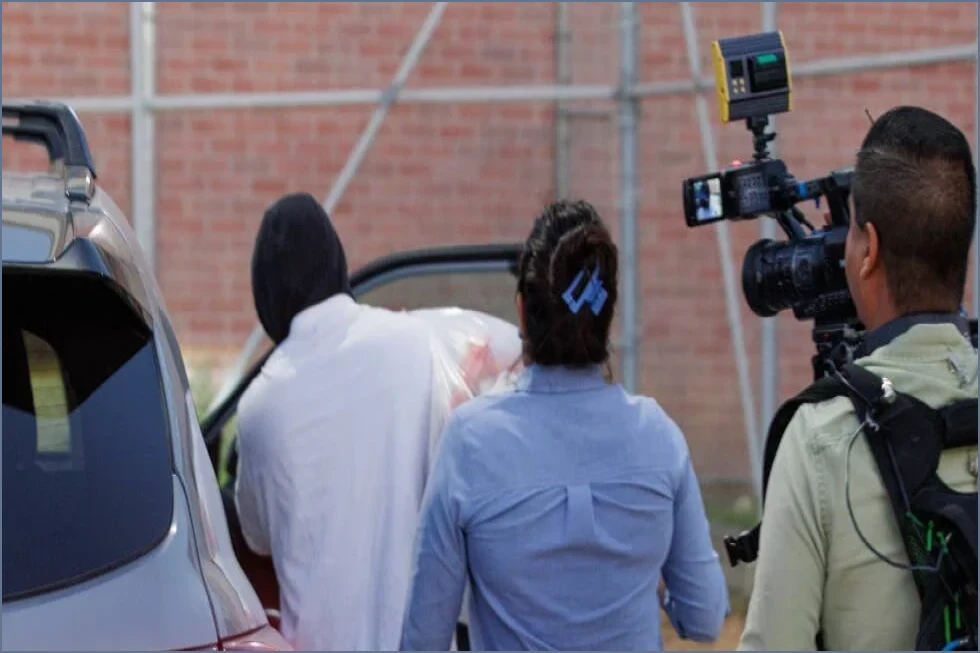
Christian Castro, the accused officer, walked out of the Carrizalez-Rucker Cameron County Detention Center in Brownsville, Texas, at the break of dawn. Surrounded by a small group of reporters and camera operators, Castro gestured briefly toward them before quickly entering a waiting SUV, which immediately drove away from the facility.
Castro's release marks a significant development in a tense legal and political standoff between Minnesota and Texas officials. The ICE officer is charged in Minnesota with felony assault and falsely reporting a crime in connection with a January 14 shooting that injured 24-year-old Julio Cesar Sosa-Celis. According to prosecutors, Castro fired a handgun through the front door of a Minneapolis residence, striking Sosa-Celis in the leg. Following the shooting, Castro allegedly fabricated an account of the confrontation, falsely accusing Sosa-Celis and another man of launching an attack on an ICE officer using a broom handle and a snow shovel.
After a Minnesota judge issued a nationwide arrest warrant for Castro in May, law enforcement agencies, including the Minnesota Bureau of Criminal Apprehension, tracked him to South Texas. Castro was arrested on May 29 in Cameron County, a region bordering Mexico. Minnesota authorities immediately initiated extradition proceedings, but Castro remained held in the Brownsville jail as the process stalled. Under Texas state law, a detained individual must be released after 90 days if an extradition warrant has not been executed. Thursday marked the exact expiration of that 90-day statutory limit.
Fearing that Castro would use his freedom to escape prosecution, Minnesota Attorney General Keith Ellison intervened last week by filing a lawsuit. The state sought a temporary restraining order in federal court to either block Castro's release or compel his immediate transfer back to Minnesota. State prosecutors argued that Castro posed an extreme flight risk, pointing to recorded jailhouse phone calls. In those conversations, Castro reportedly spoke to a woman residing in Mexico about his plans to marry her and purchase a home in Mexico once he was freed from custody.
However, U.S. District Judge Fernando Rodriguez Jr. rejected Minnesota's emergency request in a written order issued on Wednesday. Judge Rodriguez ruled that the federal court lacked the subject matter jurisdiction required to intervene at this stage, declaring the dispute "not ripe for adjudication." The judge explained that Minnesota could not base its legal action on the mere anticipation that Texas Governor Greg Abbott might violate extradition laws in the future. Instead, the state would have to prove that an actual violation had already taken place. Furthermore, the judge noted that federal extradition statutes do not establish a specific timeframe or deadline within which a governor must make an extradition decision.
Although Judge Rodriguez acknowledged the real possibility that Castro might flee the country, he maintained that the threat of potential injury alone does not satisfy the legal requirements to make the matter ripe for a federal court ruling.
Attorneys representing the state of Texas argued in court on Tuesday that the judge could not legally rule on an extradition matter that remains actively pending. They clarified that Governor Abbott has not formally denied Minnesota's extradition request. Instead, the governor is holding the request in abeyance pending the outcome of an internal Texas state investigation. This inquiry is examining whether Castro meets the legal definition of a "fugitive" under the U.S. Constitution's Extradition Clause.
Governor Abbott had previously indicated last week that he would not immediately respond to Minnesota's extradition demands. He cited an ongoing investigation into alleged fraud within government social service programs in Minnesota. That fraud investigation was a key justification used by President Donald Trump to launch the federal immigration crackdown in Minnesota during which the shooting occurred.
The legal setback sparked a fierce public exchange between the political leaders of both states. Following the judge's ruling, Attorney General Ellison took to social media to criticize the decision, asserting that the Texas governor has a clear constitutional obligation to extradite the charged officer. Ellison argued that by refusing to act, Abbott was effectively turning Texas into a "sanctuary state for violent criminals."
Governor Abbott quickly fired back online with a sharp rebuke of Minnesota's legal strategy. Abbott wrote that Minnesota's representatives were "bad lawyers" who "showed up unprepared, uninformed & unpersuasive." He added, "You don't know the law & it showed." Abbott went on to accuse Minnesota of failing to enforce federal immigration laws. He threatened to transport future waves of undocumented immigrants to Minnesota, comparing the potential move to his administration's previous actions of busing thousands of migrants to New York City after they were released into Texas during President Joe Biden's administration.
Cameron County Sheriff Manuel Treviño held a press conference outside the detention center shortly after Castro's dawn release to address the logistical aspects of the discharge. A request for comment and reaction to the release and the governor's remarks was sent to Ellison's office on Thursday.