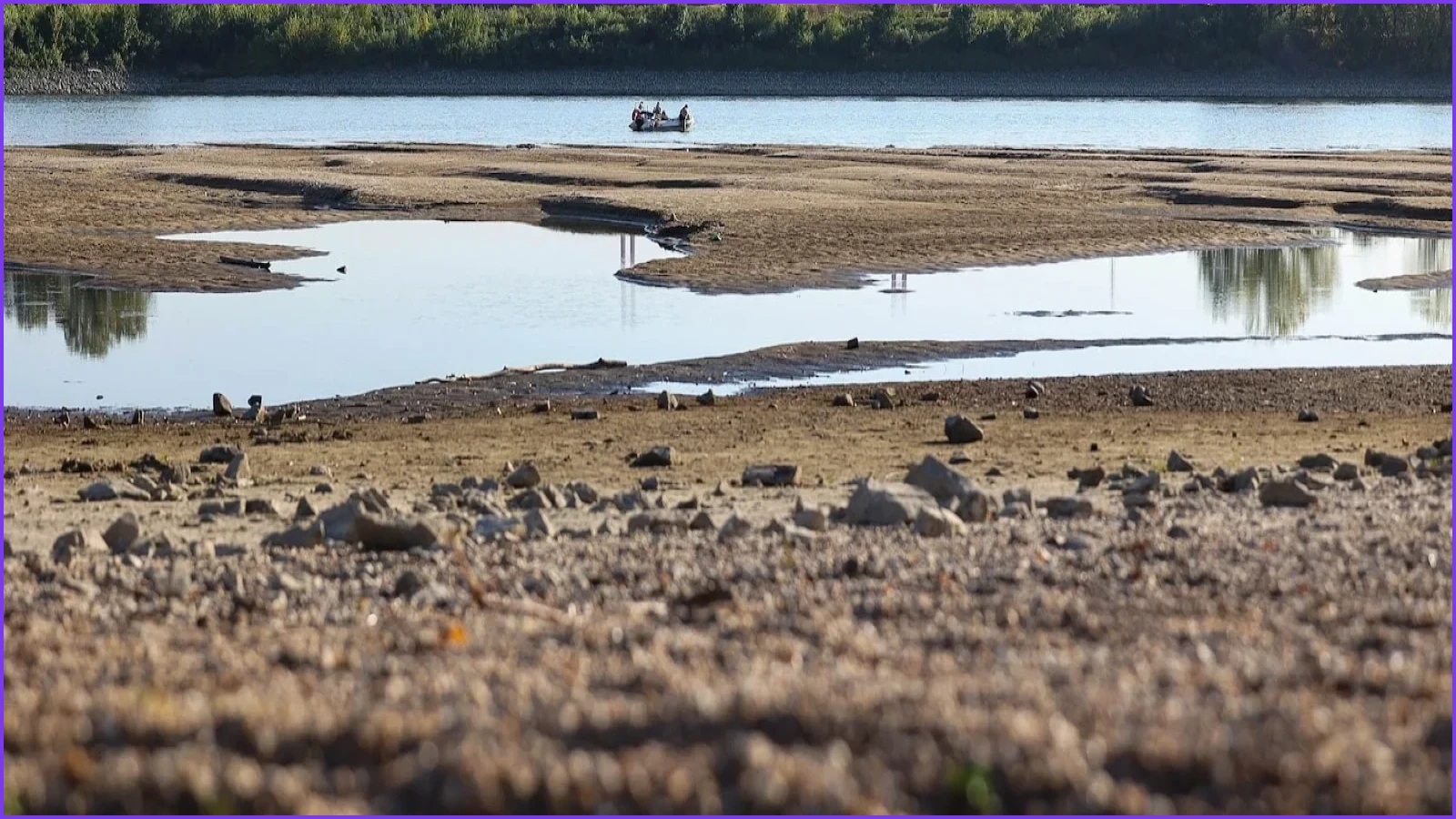
Hungarian authorities are set to begin emergency operations on the Danube River this week to safeguard the future of the nation's only nuclear power plant. Prime Minister Péter Magyar announced on Wednesday that persistent drought and extreme heat waves have driven the river to record-low levels, threatening the operational stability of the Paks nuclear facility for the first time in its 44-year history.
The Soviet-built plant, which relies on Danube water to cool its four reactors, is currently restricted to operating at little more than 10% of its 2,000-megawatt capacity. The facility is critical to the national grid, supplying approximately one-third of Hungary's electricity. Magyar warned that without immediate intervention, the plant faces a complete shutdown as water levels continue to drop.
Construction of a bed sill—a stone and concrete structure designed to slow the river's current and raise upstream water levels—is scheduled to begin on Thursday. Delivery of approximately 145,000 cubic meters of rock for this project was slated to commence Wednesday evening. According to the Prime Minister, this intervention could elevate the Danube's water level by as much as one meter, or three feet. Additionally, authorities are considering the use of two 80-meter, or 262-foot, barges that may be sunk near the plant's cooling pumps to provide a further 20-centimeter, or 8-inch, increase in water depth. A final decision regarding the barges is expected by Friday.
Magyar characterized the bed sill as a long-term solution to ensure water levels remain above the critical threshold required for reactor operation. Describing the urgency of the situation, he noted that the Danube has provided only days of lead time rather than months. The current restricted output at Paks is costing the Hungarian economy as much as 50 billion forints, or $158 million, per month, while the planned river interventions are estimated to cost approximately 6 billion forints, or $19 million.
Similar emergency measures were recently implemented in Romania, where authorities sank four rock-laden barges into the Danube to redirect water toward the Cernavoda nuclear plant. That facility had already been forced to shut down one of its two reactors due to the ongoing water shortage.