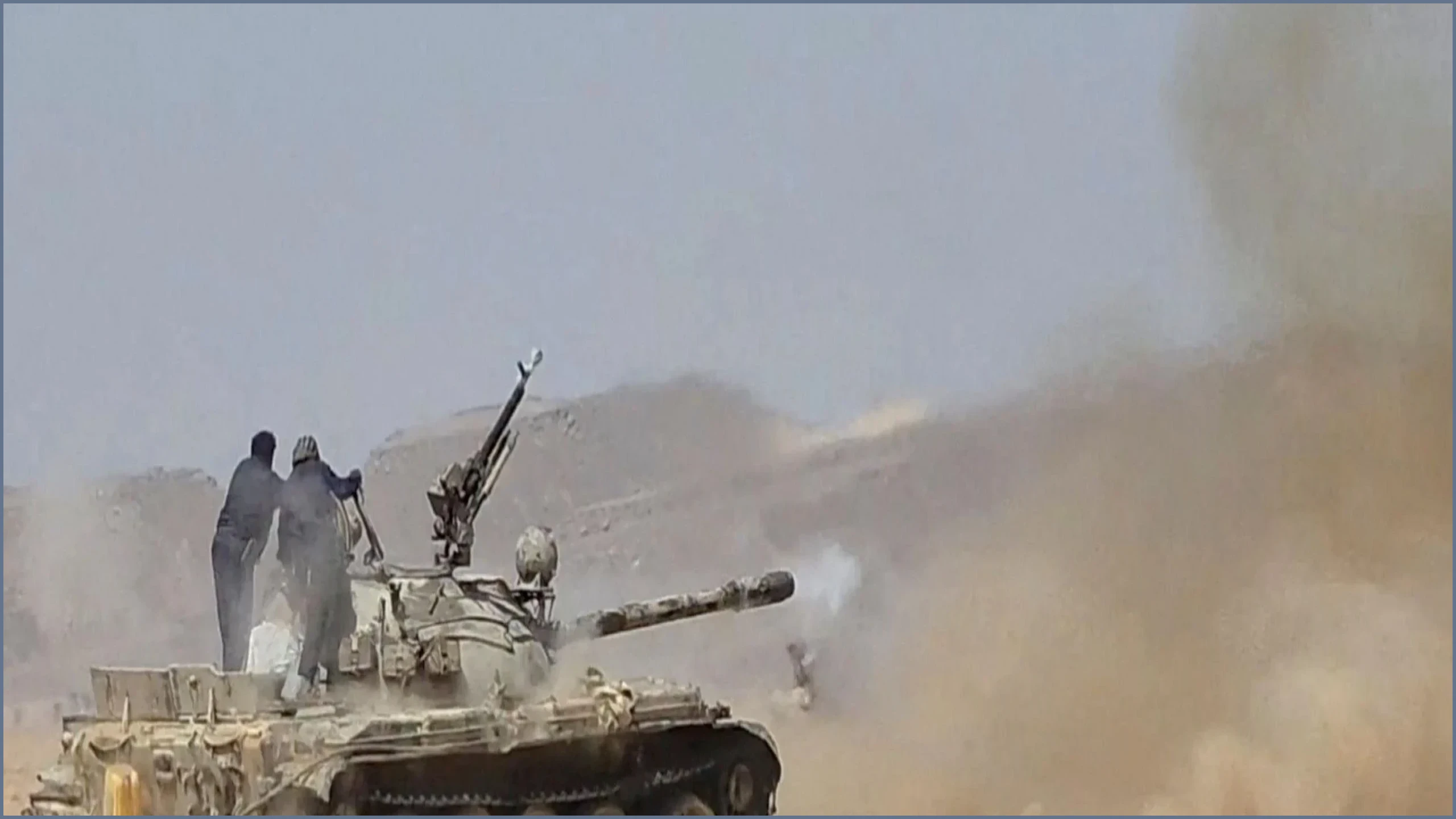
A rapid military offensive by Houthi forces across the southern stretches of the Tihamah, Yemen's arid coastal plain, has caught international observers by surprise and dramatically altered the geopolitical landscape of the Red Sea. The sudden advance has dismantled the territorial holdings of the National Resistance, an anti-Houthi coalition that until recently controlled significant portions of the strategic coastline.
According to military estimates, the Iranian-backed Houthi rebels have seized up to 130 kilometers (81 miles) of Yemen's highly sensitive shoreline. This rapid territorial gain represents the group's most significant military breakthrough in several years. It underscores the continued resilience and potency of the Houthi movement, which has endured twelve years of civil war, relentless Saudi Arabian airstrikes, and targeted military campaigns by American, British, and Israeli forces.
With their local opponents left stunned and demoralized, experts warn that displacing the Houthis from their newly acquired positions will be an uphill battle. Hisham al-Omeisi, a senior analyst at the Brussels-based European Institute of Peace, observed that the group is highly likely to entrench itself in these coastal areas, making any future efforts to push them out far more difficult and costly.
The Houthis' success comes amid shifting dynamics within Iran's regional alliance network. Tehran has reportedly redirected its focus and resources toward its Yemeni allies following a series of military setbacks suffered by other factions in its "Axis of Resistance," including Lebanese Hezbollah, Hamas in Gaza, and the Assad regime in Syria. Al-Omeisi noted that this redirected support has become vital for the Houthis as they consolidate their territorial gains.
While analysts caution against viewing the Houthis merely as direct puppets of Tehran, the territorial shift has created an uncomfortable strategic reality for Western powers. Seven months after the United States and Israel initiated a massive, coordinated military campaign against Iran, the government in Tehran now holds significant sway over two of the world's most critical maritime trade corridors: the Strait of Hormuz at the mouth of the Persian Gulf, and the Bab al-Mandab, which serves as the southern gateway to the Red Sea and the Suez Canal.
Farea al-Muslimi, a research fellow at London's Chatham House think tank, pointed out that Iran and its allied proxy forces now effectively control two of the most critical maritime chokepoints on earth. This dual control covers more than 35 percent of the global fuel and oil trade, a level of strategic influence that al-Muslimi compared to the leverage of a nuclear bomb.
The Houthis' operational capacity is expected to expand further if they have secured key islands in the Red Sea, such as Perim Island, which sits directly in the narrowest passage of the Bab al-Mandab. Control of these landmasses significantly enhances their ability to intercept and disrupt international maritime traffic, echoing previous campaigns where the group successfully targeted commercial vessels using drones, missiles, and small attack boats in response to the war in Gaza.
Yemen expert Iona Craig explained that while the Houthis previously managed to disrupt shipping passing through the Bab al-Mandab without holding these specific coastal territories, their direct physical presence overlooking the strait now grants them vastly superior leverage. Although the Houthi military released a statement declaring that maritime shipping remains safe for all entities except for Saudi-owned vessels, global shipping firms remain deeply skeptical. During previous escalations, the group claimed to target only vessels connected to Israel, yet repeatedly struck unrelated targets, including a Norwegian-flagged tanker.
Craig suggested that the Houthis might still exercise some caution to avoid provoking another massive Western campaign like Operation Rough Rider, which saw six weeks of heavy American naval and air bombardment in the spring of 2025. However, direct U.S. intervention remains politically complicated. U.S. President Donald Trump's military confrontation with Iran faces domestic unpopularity, and with global oil prices rising, opening a new active front in Yemen could negatively impact his administration's approval ratings ahead of the November midterm elections.
According to reports, appeals from Saudi Crown Prince Mohammed bin Salman for direct American military intervention have so far gone unanswered. Washington is reportedly highly concerned by the escalating violence in Yemen and is working to bolster its support for Saudi Arabia, while actively trying to avoid becoming directly entangled in a new military conflict.
The threat to Saudi Arabia extends beyond the immediate coastline. Recent satellite imagery revealed an apparent Houthi drone-and-missile strike targeting Saudi Arabia's vital East-West pipeline. The pipeline serves as a crucial alternative route for Saudi oil exports, designed to bypass the Strait of Hormuz, which was closed earlier this year. The attack represents a calculated effort by Iran's regional allies to intensify economic pressure. Al-Muslimi noted that the pipeline strike marked the beginning of a clear escalation, indicating Tehran's determination to establish a much larger foothold along the Red Sea.
With Yemen on the brink of returning to full-scale warfare, Saudi Arabia facing severe threats to its economic infrastructure, and the United States reluctant to intervene militarily, the broader conflict with Iran has entered a highly volatile phase. For the civilian population of Yemen—already devastated by over a decade of displacement, bombardment, and starvation—this new wave of escalation threatens to deepen an already catastrophic humanitarian crisis.
It's the group's most impressive military coup for several years, proving that despite a civil war that has lasted 12 years, devastating Saudi air raids and attacks by American, Israeli and British forces, the Houthis remain a force to be reckoned with.
Oil hits $100 a barrel for first time since July after US and Houthi strikes