A verdict is expected this Friday in the high-profile trial of two prominent activists who formerly organized Hong Kong’s annual vigil commemorating the 1989 Tiananmen Square crackdown. Lee Cheuk-yan and Chow Hang-tung, who served as leaders of the Hong Kong Alliance in Support of Patriotic Democratic Movements of China, were charged in September 2021 with inciting subversion. If convicted under the China-imposed national security law, the pair faces a maximum prison sentence of 10 years. The activists, who pleaded not guilty when the trial commenced in January, are expected to appear in court for the decision. The ruling will be delivered by three government-approved judges. Should they be found guilty, sentencing is expected to occur at a later date. Their co-defendant, Albert Ho, previously entered a guilty plea, a legal move that typically leads to a reduced sentence; his sentencing remains pending.
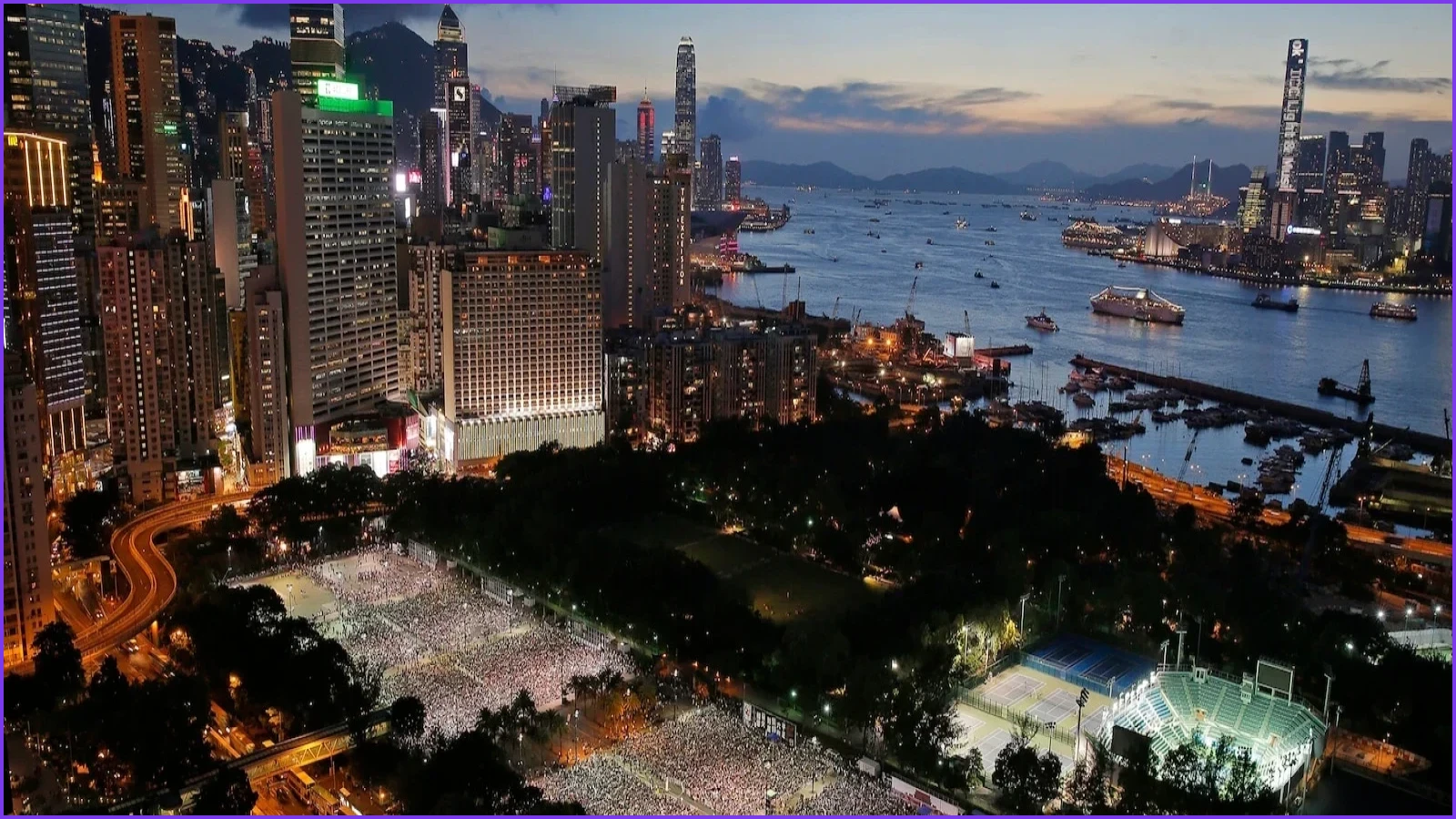
For three decades, the alliance organized the only large-scale, public memorial for the 1989 massacre held within China. The event regularly drew tens of thousands of participants until 2020, when authorities banned the gathering, citing public health risks associated with the coronavirus pandemic. Shortly after the ban, Beijing implemented the national security law, which officials argued was necessary to restore stability following the 2019 anti-government protests. The alliance subsequently voted to disband in the same month that Lee and Chow were formally charged. Many other leading activists are now also jailed under the 2020 law, including the pro-democracy former media tycoon Jimmy Lai. Dozens of other civil society groups also disbanded following its introduction.
Prosecutors in the case have argued that the defendants incited others to use unlawful means to topple China's fundamental system and central political bodies. Specifically, the prosecution pointed to the alliance’s core demand of “ending one-party rule,” characterizing it as an attempt to overthrow the Communist Party’s leadership. The defense has consistently denied these claims, arguing that the slogan advocated for a transition toward democracy rather than an illegal overthrow of the government. The defense insisted the alliance had not asked people to adopt any illegal means. Chow, a barrister who defended herself, cautioned that if the court fails to gatekeep over the reasonable effects of their statements, it could easily become an accomplice by tolerating the crimes committed by those in power.
Observers and legal experts view this case as a critical bellwether for the future of civil rights and judicial independence in Hong Kong. Eric Lai, a senior fellow with the Georgetown Center for Asian Law, noted that the vigil and the alliance were long considered symbols of the city’s autonomy under the “one country, two systems” governing framework that Beijing promised to maintain for 50 years when the former British colony returned to Chinese rule in 1997. Lai suggested that the verdict will reveal the extent to which Hong Kong’s judiciary aligns with the party-led system in mainland China, noting that the charge of inciting subversion was commonly used in the mainland to criminalize the acts of human rights lawyers, activists, and intellectuals, including the late Nobel laureate Liu Xiaobo. While the government maintains that all accused have the right to a fair trial and that courts exercise their power independently, critics consider this case and its result a litmus test of the city's civil rights and judicial independence.