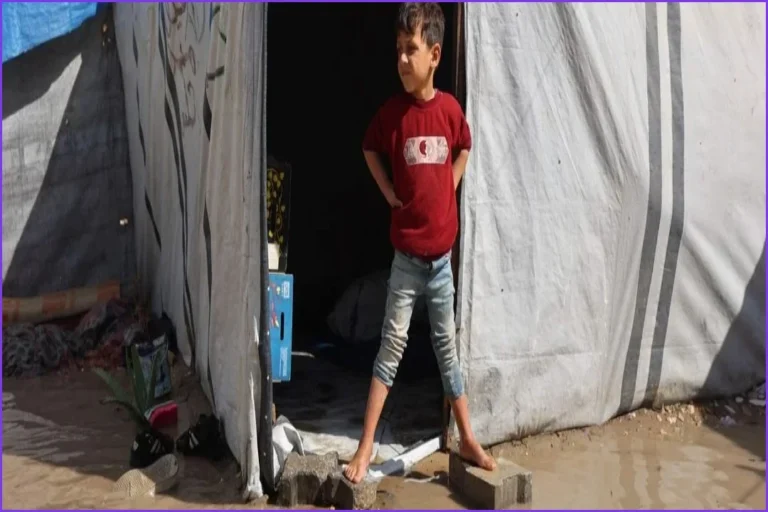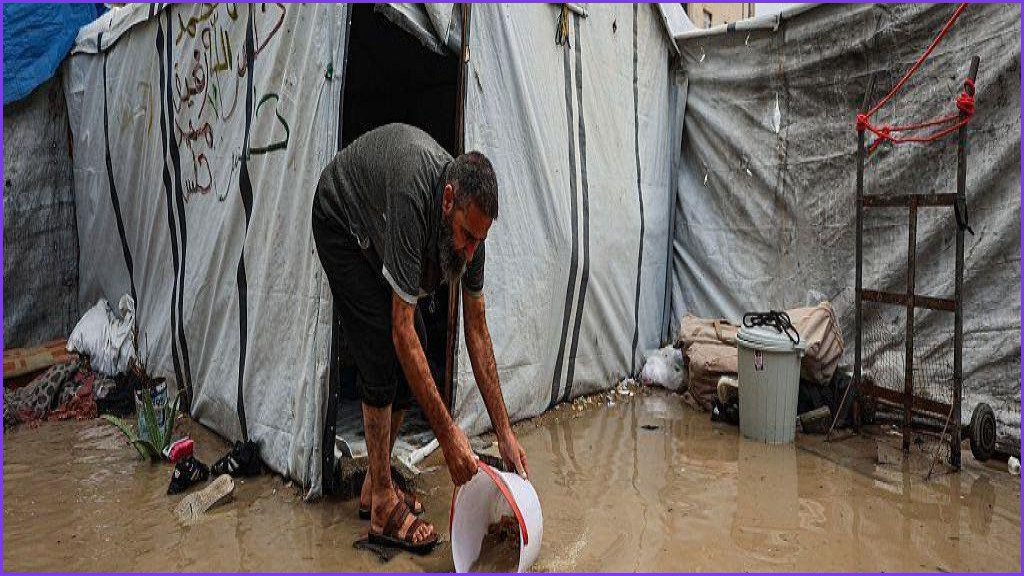
Heavy rains have caused widespread flooding in Gaza, impacting tens of thousands of tents where displaced residents are currently living. The situation has left many families without adequate shelter, with residents forced to use pots and pans in a desperate attempt to clear water from their flooded living spaces.
Jonathan Veitch, the Unicef representative for Palestine, described the conditions as "horrific" and "desperate." Speaking from Deir Al Balah in central Gaza, Veitch noted that the crisis is being exacerbated by Israeli restrictions on the entry of essential supplies, including engine oil and heavy machinery needed for site maintenance. Additionally, UN budget cuts have reduced the availability of plastic sheeting, tarpaulins, and tents, forcing agencies to be more selective in their support efforts.
The Hamas-run government in Gaza reported that approximately 70,000 tents have been affected by the flooding. A spokesperson stated that the severe weather led to the collapse of numerous cracked walls and roofs, resulting in injuries, some of which were classified as critical. Aid agencies are expressing grave concern that conditions will deteriorate further as the rainy season progresses, recalling that deaths from hypothermia were recorded during the previous winter.
Veitch emphasized the urgency of the situation, noting that aid workers are frequently stopped on the streets by people begging for assistance. "We can expect the same again unless we have very, very urgent action now," he warned.
The current crisis unfolds against the backdrop of a long-standing conflict. Since the war began on 7 October 2023, following a Hamas-led attack on Israel that resulted in approximately 1,200 deaths and 251 hostages, 90% of Gaza's population has been displaced, often multiple times. According to health ministry figures, which are considered reliable by the UN, 74,594 people have been killed in Gaza since the war started. Despite a ceasefire that came into force in October of last year, Israeli air strikes have continued on a nearly daily basis, contributing to a volatile environment where access to clean water and sanitation remains severely limited.
"We're providing all the assistance that we can but we're getting stopped on the street as we're driving now because people are begging us for help."
He continued: "They're absolutely desperate. We saw last year what winter does, and we had deaths from hypothermia last year.