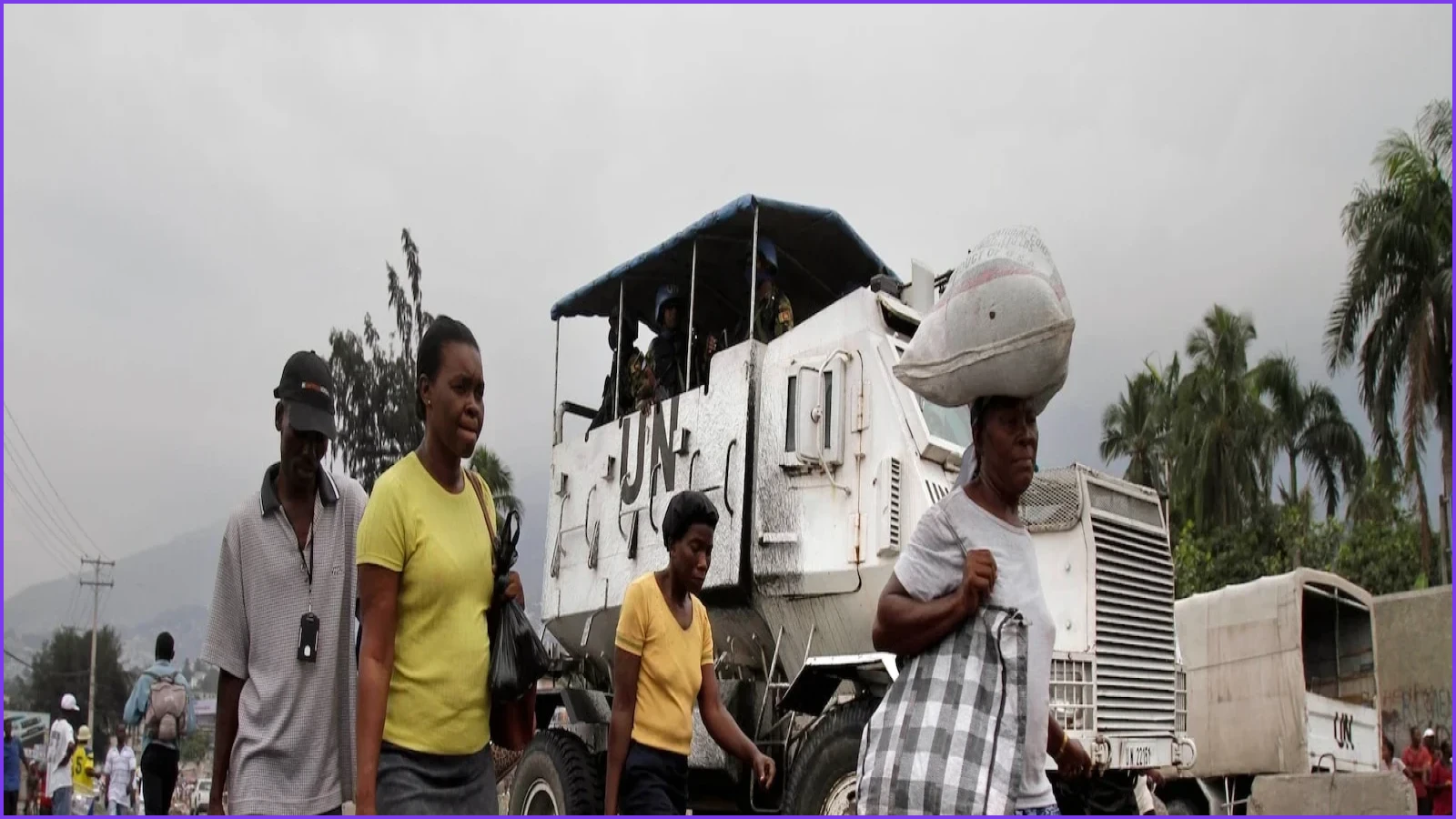
Haitian security forces have launched an aggressive military operation to reclaim control of a critical transport corridor linking Port-au-Prince to the country's southern and western regions, marking the first large-scale offensive in the area in five years.
The offensive targets Martissant, a district situated at the western edge of the capital along Route 2. The neighborhood fell under absolute gang control more than five years ago, severing primary commercial supply lines, disrupting the national economy, and forcing travelers to navigate extortionate checkpoints or risk gunfire.
According to a video statement released on X by Haiti’s National Police, at least 34 suspected gang members were killed in Martissant during intense engagements. Police personnel operated alongside a task force from Vectus Global, a private security firm founded by former U.S. Navy SEAL and Blackwater founder Erik Prince.
Local media reports described heavy gunfire and the deployment of explosive drones throughout Martissant, while official video footage showed armored vehicles advancing through the community.
Prior to the gang takeover, thousands of people traveled through Route 2 daily. Since losing control of the corridor, aid organizations and local civilians have been forced to rely on rural back roads or alternate modes of transport to bypass the blockades. Gangs holding the area routinely charged tolls or opened fire on passing cars and buses.
The initial battle for Martissant began in June 2021 when gang factions from Grand-Ravine and Village-de-Dieu launched an attack against the Ti-Bois gang. Armed assailants burned homes, killed families, destroyed businesses, and captured the local police station.
Citing a July 2022 United Nations report, those initial clashes forced at least 19,000 residents to flee their homes and impacted approximately 800,000 people overall. A subsequent 2023 U.N. report documented that gangs operating across the corridor between Tabarre and Carrefour demanded around $380 from those attempting to pass through Martissant.
Data from Haiti’s Center for Analysis and Research in Human Rights noted that the fall of Martissant ultimately forced the relocation of hundreds of public and private institutions and displaced more than one million people across the nation.
Concurrent with the offensive in Martissant, a U.N.-backed gang suppression force has been making inroads in other sectors to displace armed groups and prevent their return.
In a Thursday update posted on X, the U.N.-backed force announced that its operations had entered a new phase focused on increasing pressure on gang networks, dismantling strongholds, and extending control over strategic areas.
The multinational suppression force reported engaging in operations in areas including Tabarre in Port-au-Prince, as well as the central Artibonite region, which has suffered repeated violent attacks by armed groups.
Forces advancing along Route 5 reported coming under fire while clearing gang-erected roadblocks designed to isolate communities. The force also cleared and secured a church and a school previously occupied by gangs north of Gros-Morne.
The force stated on X on Sunday that the primary objective of these maneuvers is to restore freedom of movement, reopen access to public institutions, and re-establish state presence for communities that have endured years of gang control.
Parallel security efforts are also underway involving approximately 2,500 troops deployed by El Salvador last month. That deployment was ordered after four Salvadoran personnel went missing following an October 18 attack in Haiti's capital.
Following directives from Salvadoran President Nayib Bukele, these troops targeted the primary residences of two prominent Haitian gang leaders, identified as Jeff and Lanmò San Jou, earlier this month. Neither gang leader was killed in the actions.
While thousands of Haitians took to the streets of Port-au-Prince and other areas this week to demonstrate support for Bukele, experts have criticized the unilateral nature of the Salvadoran troop operations and highlighted that the use of explosive drones has caused a growing number of innocent victims.
A separate, smaller group of Salvadoran personnel is working directly with the U.N.-backed gang suppression force. In late September, El Salvador’s legislature passed a law authorizing that contingent's participation in Haiti for an additional 12 months through October 2027. The measure was championed by Bukele and approved by the congress controlled by his party.
The ongoing clashes occur as Haiti prepares to organize its first elections in more than a decade. The country has lacked a president since Jovenel Moïse was assassinated in July 2021.