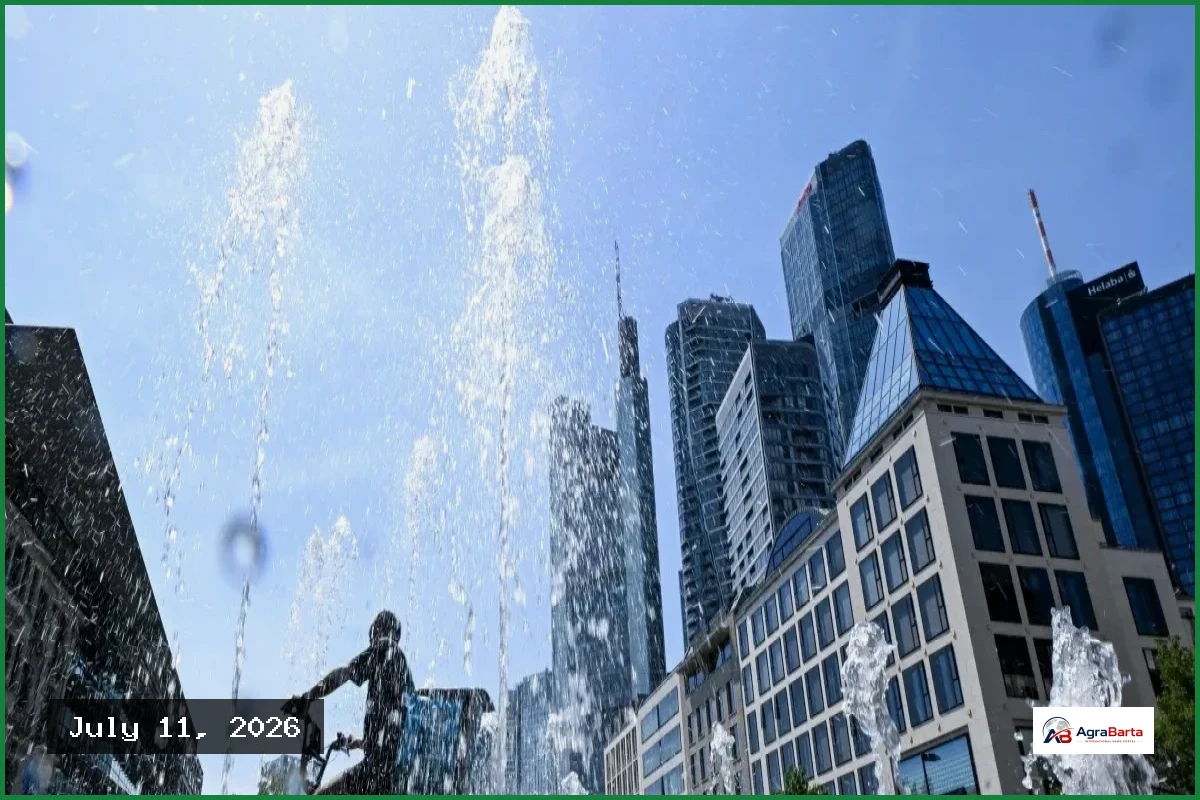
Germany is bracing for another intense heatwave in mid-July, following a brief period of cooler temperatures and rain. This upcoming weather shift comes shortly after a record-breaking June heatwave that saw temperatures soar to a deadly 41.5C in Saxony-Anhalt, causing forest fires and disrupting daily life.
According to meteorologists, the country is entering a new 10-day weather phase as the low-pressure system currently affecting the north and east moves toward Eastern Europe. In its place, the Azores High is expanding into Central Europe. ZDF weather expert Özden Terli explained to German media outlet t-online that once the current storm system moves over southern Scandinavia toward the Baltic states, the cool and changeable weather will end, allowing a high-pressure system to significantly raise temperatures.
While Thursday will start cool before warming up, Friday will see temperatures rise to 27C in Berlin, 31C in Munich, and 32C in Saarland and its surrounding areas. The German Weather Service (DWD) also projects highs of around 34C in the southwest. Although the most intense heat will initially linger over France, it is expected to spread into Germany by the weekend.
By Saturday, maximum temperatures are forecast to climb between 25C and 30C generally, with the west and southwest experiencing localized peaks of up to 34C. Some model simulations even suggest peak temperatures could reach between 37C and 39C. Terli noted that weather models largely agree on the establishment of an “omega pattern,” which is expected to persist until the beginning or middle of next week.
What do forecasters predict in the next days?
Calculations from the European Centre for Medium-Range Weather Forecasts indicate that this dominant high-pressure system will persist until at least Saturday, July 18th. Whilst isolated, brief thunderstorms cannot be ruled out in the east, the rest of Germany will see sunny and dry summer weather.
Unlike the previous heatwave, however, the air is expected to remain comparatively dry at first. The dew point, which is a measure of moisture content in the air, will mostly be within a comfortable range. That means the heat is likely to feel less oppressive than in muggy, warm weather.
Terli emphasized that these rising temperatures are heavily driven by climate change rather than just temporary weather patterns. Global warming has raised baseline temperatures, meaning hot air from southern regions heats up even further under stable high-pressure systems. This phenomenon is now a permanent fixture of Europe’s climate system, with southwest Germany already experiencing its third heatwave of the year. Terli warned that heatwaves are becoming more frequent, hotter, and longer-lasting, with additional heatwaves possible later this summer.
READ ALSO: Germany’s official advice for how to stay safe in a heatwave
Meteorologist Terli stresses that the high temperatures are not solely due to the current weather conditions – they are due to climate change.
READ ALSO: IN NUMBERS – Yes, summers in Germany really are getting hotter