While many people fondly recall childhood summers as idyllic periods of sunshine, current meteorological data confirms that France is experiencing a distinct and measurable warming trend. It is no longer just a matter of perception; temperature records kept by the French national weather forecaster, Météo France, since 1900 provide clear evidence that the country is getting hotter.
According to the agency, the average temperature in France has warmed by 1.7C since the turn of the 20th century.
This warming trend has accelerated significantly in recent decades, with every decade since 1970 proving to be warmer than the one preceding it. Notably, the period between 2011 and 2020 saw a rise of 0.6C, which stands as the highest increase observed between two decades in France since 1900.
The shift is particularly evident during the summer months, which Météo France defines as the period from June 1st to August 31st. The hottest summers recorded since 1900 are all recent, specifically 2003, 2018, 2019, 2022, and 2023. The year 2022 remains the hottest on record, featuring 33 days that met official heatwave criteria, including five in June and 14 each in July and August.
Although 2026 is only halfway through, data indicates that July was the hottest month ever recorded, and an early June heatwave suggests the year will likely rank among the highest for summer temperatures. A visual analysis of summer temperatures from 1900 to 2024 shows a clear clustering of red bars—representing above-average temperatures—in the most recent years.
Beyond average temperatures, the frequency and severity of heatwaves have increased dramatically. Météo France defines a heatwave as a period of several days when the temperature is above the regional average, meaning the threshold for a heatwave varies by location. Between 1947 and 2024, the agency recorded 49 heatwaves.
In the decade between 1947 and 1957, only four heatwaves were recorded. This figure has increased five-fold over the last 10 years, with 20 heatwaves recorded between 2014 and 2024. Météo-France forecaster François Gourand noted that these events are occurring earlier, lasting longer, and becoming more intense.
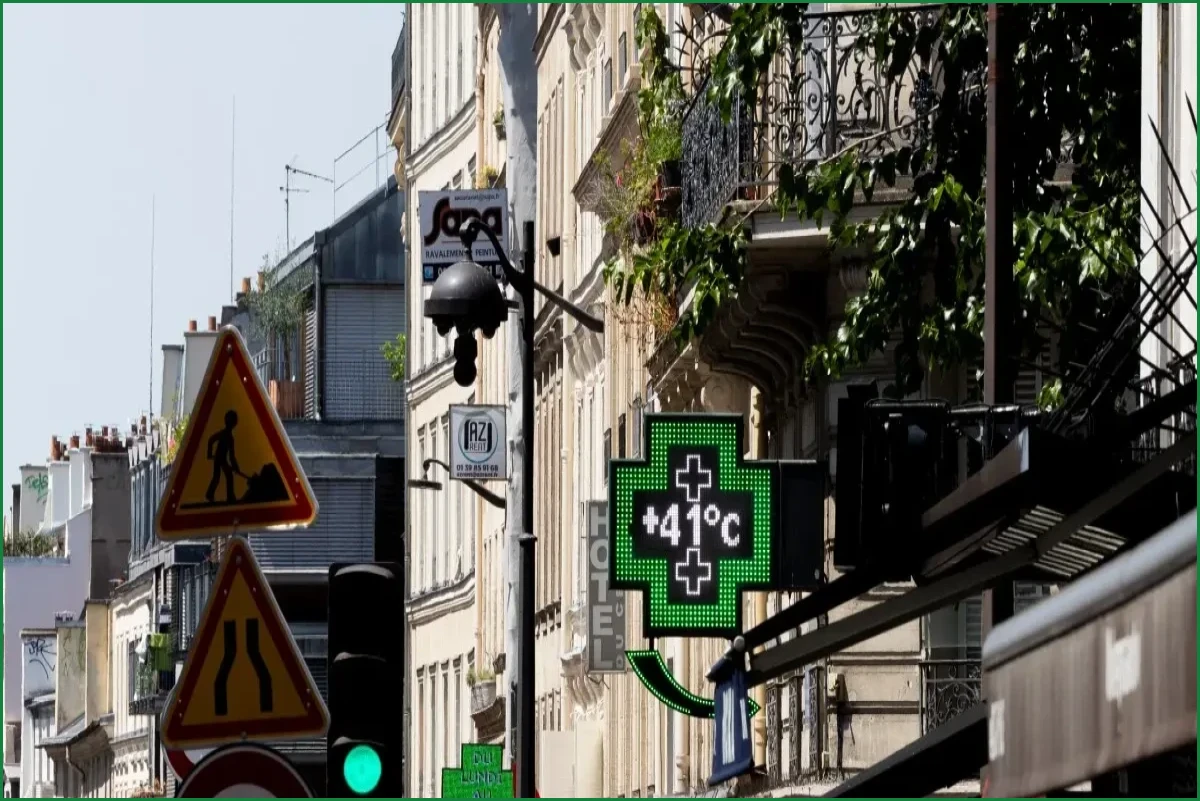
The national record for the highest temperature was set in 2019 in Hérault, which reached 46C in the shade. That same year, multiple local records were broken, including in Paris, which recorded 42.6C. By 2026, heatwave warnings were issued as early as May for the first time since the alert system's 2004 inception, with temperatures reaching 37C in the southwest and 33C in Paris.
By early August 2026, four heatwaves had already been documented.
The public and government response to these shifts was catalyzed by the summer of 2003, when a particularly severe and long-lasting heatwave led to the deaths of 15,000 people, many of whom were elderly individuals living alone. This tragedy forced the country to confront the fact that heatwaves are not merely uncomfortable, but potentially fatal. In response, local and national governments implemented comprehensive heatwave plans.
Every authority now has protocols to protect the vulnerable, including the creation of registers for at-risk individuals and the establishment of public 'cool rooms.' In urban areas, leaders have focused on installing drinking water points, cool air misters, and ensuring access to shaded and air-conditioned spaces.
While heatwaves remain lethal, the death toll has never reached the levels seen in 2003, thanks to these protective measures. However, the risk remains: in 2023, which was France's fourth hottest summer on record, 400 people died during a two-week heatwave in August. Overall, 5,000 excess deaths were recorded between June 1st and September 15th, 2023, of which 1,500 were attributed to the heat.
Meanwhile, in 2026, an exceptionally early June heatwave alone accounted for 5,700 excess deaths, with nearly 3,000 of those occurring in the greater Paris area.
Météo France currently utilizes a traffic light warning system, ranging from green to red, to alert the public to life-threatening heat risks. Under a red alert, emergency plans are activated, and local authorities gain additional powers, such as the ability to cancel large public events.
Furthermore, the agency now issues a daily wildfire risk map during the summer following the 2022 season, which saw 72,000 hectares—an area seven times the size of Paris—burned.
When a red alert is in place for wildfire risk, local authorities have the power to close forests and national parks or cancel fireworks displays. While media coverage of these events has increased, the data confirms that France’s climate is undeniably shifting toward hotter, more dangerous summer conditions.
Picture your childhood, and you'll often see it bathed in sunshine – especially if you were lucky enough to have holidays in the south of France as a youngster.
Some things are hard to measure, but fortunately temperature isn't one of them.