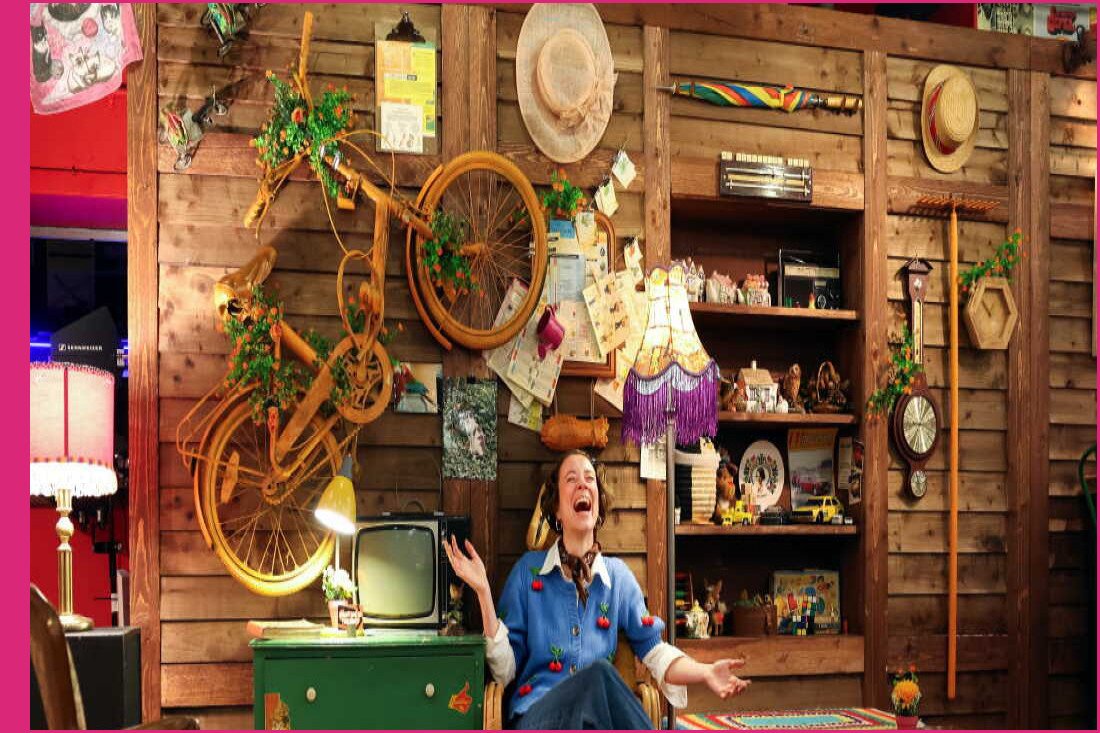
The Edinburgh Fringe Festival, which recently wrapped up its 79th edition, remains a place where almost any concept can find a stage and any performance can serve as an industry audition. Among the more than 4,200 productions featured this year were a Shrek burlesque parody, a one-man show inspired by the 2002 Disney Channel original movie Cadet Kelly, and an hour-long improvised performance titled David Elms Describes a Room.
While the latter sounds dry on paper, it proved highly entertaining to audiences. This massive, overwhelming marketplace of comedy, theater, and cabaret serves as a critical hunting ground for producers searching for unique, unconventional projects that have the potential to travel far beyond the Scottish capital.
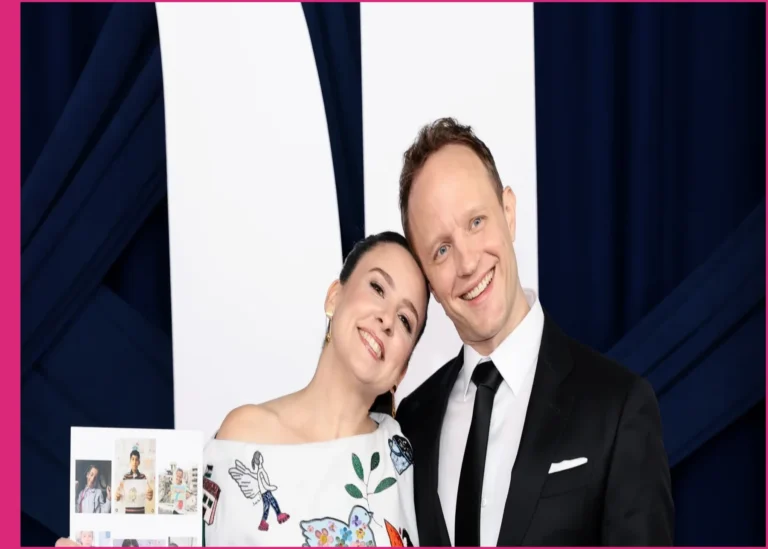
Few producers have a better track record for identifying these breakout hits early than Francesca Moody. The 38-year-old London-based theater producer helped bring both Fleabag and Baby Reindeer to the Fringe years before they transitioned into global television phenomena. While her success has earned her a reputation as a premier talent scout, Moody does not rely on complex market strategies or numerical analysis. In an interview from a makeshift office in Edinburgh during the festival, Moody explained that her decision-making process is guided entirely by her personal taste and gut instinct.
She warned that trying to reverse-engineer a commercial success can destroy the very qualities that make a show special. According to Moody, whenever she deviates from her instinct to select a project because she thinks it will be highly commercial, head straight to the West End, or get adapted for television, the final production is never as strong.
To understand Moody’s gut-led approach, one must look back to the early development of Fleabag in late 2012, long before it became a cultural phenomenon. When Moody first became involved with the project, writer and actress Phoebe Waller-Bridge had written only about a single page of text. At that stage, neither of them knew what the show would eventually become. Waller-Bridge had been invited to perform a short monologue for a storytelling night at a London theater.
Moody, who was already producing another play with Waller-Bridge, asked to read the draft and was immediately hooked. She describes experiencing a distinct, fizzy feeling that comes from reading something truly exciting, even when it is far from complete. This intuitive excitement was enough for Moody to secure a performance venue at the Fringe.
What followed was a highly stressful six-month period of preparation. Moody, who was only 26 years old at the time, learned two vital lessons during this period: the critical importance of trust in the relationship between a producer and an artist, and the value of a hard deadline. Just one week before rehearsals were set to begin, Moody visited Waller-Bridge's home to check on the script's progress. She found that the play was still unwritten, with only a collection of Post-It notes scattered across the floor.
Maintaining her calm demeanor, Moody reassured Waller-Bridge, locked her in a room, and told her to write. While Moody projected confidence to the artist, her internal anxiety was severe; a colleague later found her hyperventilating inside a closet, terrified of what would happen if the play was not completed. The script was ultimately finished, with the final ending—chosen from at least three alternate conclusions—written on the train journey up to the festival.
The show arrived in Edinburgh with plenty of rough edges. Initial reviews were mixed, with theater critic Lyn Gardner writing in The Guardian that Waller-Bridge had not produced a flawless piece of writing, though she acknowledged the work was hugely distinctive. For Moody, this lack of polish is precisely what makes the festival valuable. She views the Fringe as a dedicated space for messy, complicated, unfinished, and scrappy work, believing that the magic is often found in those unpolished elements.
Moody’s own connection to the Fringe began as a practical compromise. After she told her parents that she wanted to pursue an acting career, they suggested she take an internship on the organizational side of theater as a less precarious alternative. This led to her first experience at the Fringe, where she spent her time away from home handing out flyers and moving stage sets. She fell in love with the environment and has returned every year since.
Later, after graduating from drama school, she ran into a friend at the festival who invited her to help produce a project. While that specific project did not lead to a major breakthrough, it made Moody realize that producing served everything she loved about acting in a more effective way, offering her greater autonomy and a direct role in how creative works were shaped.
At age 23, Moody produced her first Fringe show, a play called The Ducks written by Michael McLean. The production helped launch her career, connecting her to the wider London theater ecosystem and eventually leading to her breakthrough with Fleabag in 2013. Five years later, she founded her own company, Francesca Moody Productions. Around that time, friends sent her a script for Baby Reindeer, a monologue written by Scottish actor Richard Gadd based on his personal experiences with a stalker.
Moody began reading the script on a train ride from Norwich to London and became so absorbed that she stayed in her seat at the station after the train arrived just to finish the final pages. Determined to bring the story to the stage, she resolved to produce it by hook or by crook. Baby Reindeer premiered at the Fringe in 2019 and was adapted into a hit Netflix series five years later.
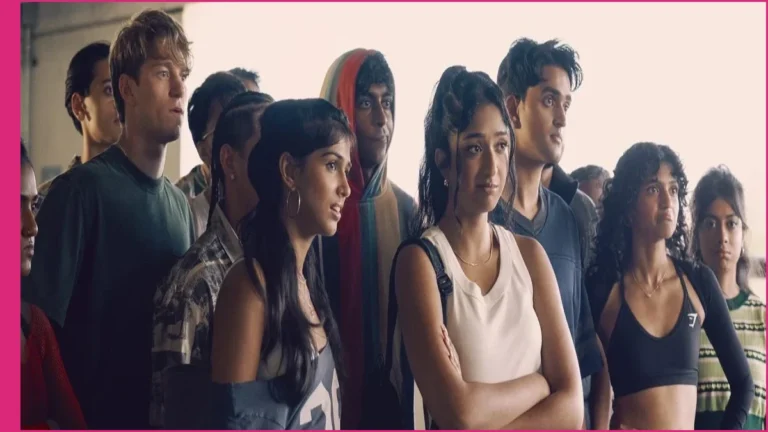
Moody’s reputation now acts as a powerful endorsement at the festival. At the recent Fringe, she produced three distinct shows: Crybabies: The Scaring, a horror sketch comedy; Roleplay, a one-woman drama about feminism, sex, and online personas; and Garry Starr: Classic Penguins, a raucous comedy featuring a nearly naked performer. Moody sees a common thread across these works: comedy that avoids taking itself too seriously, even when dealing with serious underlying themes.
Roleplay generated significant anticipation and sold out its entire run before the festival started. India Scarlet Kolb, a creative director from London who bought tickets two and a half months in advance, noted that Moody's name was a major factor in her decision, as she wanted to see what the next breakout hit of the Fringe would be.
This high profile can be a double-edged sword for the artists Moody supports. Hannah Reilly, the writer and star of Roleplay, noted that works produced by Moody are rarely viewed in a vacuum, with some audience members arriving with high expectations, hoping the show will surpass Fleabag and Baby Reindeer combined. While Reilly noted the pressure of presenting her first solo show under these conditions, she praised Moody for pushing her to take risks and lean into the darker aspects of her narrative to realize the boldest version of her vision.
Not every project Moody backs turns into a commercial success. In 2023, she produced Berlusconi: A New Musical, a satirical comedy about the former Italian Prime Minister that became both a critical and commercial flop. Moody accepts these failures as part of the creative process, maintaining that developing theater with a future television adaptation in mind is detrimental to good storytelling. A prime example of this philosophy is Garry Starr: Classic Penguins, which made its New York debut earlier this month. The production stars Australian clown Damien Warren-Smith as his alter ego Garry Elizabeth Starr, who attempts to save both penguins and literature from extinction by acting out the titles of Penguin Classics.
Performing nearly naked except for a tuxedo jacket, a black top hat, and penguin flippers, Warren-Smith relies heavily on audience participation. Moody first saw the show at the Fringe two years ago and immediately decided to produce it. Warren-Smith describes the production as pure, non-political escapism. For Moody, the goal is not to search for the next massive commercial hit, but to support unique, true, and strange stories that are worth the creative risk.
"You know when you get that fizzy feeling when you read something that you think is really exciting, and it doesn't really matter that it's not all there yet?"