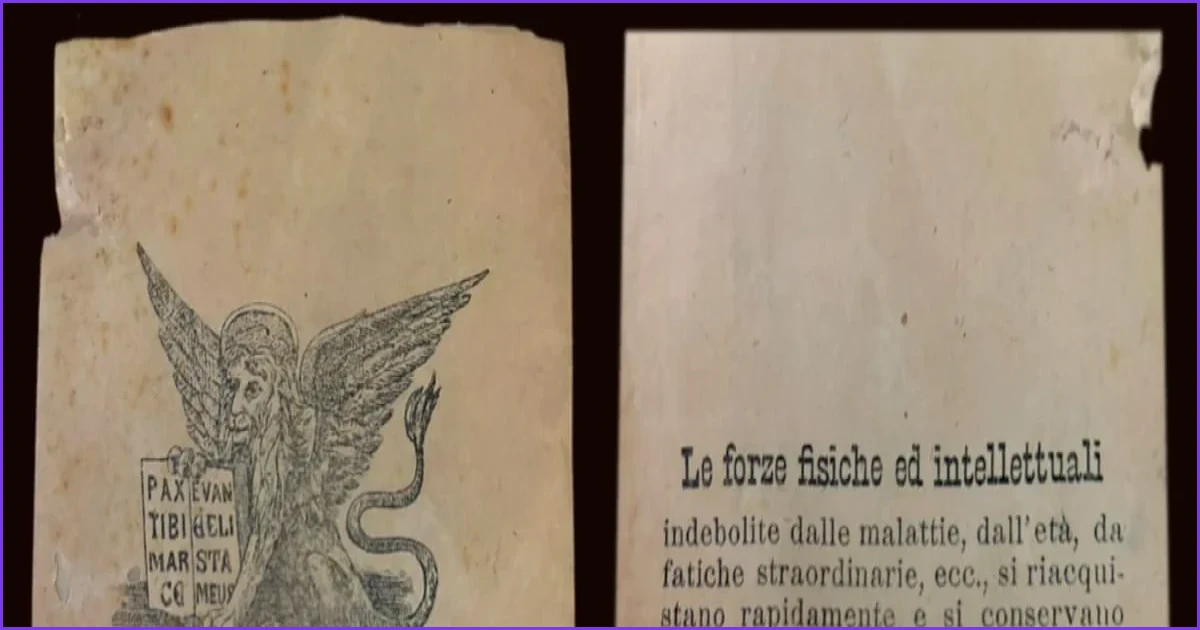
Father Manuel Russo, the rector of the San Marco convent in Florence, has uncovered a historical document that suggests a potential link between an ancient Italian medicinal potion and the world-famous soft drink, Coca-Cola. While organizing the pharmacy archives of the convent, which was founded on Via Cavour in 1436, Russo discovered a yellowed promotional flyer detailing a recipe for a restorative wine elixir, or elixir vinoso ricostituente.
The tonic was designed to help patients recover from fatigue caused by illness or aging. According to the document, the mixture consisted of 10g of Bolivian coca leaves and 30g of kola nut, combined with wine. Although the flyer is undated, it is believed to originate from the mid-19th century, a period when the friars actively traded in coca leaves imported by missionaries. These leaves were later globally banned in 1961 due to their natural alkaloid content, which is used to produce cocaine.
The discovery has drawn immediate comparisons to the recipe developed by American pharmacist John Pemberton. In 1886, Pemberton created a syrup using coca leaf extract and kola nuts; however, due to local alcohol regulations, he substituted wine with carbonated water, eventually leading to the creation of Coca-Cola. While some local news outlets have questioned whether the drink’s true origins lie in Florence, Father Russo remains cautious, noting that such medicinal tonics were common in Italy and France at the time. He joked that he hoped to avoid legal action from the beverage giant, emphasizing that the San Marco recipe was simply one of many similar preparations from that era.
Russo also identified empty bottles that once held the potion, which he noted was a bestseller until the ban on coca leaves. The archive discovery is part of a broader collection at the San Marco pharmacy, which originally opened in 1460 to serve the local poor. Though the pharmacy relocated within the city in 1995, the original premises remain intact. The site is notable for historical artifacts, including a crocodile from the Nile River that has hung from the ceiling since the 1600s—a common practice for 19th-century chemists to signal the availability of rare ingredients. Alongside the tonic recipe, the archives contain labels for cognac, pure oxygen, and rectified petroleum spirit, all of which underscore the historical breadth of the convent's medical inventory.