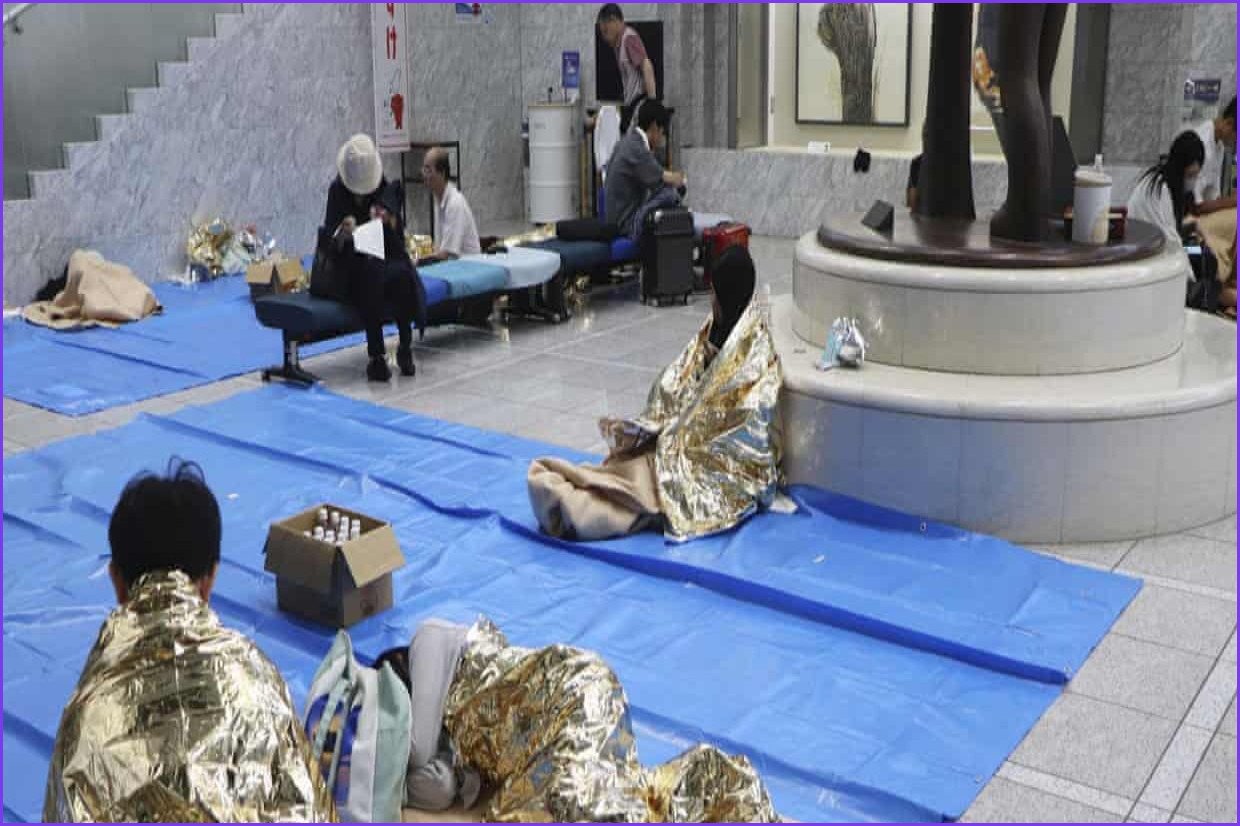
At least five people have died in eastern Japan following a bout of unprecedented torrential rainfall that left nearly 7,000 travelers stranded at Tokyo’s Narita airport and forced thousands to seek refuge in government facilities. The severe weather hit Chiba prefecture on Thursday night, prompting the Japan Meteorological Agency to issue its highest level-5 warning for heavy rains and landslides for the first time in the region.
The impact of the storm was widespread, with approximately 45,000 homes losing power as the region experienced 115mm of rain in a single hour—a volume roughly equal to the area's typical monthly rainfall for August. Authorities issued evacuation orders for more than 400,000 people across Chiba and neighboring areas. Among the fatalities, a man in his 60s or 70s was discovered in a flooded road in Ichikawa, while a 66-year-old woman died when her car became trapped in rising waters in Sakura. Two additional individuals were reported dead after failing to escape their vehicles during the flooding. Soldiers have been deployed to the prefecture to assist with ongoing relief efforts.
Chiba Governor Toshihito Kumagai described the situation as extremely unusual during a press conference on Friday morning, noting that he had never encountered a disaster of this nature before. Public broadcaster NHK captured footage of water surging from maintenance holes, rising higher than nearby five-storey buildings in Chiba’s central ward. Local residents expressed shock at the sudden nature of the deluge, with one business owner in Ichikawa noting that the resulting power outage left her concerned about the viability of her shop in the coming days.
The disruption extended to major travel hubs, where 7,000 passengers spent the night at Narita airport. One traveler from the UK, identified as Philip, described a difficult nine-hour journey to reach the facility, where he eventually settled in with a sleeping bag to wait out the conditions. Meanwhile, 1,700 people sought shelter at the Chiba prefectural government building.
While the rain had eased by Friday, officials continue to warn of ongoing flood risks. Kazuhito Shimamoto of the ministry of land, infrastructure, transport and tourism urged residents to remain vigilant, particularly near rivers where flooding risks remain high. Meteorologists have pointed to climate breakdown as a factor increasing the frequency and intensity of such extreme weather events in Japan.
With a sleeping bag in hand, he said he has “just been trying to get some sleep and watching Netflix”.
“Just get on with it, really. Nothing else you can do,” he said.