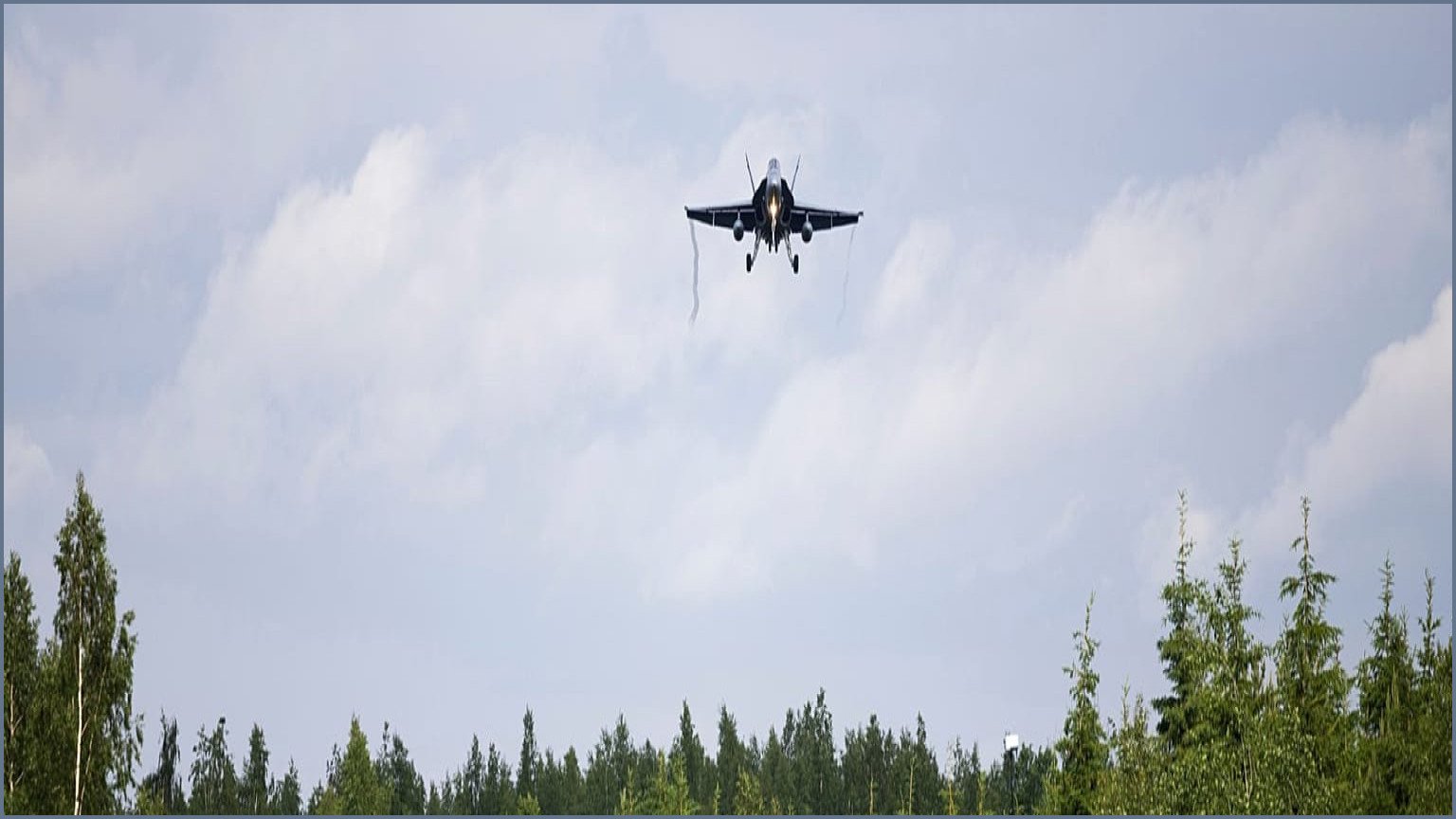
Finland’s defence ministry announced on Thursday evening that it is investigating a suspected violation of the nation's airspace by a Russian aircraft earlier that day. Defence Minister Antti Hakkanen emphasized the gravity of the situation, stating that every potential incursion is handled with seriousness and that a formal investigation is currently underway.
This event is part of an ongoing series of security incidents involving the two nations, which share a 1,340-kilometre border. Earlier this year, Finland suspected two Russian military aircraft of entering its airspace in both May and June, prompting the country to summon the Russian charge d'affaires at that time.
Beyond manned aircraft, Finnish authorities have expressed increasing concern regarding the risk of drones drifting into their territory. Major General Pekka Turunen, chief of Finnish Defence Intelligence (FDI), noted in January that as the conflict in Ukraine intensifies, particularly near the Gulf of Finland, the danger of long-range drones inadvertently crossing into Finnish airspace grows. While the overall security landscape has faced pressure since Russia’s full-scale invasion of Ukraine in 2022, the intelligence agency noted that the situation has remained relatively stable compared to the previous year.
Finland, which abandoned its long-standing policy of military non-alignment to join NATO in April 2023, is not alone in navigating these challenges. European nations remain on high alert following a spike in drone flyovers near NATO borders last September. In response, alliance leaders have committed to building a "drone wall" to track and intercept unauthorized aerial threats. NATO has already taken steps to bolster its eastern flank, including the deployment of new US anti-drone systems and the creation of the Eastern Sentry programme by NATO Secretary General Mark Rutte, designed to deter further incursions.
Tensions remain high across the region. On Thursday, a Romanian F-16 fighter jet destroyed an explosive-laden maritime drone near a major offshore gas project, shortly after another drone entered the country's airspace. While some European officials suggest these incidents represent a test of NATO's defensive capabilities, the Kremlin has dismissed allegations of Russian involvement in such flights as "unfounded."