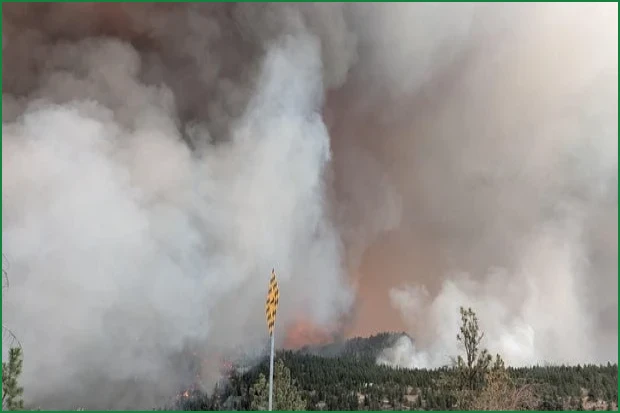
A rapidly intensifying wildfire in western Canada has forced more than 20,000 residents to flee their homes as flames raced toward communities along British Columbia's Okanagan Lake. The emergency situation includes evacuation orders for the entire community of Summerland, which houses approximately 12,000 people, as well as an additional 8,000 residents in and around the neighboring area of Peachland. While the full extent of the property damage remains under assessment, officials confirmed that power has been cut throughout the District of Summerland.
Known as the Bald Range wildfire, the blaze was first identified on Friday evening. Within just a few hours, it expanded to cover roughly 19 square miles. The fire moved with extraordinary speed, overwhelming the small community of Faulder before traveling about 9 miles to reach Summerland. Erick Thompson, an emergency official representing the Regional District of Okanagan-Similkameen, described the event as one of the fastest-growing wildfires the region has ever encountered. The severity of the situation forced Thompson to abandon his post at the emergency operations center to evacuate his own family, noting in a video from his vehicle that traffic was heavily congested as he headed south.
Social media footage from the scene captured the intensity of the disaster, showing multiple homes engulfed in flames while residents attempted to escape along roads flanked by fire. For many, the decision to leave was sudden. Homeowner Kerry Gold and her husband, Mike Elsinga, fled their home around 12:30 a.m. after observing the fire spread past the nearby mountains. The couple, who had recently relocated from Vancouver, managed to pack bags and prepare their cat for evacuation while intending to assist a disabled friend. Elsinga reflected on the difficult choice residents faced, stating that while there is an instinct to stay and protect one's home, the speed of the fire makes it dangerous to stay caught in the path.
Canada has faced increasingly severe wildfire seasons in recent years, leading to widespread evacuations and recurring smoke issues across North America. According to the BC Wildfire Service, British Columbia experiences an average of 1,600 wildfires annually. Previous wildfire-related smoke incidents have previously drawn international attention, including threats of tariffs from President Trump in July following air quality concerns in major cities like New York, Chicago, Detroit, and Washington, D.C.
"I had to leave the EOC to come and get my family to leave this area. We're heading south," he said in a video posted early Saturday from his vehicle as traffic backed up around him.
"It's scary. It's moving fast," Gold said.