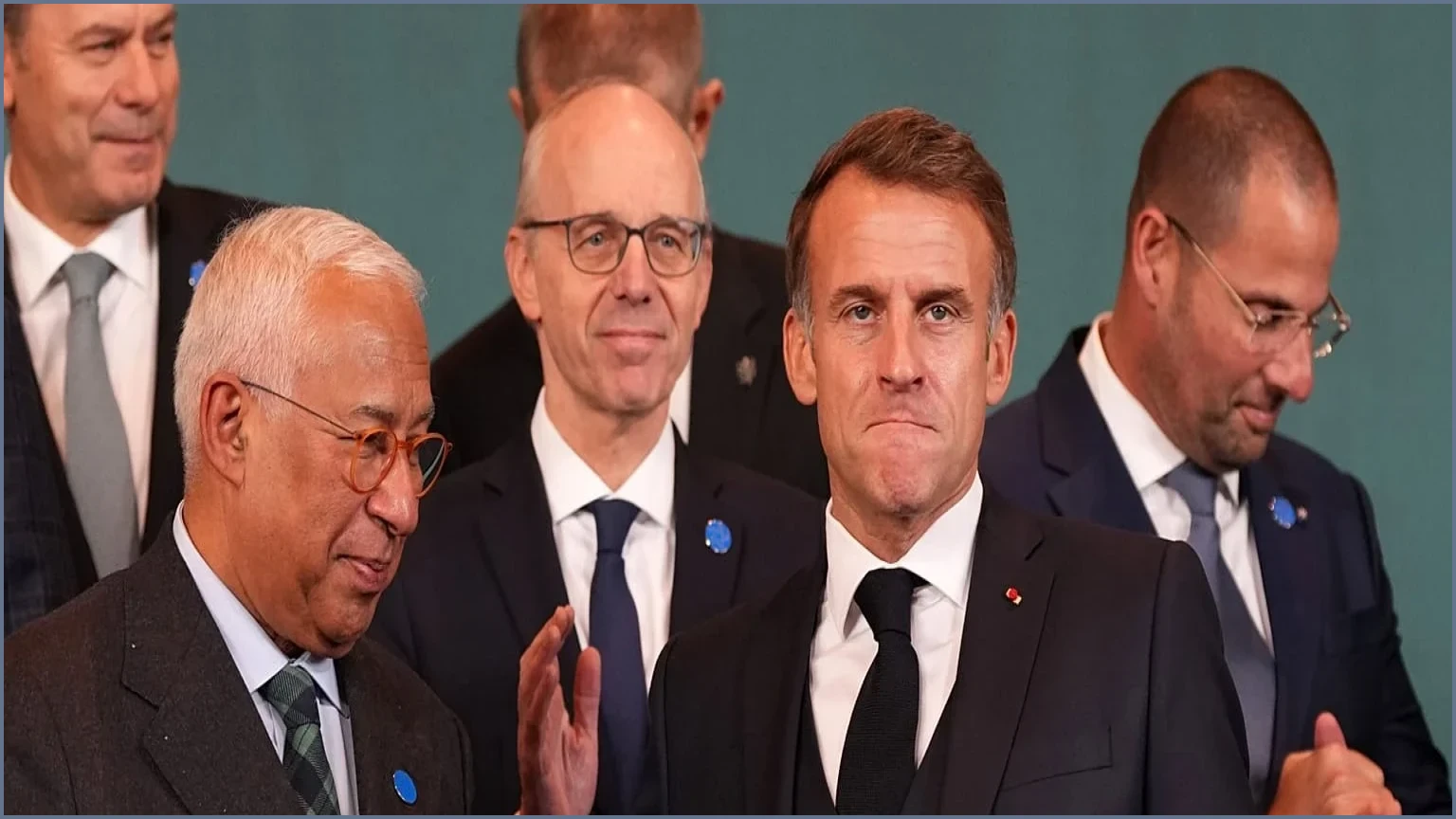
European Union leaders reached a formal agreement on Friday at an informal summit in Dublin, Ireland, to establish a joint team tasked with representing the bloc in ongoing negotiations to end Russia’s war in Ukraine. The newly defined team will include France, Germany, Italy, Poland, and the United Kingdom. While the UK is not a member of the European Union, its inclusion stems from its role in the E3 group. The European Council, the European Commission, and NATO are also set to be represented in the diplomatic efforts.
The decision to expand the negotiating group follows significant pressure from the United States, Ukraine, and Russia, which had all urged the EU to appoint a single representative for the peace process. Italian Prime Minister Giorgia Meloni had been a vocal critic of the previous "disarray" of European voices in the negotiations, advocating for a solitary envoy. Similarly, Poland had issued warnings against allowing Western European nations to make decisions on behalf of the East. In response, EU leaders chose to broaden the existing format rather than appoint a new special envoy.
This outcome leaves EU foreign policy chief Kaja Kallas without the special envoy role she had publicly campaigned for. Earlier on Friday, Kallas argued that representing the bloc on security and foreign policy was firmly within her mandate, citing a June 2024 decision by EU leaders regarding representation for the five-year term. She acknowledged that "the Russians do not want me" due to her "strong" views, but maintained that the focus should remain on the substance of the talks. However, her claim was effectively dismissed by European Council President António Costa, who pointed to EU treaties defining the representative roles of the Council and Commission presidents. European Commission President Ursula von der Leyen also declined to support Kallas, stating that the bloc had already decided on its representation.
The current negotiating format, which has been shaped by the United States, has already seen participation from the E3, EU institutions, and NATO in recent rounds held in Miami, Oslo, Brussels, and Abu Dhabi. Italian officials participated in the Abu Dhabi meeting, and Poland is expected to join the next round. German Chancellor Friedrich Merz expressed satisfaction with the current arrangement in Dublin, noting that the "E3 format has proven very effective" and that Berlin saw no need for an institutional debate on changing the structure.
A critical uncertainty remains whether Russia will agree to negotiate directly with these European representatives, having consistently refused to sit at the same table with them previously. US special envoys Steve Witkoff and Jared Kushner, who traveled to Moscow on Thursday, reported that Russia indicated a willingness to hold face-to-face talks with Europeans. However, the Kremlin has since played down these claims, casting doubt on the likelihood of such a meeting occurring. European Council President António Costa affirmed the bloc's commitment, stating, "We are fully engaged in supporting the ongoing process, and we hope it will deliver concrete results."
"The leaders agreed that our European team for the negotiations on peace in Ukraine is the European Union institutions and the E5 of the Coalition of the Willing."
"We decide on who represents us, and that's what we've done today, and how we are being represented to 27 sovereign countries plus the EU institutions," she said.