An official in Tigray’s new federal-backed administration on Friday urged rebel fighters to lay down their weapons, hours after a rebel commander publicly called for continued resistance following the loss of Mekelle, the northern Ethiopian region’s capital.
Redae Halefom Woldeselassie, chief executive for political and public mobilization in the caretaker administration, stated that rebel forces were collapsing. He called on fighters to join a disarmament and reintegration program, emphasizing, “This is not the time for settling scores, I call upon you to return to your homes and continue your civilian lives.” Speaking from Mekelle, he dismissed any prospect of rebels retaking the city and characterized the conflict as serving a small group of leaders rather than the people of Tigray.
Earlier on Thursday, Lt. Gen. Fisseha Kidanu, identified as commander of the Tigray army on Tigray Broadcast Media, a new rebel television station, pledged to reverse recent military setbacks. He urged local militias and volunteers to “engage the enemy,” despite acknowledging opponents' advantages in drones and heavy weapons. His location was not disclosed. The Tigray People’s Liberation Front (TPLF) has also claimed to have inflicted heavy losses on government forces, though The Associated Press could not independently verify these claims.
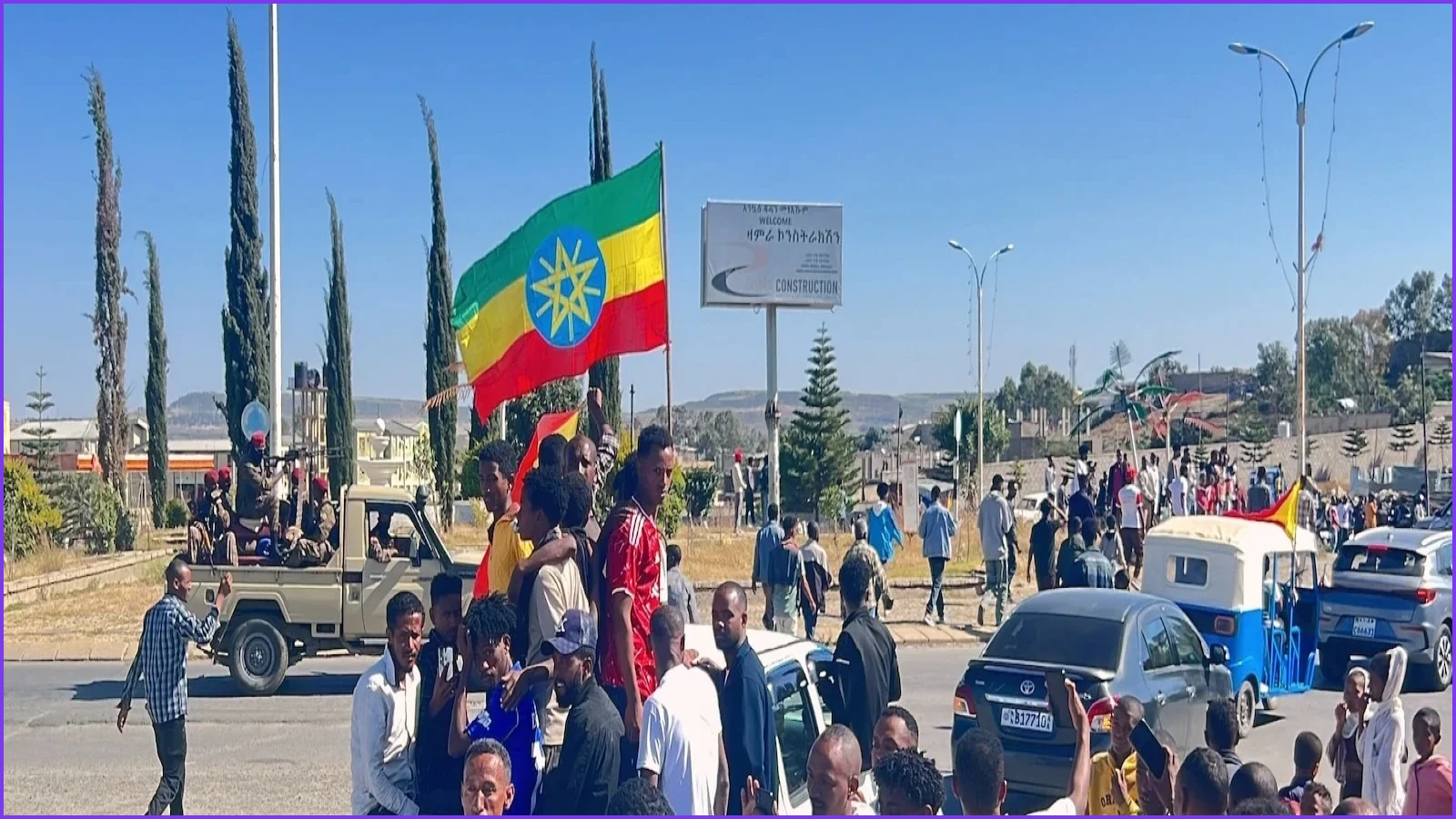
These conflicting calls come nearly three weeks after the TPLF withdrew from Mekelle, allowing government-allied fighters to enter the capital on October 4. Ethiopia’s government subsequently established a six-month caretaker administration, promising to restore services, facilitate the return of displaced people, and prepare for elections. Among the government’s allies is the Tigray Peace Force, composed of former members of the TPLF’s armed wing, a division that has complicated the renewed conflict.
Redae Halefom Woldeselassie confirmed that Ethiopian troops and allied forces are conducting joint security operations, including measures to prevent looting. He also promised preparations for displaced residents to return but did not provide a timetable.
Ethiopian Prime Minister Abiy Ahmed, speaking Monday to the Ethiopian Broadcasting Corporation, accused the TPLF of acquiring weapons and forcibly recruiting young people instead of disarming under the November 2022 Pretoria peace agreement. He asserted that his government had done everything within its capacity to implement the accord.
Meanwhile, two wounded men at Ayder Hospital in Mekelle described being caught in a drone strike. Luel Berhanu, 22, and Samuel Belay, 20, said they were loading goats onto a truck in Finariwa, about 80 kilometers (49 miles) south of Mekelle, when a strike occurred around 9:30 p.m. Tuesday. They reported that four civilians were killed and approximately six people wounded. The AP could not independently verify the casualties or identify the perpetrator of the attack.
Luel stated that the truck’s headlights were on and a drone was hovering overhead shortly before the explosion, which severely injured his right eye and arm. Samuel confirmed they were working as day laborers. Hospital footage showed Luel with a bloodstained bandage over his right eye and dressings on his shoulder and arm, while Samuel lay on his side with an intravenous line attached. A witness interviewed by the AP reported movements earlier that day by fighters identified as Agew Shengo, a militia that has previously fought alongside Tigrayan forces in the neighboring Amhara region. Luel noted that rebel forces had been in the area several hours before the strike but were not present when it occurred.
The renewed fighting has effectively shattered the Pretoria agreement, which aimed to end the region's devastating 2020-2022 war. That earlier conflict caused an estimated 500,000 civilian deaths through violence, famine, and collapsed health services, according to researchers at Ghent University in Belgium.
Magnus Taylor, deputy Horn of Africa director at the International Crisis Group, cautioned last week that controlling towns and roads would not necessarily secure rural areas where Tigrayan fighters regrouped during the previous war. He stated, “We shouldn’t imagine that this conflict is completely over just because the TPLF has lost Mekelle.”