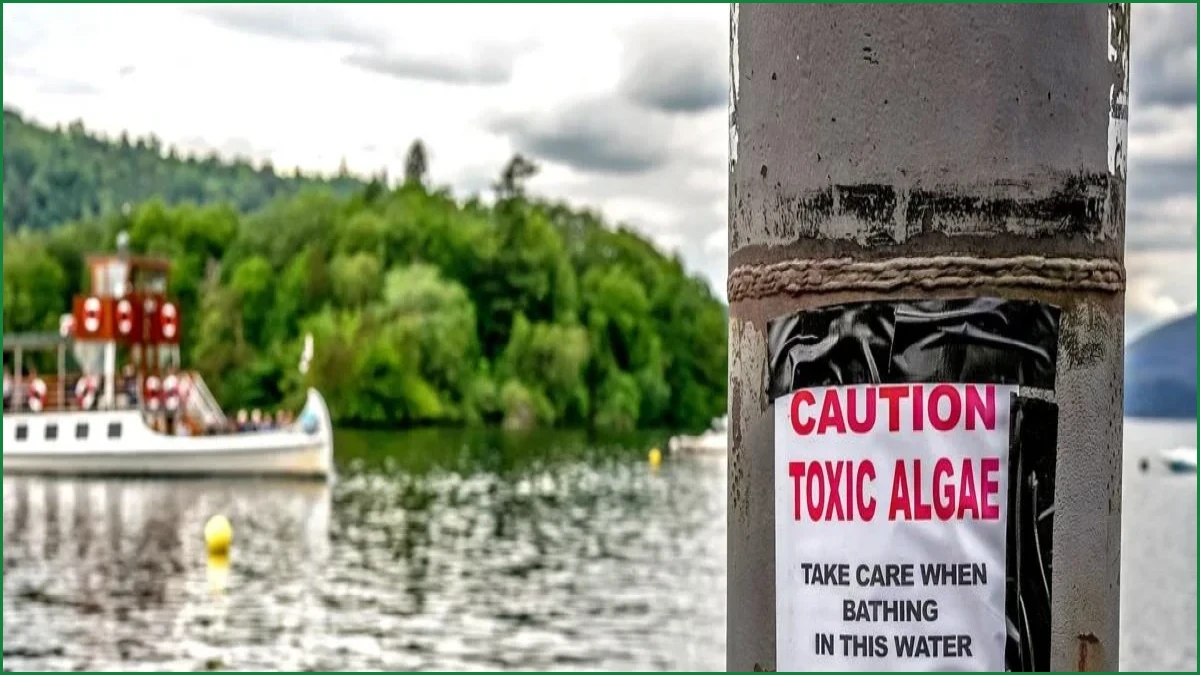
England’s aquatic environments, including its rivers, lakes, and coastal waters, continue to face significant health challenges, according to the first comprehensive Environment Agency assessment conducted in six years. The data reveals that only about 15% of rivers currently meet the criteria for good ecological condition, while fewer than 7% of lakes achieve that status. Notably, every single waterway examined failed to pass a separate, rigorous test for chemical pollution.
Phosphate, a nutrient primarily originating from sewage and agricultural runoff, remains the most significant individual pollutant, with safe levels being exceeded in approximately half of England’s rivers. Despite a commitment to invest a record £22bn in environmental improvements by 2030, the overall state of the nation's waters has seen little change since 2019.
The government is currently on track to miss its legally binding target of restoring 77% of England’s waters to good ecological status by 2027, a failure the Office for Environmental Protection has warned will occur by a considerable margin.
Consequently, the watchdog is investigating both the government and the Environment Agency over possible rule breaches. It's now investigating both the government and the Environment Agency over possible rule breaches.
Environment Secretary Angela Eagle acknowledged that these findings highlight the necessity for comprehensive reform across the water sector. She emphasized that the government has introduced new legislation to hold water companies accountable and is committed to prioritizing the public interest through increased investment.
While much public discourse has focused on sewage releases by water companies, scientists and campaigners emphasize that agriculture represents an equally severe source of pollution that often receives less scrutiny.
Erica Popplewell of the campaign group River Action highlighted that intensive poultry farming, which involves massive facilities housing hundreds of thousands of birds, poses a growing threat to rivers like the Wye and the Severn.
She noted that high levels of waste entering waterways cause eutrophication, effectively damaging the river's ecology and resulting in what she described as a dying river, and urged the government to address agricultural pollution with the same urgency as sewage. The National Farmers' Union of England and Wales has been approached for comment.
Other contributors to water degradation identified by the Environment Agency include petrol, pesticides, and road runoff contaminated with microplastics. Fertiliser added by farmers to fields can run off into rivers overloading it with nutrients. The agency has cautioned that this year's results cannot be directly compared to 2019 figures due to changes in assessment methodology.
For instance, the sharp decline in lakes ranked as being in good condition is largely attributed to updated assessment techniques rather than a sudden deterioration.
Alan Lovell, chair of the Environment Agency, admitted that too many water bodies are failing to meet expected standards, and stated that the agency is currently transforming its enforcement operations with its largest workforce to date.
However, leading water quality scientist Professor Penny Johnes of the University of Bristol argued that the actual situation is likely worse than the official classifications suggest. She characterized the current assessment scheme as not fit for purpose, noting that it monitors too few pollutants and fails to account for nitrogen and other substances known to drive the decline of river systems.
Prof. Johnes further stated that the failure to regulate new chemicals, such as antibiotics and PFAS—often referred to as forever chemicals—contributes significantly to the problem.
While the Environment Agency attributed the universal failure of chemical tests to legacy substances like heavy metals from past mining, there are currently 23 enforcement notices in place requiring water companies to reduce PFAS levels. Water UK, representing the water industry, has advocated for a ban on PFAS to mitigate treatment costs and health risks, while reiterating its commitment to the £22bn investment plan intended to secure water supplies and eliminate sewage discharges.
The findings are particularly concerning as much of England experiences drought conditions, leading to low water levels and widespread hosepipe bans for over 20 million people. Reduced flow rates can concentrate pollutants, placing aquatic life at greater risk, a situation expected to worsen as climate change brings hotter and drier summers.
While the Environment Agency noted that other European nations, such as Germany and the Netherlands, report even lower percentages of healthy waterways, Prof. Johnes cautioned that international comparisons are often misleading due to significant differences in national monitoring methodologies.