Democratic lawmakers are calling for a formal congressional briefing to investigate a clandestine security operation involving Donald Trump, during which the former president was secretly moved to a different aircraft while over 100 staff members and journalists remained on board the original Air Force One. The incident, which has sparked significant controversy regarding the safety of those left on the plane, occurred following reports that US intelligence identified a credible threat from Iran against the president last month.
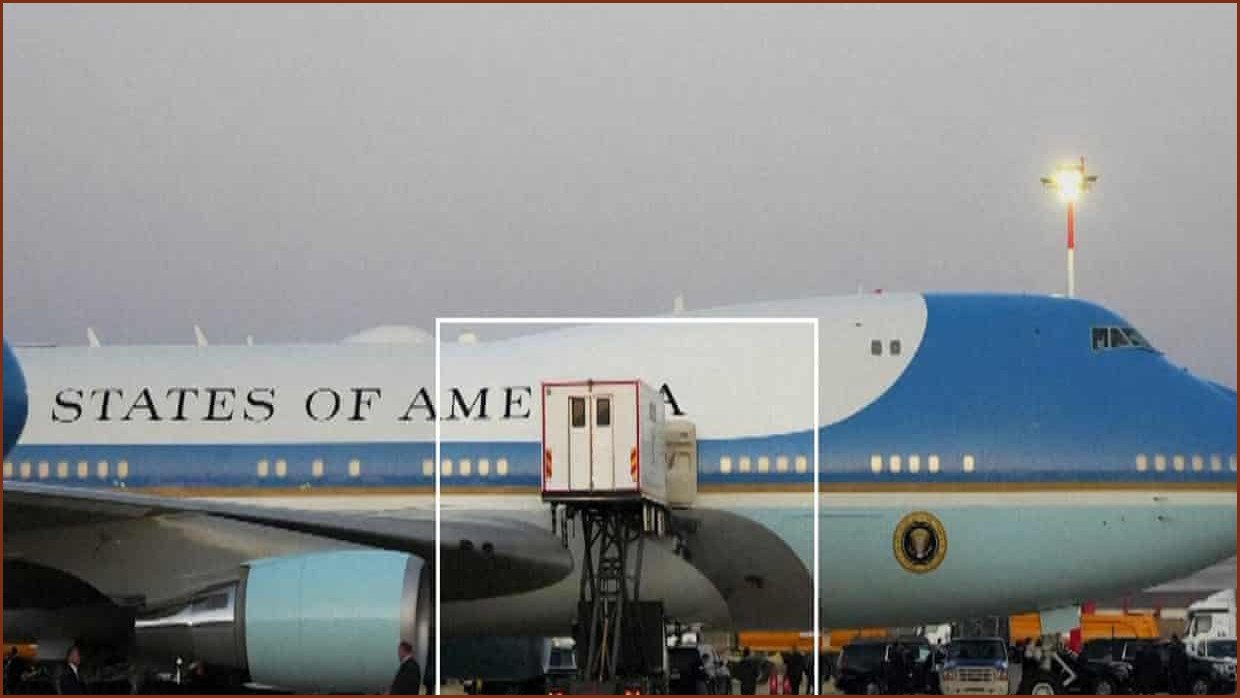
According to accounts, the deception was highly elaborate. While the public and the press pool believed Trump was traveling on the presidential aircraft, the president was reportedly spirited away through a side door and transferred to an air force C-32A via a catering truck. The C-32A carrying Trump flew to RAF Mildenhall in Britain, arriving at about 10.20pm. The older Air Force One and the travelling press pool arrived minutes later. Photographers subsequently captured Trump descending from the presidential aircraft, apparently after he had been secretly reunited with it. Journalists were instructed to keep their window shades closed throughout the journey, and many remained unaware of the security situation until much later.
Senator Richard Blumenthal of Connecticut labeled the operation as "unprecedented and surreal" and "downright scary" during a CNN appearance. He emphasized the necessity of a congressional inquiry, questioning what specific precautions were taken to ensure the safety of the passengers left on the plane that had been deemed too dangerous for the president. Steven Cash, a former CIA intelligence officer and senior adviser to the Department of Homeland Security, criticized the move, noting that it appeared the administration attempted to reduce the danger to the president by using the passengers as a potential decoy.
Cash further raised concerns regarding Intelligence Community Directive 191, a federal "duty to warn" policy that requires authorities to alert individuals who are the specific, credible targets of threats. He argued that if the passengers were not warned of the danger, the government may have violated this directive. The directive, adopted by the director of national intelligence in 2015, does a great deal to clarify these obligations. While some, including former White House press secretary Ari Fleischer, defended the administration's actions as a necessary measure to protect the president, others expressed disbelief at the nature of the operation. CNN anchor Jake Tapper noted that while presidents have used deception for safety in the past, he had never encountered a scenario where a plane full of staff and reporters was knowingly used as a decoy.
The White House has not directly confirmed the details of the operation, with communications director Steven Cheung stating that the president faces numerous threats and that officials use "every tool at our disposal" to ensure his protection. The revelation follows an abrupt change in travel plans where Trump, who had flown a newly refurbished Qatari-gifted Boeing 747 to a Nato summit, announced he would return on an older version of Air Force One. At the time, he claimed the newer aircraft was being sent to RAF Mildenhall for inspection by US troops.
Experts remain divided on the nature of the threat. Ankit Panda of the Carnegie Endowment for International Peace expressed skepticism regarding the plausibility of an Iranian strike on the aircraft, while Dr. Jeffrey Lewis of the Foreign Policy Research Institute suggested the concern may have been related to man-portable air defense systems. "Iran doesn’t have surface-to-air missiles that could target an aircraft taking off from Ankara," said Lewis, noting that while Iran could in theory strike a plane on the runway with a ballistic missile, it seems very unlikely. Conversely, former US ambassador to Turkey James Jeffrey suggested that the extreme secrecy surrounding the transfer indicated the presence of highly credible intelligence, possibly sourced from 1 of the 12 or 16 nations involved in regional intelligence sharing.
Ned Price, a former national security council official, criticized the administration for choosing to lie to the press corps rather than enlisting their cooperation. He argued that the press would have likely agreed to maintain confidentiality regarding security arrangements without the need for an elaborate deception. The incident has drawn comparisons to a 2000 operation by Bill Clinton, who flew into Pakistan on an unmarked jet while his official plane served as a decoy, though observers note the current situation is unique due to the risks placed upon the civilian passengers on board.