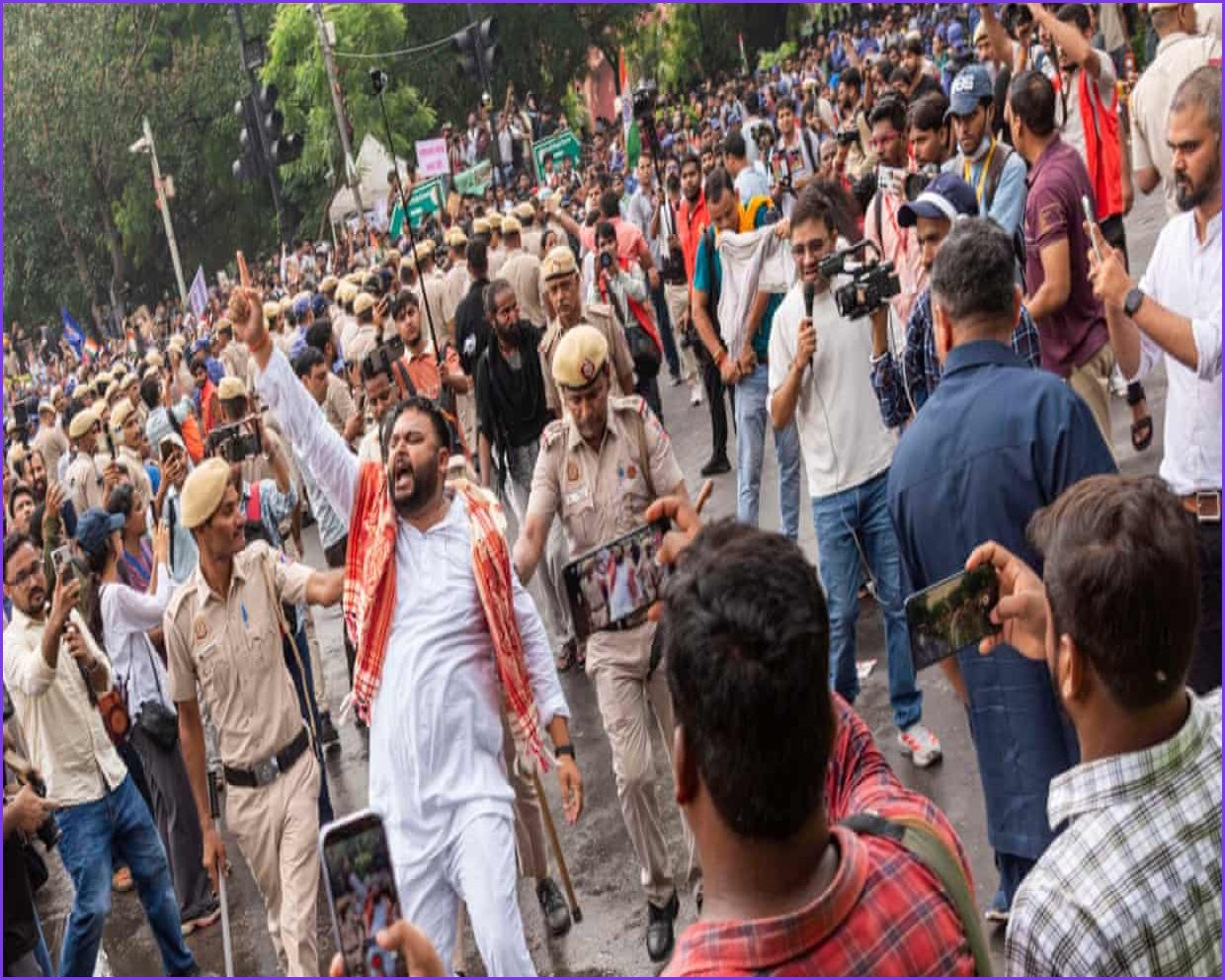
Thousands of demonstrators continued to occupy central Delhi on Tuesday, signaling that the unprecedented wave of dissent against Prime Minister Narendra Modi’s government remains strong. The ongoing protests follow a massive mobilization just 24 hours earlier, where more than 50,000 people—largely consisting of youth in their late teens and early 20s—gathered to demand the resignation of the education minister and systemic reforms to a broken and corrupt education sector.
The movement, organized by the newly formed Cockroach Janata party (CJP), began peacefully on Monday as attendees shared snacks and chanted slogans in the humid weather. However, the atmosphere shifted after 3pm when Delhi police, acting under central government authority, barred the crowd from marching on parliament. Authorities kettled the protesters into a restricted area, shut down the internet, and deployed barricades before using teargas and batons against the crowd.
While police stated they were responding to agitation, witnesses and organizers reported unprovoked violence, including attacks on women and children. Approximately 600 people were injured during the crackdown, and at least one protester remains in intensive care on a ventilator. Taru, a participant, described the police response as a major error that only served to increase the protesters' resolve. Despite the intensity of the previous day, supporters returned to the historic Jantar Mantar site on Tuesday, vowing to remain until their demands are met.
Ranjit Verma, 23, emphasized that the protesters have no intention of leaving, noting that many have traveled hundreds of miles to participate. The movement has garnered broader political attention, with the opposition Congress party also holding a protest in Delhi on Tuesday to condemn the government’s handling of the nation’s youth. Although the CJP initially focused on exam paper leaks and the accountability of education minister Dharmendra Pradhan, participants like 26-year-old content creator Kuhoo Kaushik noted that the movement has evolved into a broader call for political voice and change, adding that police beating up 14-year-olds was particularly horrible.
CJP founder Abhijeet Dipke confirmed at a press conference on Tuesday that protests would continue, though specific future steps remain undecided. Spokesperson Ratna Singh highlighted the bravery of the demonstrators, noting that the movement is fully aware of the ways in which the Modi government has successfully cracked down on previous movements and figures of dissent during its 12 years in power. Despite a brief meeting between a senior government minister and 3 CJP representatives on Monday, Singh stated that there has been no further response from the government and the Prime Minister has remained silent regarding the violence.
The protest site saw a diverse turnout, including 80-year-old Shobha Varma, who attended with her granddaughter. She expressed hope for the future while criticizing the long-standing failure of the current education system.
Police said they were responding to agitation but organisers and witnesses claimed the police carried out unprovoked attacks, including against women and children in the crowd. About 60 suffered injuries and at least one protester is on a ventilator in hospital intensive care.
Some had travelled hundreds of miles to be there and said they intended to camp out until the government responded to the demands of the country’s millions of young people. “The government needs to understand: we are not going anywhere,” said Ranjit Verma, 23.