In an era defined by hectic schedules and a growing sense of isolation, many Americans are turning to an unexpected destination to find friendship, community, and even romance: their local Costco. For Los Angeles-based best friends and social media influencers Analyse Talavera and Carmen Rene Smith, coordinating their busy calendars often means turning a routine shopping trip into a primary social hangout. Instead of spending hundreds of dollars on a night out, the duo uses their Costco runs to catch up while loading their carts with everything from Neutrogena makeup wipes and paper towels to protein bowls and tins of spicy albacore. "Especially in this economy, instead of going out and dropping $200 on dinner – which Analyse and I are good for – we go to Costco and stock up on meal prep for the week and then top it off with a $3 fro yo," Smith explained, adding, "You really can't beat that."
This practice of transforming errands into social events is catching on nationwide. Shoppers Stitt and Bayless treat their warehouse trips as an afternoon date with a purpose. While Stitt pushes and unloads the heavy cart, Bayless guides the way with their shopping list, checking off household staples like sugar, bottled water, and toilet paper. "It's sort of like date night, but it’s an afternoon date with a purpose," Bayless noted. Meanwhile, in San Jose, California, Alyssa Munoz, a mother of four, has swapped the local park for a different kind of playground on Sunday mornings. She meets up with other parents at Costco to push side-by-side carts—one dedicated to the kids and another for the groceries—before wrapping up the playdate at the food court. "They get samples, lunch and ice cream and we get our groceries done," Munoz said.
According to Neil Saunders, the managing director of GlobalData Retail, socializing is a "very overlooked, but also very important" reason why people shop at the warehouse chain. "While Costco’s primary purpose is as a place to stock up on products, it has also become something of a social destination," Saunders observed. Sociologists refer to these gathering spots as "third places"—a term coined by Ray Oldenburg to describe the parks, libraries, and barbershops where people build community outside of home and work. Increasingly, that gathering spot is Costco.
These communal destinations are slowly vanishing from American life. Sprawling suburbs leave little room for walkable hubs, while endless screen time—ranging from TikTok scrolling to Netflix binges—has largely replaced real-world connection. As attendance at churches and civic clubs declines, Americans are left feeling isolated, resulting in a national loneliness crisis. Federal data shows that face-to-face socializing has plummeted since tracking began in 2003, with Americans spending just 35 minutes a day connecting in person, which is down 15% from a decade ago. Consequently, Americans are searching for new places to reclaim that sense of belonging.
For decades, the cultural ideal of a third place was "Cheers"—the neighborhood bar where "everybody knows your name." Today, that coveted spot is just as likely to be a climbing gym, a yoga studio, an independent bookstore, a pickleball court, or a Costco warehouse. Jessica Finlay, an assistant professor of geography at the University of Colorado Boulder, noted that these locations share key "third place" attributes. "They're typically physically accessible, relatively low-cost, low-pressure hub/hangouts, socially welcoming to a diversity of folks, and multigenerational," Finlay said.
For some, the connection to the store is deeply personal. Wil Cid has been a card-carrying member since 1988, back when Costco was known as Price Club. For Cid, the warehouse is his happy place. Visiting three to four times a week, he is such a fixture at his local stores that employees know him by name. Once, upon returning from a vacation, staffers stopped him every few feet to ask where he had been, and friends routinely text his wife, Vivian, to report sightings. "I tell them I’m not surprised," Vivian said. "He’s there all the time." She added, "I like Costco in an average, normal, healthy way."
Of course, Costco is not the first commercial space to function as a town square. Richard Kyte, a professor of ethics at Viterbo University and author of "Finding Your Third Place," points out that corporate America has a long history of engineering social hubs. In the 1950s and 1960s, suburban malls were explicitly designed as community cornerstones, complete with bustling food courts, movie theaters, arcades, and a smorgasbord of shops. Fast-food staples like McDonald’s also became a low-cost refuge where seniors lingered over morning coffee, students gathered after school, and young kids frolicked in play areas. Eventually, Starbucks revolutionized the concept, pairing comfy seating with free Wi-Fi to market itself as the definitive destination between home and work.
After an aggressive, pandemic-era pivot to drive-thrus, mobile pickups, and delivery app orders, the coffee giant is currently trying to recapture its roots under its "Back to Starbucks" strategy. The company is actively renovating cafes with inviting couches and extra power outlets, and even returning to ceramic mugs, softer lighting, and wood paneling to convince Americans to sit down and stay a while. With its fluorescent lighting, concrete floors, and industrial shelving, Costco might seem like an unlikely setting for leisurely socializing. But the retail powerhouse is uniquely positioned to serve as a third place, according to Kyte. For one thing, it is woven into the very fabric of American life, providing a familiar, predictable environment that makes millions of members feel instantly at home across the country.
According to consumer analytics firm Numerator, roughly 72.3 million households shopped at Costco over the past year. Even more striking, over a quarter of all U.S. households are dedicated regulars, visiting at least 12 times a year. On average, a Costco shopper makes 31 trips annually, spending $99 per visit for a total annual outlay of $3,043—figures that comfortably eclipse competitors like Sam’s Club and BJ’s. Once inside the warehouse, shoppers tend to linger, enticed by a potent cocktail of comforting routine, retail adrenaline, and cheap eats. Numerator estimates that members made 144 million trips for food-court fare last year, effectively putting Costco on the same scale as major regional fast-food chains like In-N-Out and Zaxbys. Furthermore, according to foot traffic analytics firm Placer.ai, the average Costco visit lasts 15 minutes longer than a trip to a traditional grocery store and outpaces other big-box superstores by roughly seven minutes. "For many shoppers, a trip to Costco is an experience to savor and enjoy," Elizabeth Lafontaine, director of research at Placer.ai, said.
This environment has allowed structured communities to form. Once or twice a quarter, University of California, Davis students Sharon Hwang, Katrina Le, and Steven Zhang pile dozens of classmates into a caravan of cars and head to the nearest Costco about 15 minutes away. "If something small like a Costco trip can help someone meet new friends or feel a little bit connected, then I feel like we accomplished something," Hwang said. Similarly, what began as a casual weekly lunch for Jaxon Smith and his friends quickly evolved into a lifeline for local men. Gathering at the food court once or twice a week, Smith’s group frequently crossed paths with other acquaintances. But it was the sight of so many men eating alone that sparked an idea: What if a trip to Costco could be an intentional way to combat male isolation? Last November, Smith posted a video on Instagram, officially launching the Men’s Mental Health Costco Club. The weekly meetup became an instant success, drawing crowds so large it has since expanded well beyond the warehouse walls. "Mental health is often portrayed in a negative light," said Smith, who grew up going to Costco with his father and siblings. Through the club, he aims to flip that script and "just help men feel less lonely."
The ultimate testament to Costco's power to bring people together began more than a quarter-century ago in Brentwood, Tennessee. Two friends—a World War II B-24 pilot and an Army veteran from the Cold War era—started meeting every Friday in the food court over hot dogs. Before long, veterans from the Korean, Vietnam, and Gulf Wars joined their ranks at "Camp Costco." Officially known as the Middle Tennessee Veterans Support Group, the weekly assembly provides local service members with the vital camaraderie they first forged in uniform. Paul Napoli, who served in the Marines before the Vietnam War, says he started going in 2010 when the group had just 10 regulars. Today, the roster has expanded to a couple hundred members, with 40 to 60 veterans gathering each week. "Nobody cares what rank you were or what service you were in. Everybody mixes together," Napoli said. "It’s just a wonderful group of people."
This makes Costco something exceedingly unusual: a gathering place where Americans of all backgrounds feel at home in a deeply polarized country. Going to Costco has become one of America's collective rituals, according to sociologist Randall Collins. For many, this shared time roaming the aisles is deeply personal. Collins’s wife regularly catches up with friends over food-court hot dogs, and he knows couples who first met in the wine aisle. The allure crosses over to celebrities, too. Meta cofounder Mark Zuckerberg and his wife, Priscilla Chan, have been spotted browsing electronics in Mountain View, California, while Michelin-starred chef José Andrés routinely tags along on his wife’s Costco trips to scout their impressive French Bordeaux selection. Country star Russell Dickerson and his wife, Kailey, even leave their boys with grandma for warehouse dates, with Kailey joking that any kid-free excursion—especially a Costco run—feels romantic.
Perhaps no couple can claim more miles logged in the name of warehouse devotion than New York residents David and Susan Schwartz. Bonded by a mutual obsession with the brand, the pair traveled over 220,000 miles to visit more than 200 warehouses across 46 states and 13 countries—even enduring a 19-hour flight to New Zealand—to write their book, "The Joy of Costco: A Treasure Hunt from A to Z." Today, they still relish dates at their local store.
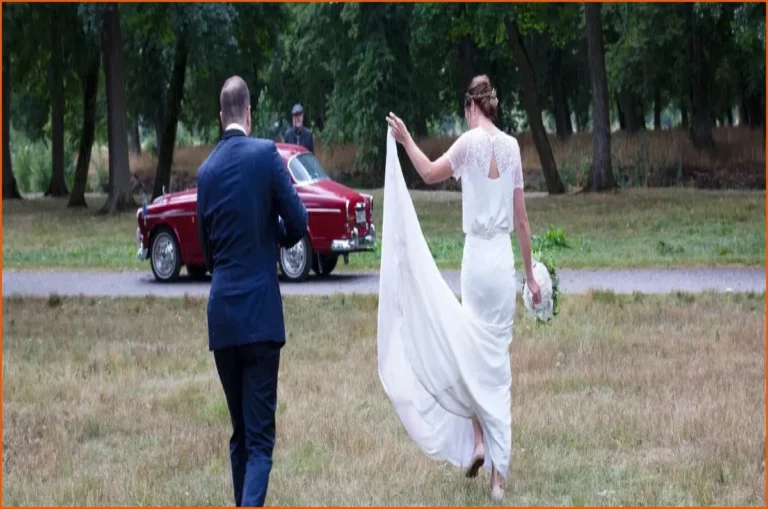
When it comes to romance, "Love Island" has nothing on Costco. Margot Schein, a self-described "Costco nerd," was browsing a dating app when she spotted the profile of Jules Parris, who listed Costco as a favorite. Intrigued, Schein reached out, and the two met at a San Diego warehouse. They spent hours strolling the aisles, grazing on free samples, and dining in the food court. Parris admits she forgot almost everything on her grocery list that day because she couldn’t take her eyes off Schein. After a cross-country move for graduate school, the couple returned to that exact San Diego store on the third anniversary of their meet-cute to get hitched. With the warehouse manager's blessing, they exchanged vows under an archway by the checkout stands.
Robert Bonilla’s Costco love story began with a similar twist of fate. Days before Christmas in 2013, Bonilla was navigating a crowded frozen food aisle when he locked eyes with a woman wearing cowboy boots. Years later, he proposed in that very same aisle, attaching a marriage proposal note to a package of frozen shrimp. The couple eventually wed after-hours inside the store, saying "I do" as employees drove forklifts and restocked shelves in the background. Though the marriage didn’t last, Bonilla’s relationship with Costco did. Now single and still a familiar regular at his local Santa Maria, California, warehouse, he hasn't ruled out a sequel. "You never know," Bonilla laughed. "I shop there all the time. In fact, I’m going there today."