Rebeca Grynspan, a Costa Rican diplomat and former vice-president, has become the surprise frontrunner in the race to become the first female secretary general of the United Nations. Grynspan, whose parents were Holocaust refugees from Poland, currently leads the UN Conference on Trade and Development (UNCTAD), a body known for its detailed reporting on the economic impacts of the occupation of Palestinian territories.
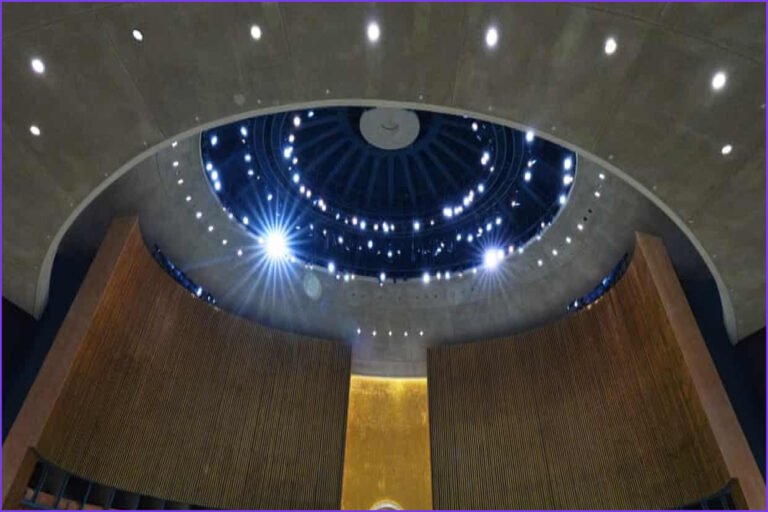
The current UN secretary general, António Guterres, is set to conclude his second term on December 31, 2026. Given the informal system of regional rotation, it is widely expected that his successor will hail from Latin America. In a recent secret straw poll conducted by the UN Security Council, Grynspan secured 10 "encourage" votes, four "no opinion" votes, and one "discourage" vote, marking a strong start to the selection process which is expected to conclude in October.
Western diplomats suggest that Grynspan is viewed as a continuity candidate with tacit support from Guterres. However, concerns remain regarding the potential for deadlock depending on the source of any future objection votes from permanent Security Council members. The election arrives at a challenging time for the UN, which is currently navigating a 20% reduction in staff and grappling with its role as a mediator on the global stage.
If successful, Grynspan would be the first Jewish secretary general of the UN. She has frequently drawn upon her personal history to emphasize the importance of peace, noting that her parents found dignity in Costa Rica after fleeing World War II. Her personal connection to the region includes a sister who moved to Israel at age 17, with her niece and nephew having served in the Israel Defense Forces.
Under her guidance, UNCTAD has produced critical data, including a February 2026 report revealing that the Palestinian economy lost an estimated $212.2bn between 2000 and 2024 due to occupation policies and military operations. Additionally, in November 2025, she highlighted that Gaza’s GDP per capita had fallen to $161 per year, representing one of the most severe economic contractions in modern history.
Other candidates, such as former Chilean president and UN human rights commissioner Michelle Bachelet, face significant political hurdles. Bachelet, for instance, has encountered opposition from the US government. The selection process requires a candidate to receive nine positive votes with no vetoes from permanent members of the Security Council, followed by an endorsement from the 193-member General Assembly. Further Security Council meetings are scheduled to test member opinion before the final decision by the end of the year.