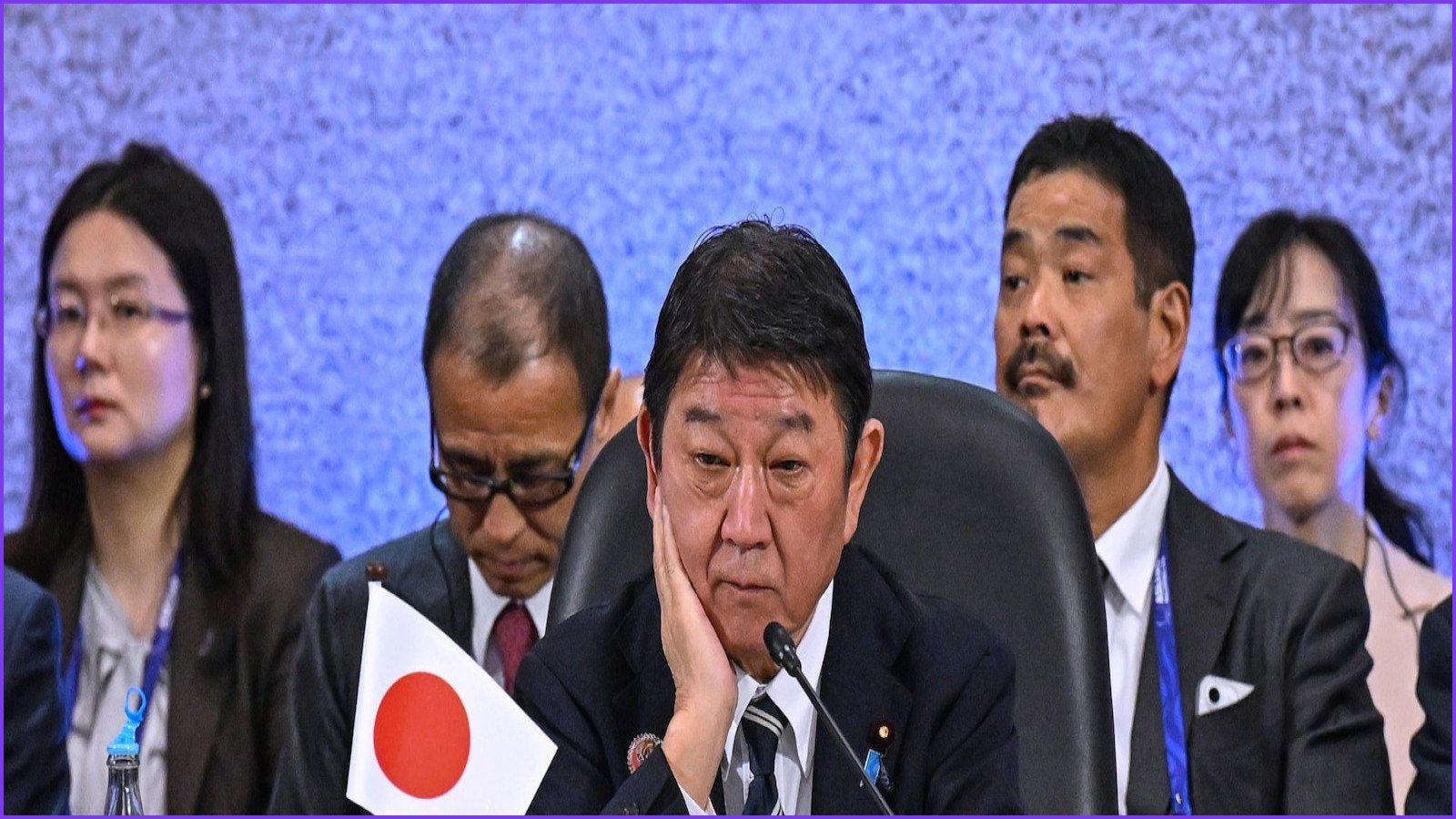
A diplomatic discrepancy has emerged between Japan and China regarding whether their respective foreign ministers held talks during last week’s ASEAN regional meeting in the Philippines. Japanese Foreign Minister Toshimitsu Motegi initially informed reporters that he had briefly discussed bilateral relations with his Chinese counterpart, Wang Yi, after the two crossed paths during the event. However, this claim was directly challenged on Monday by Chinese Foreign Ministry spokesperson Lin Jian.
Addressing the matter during a daily briefing, Lin stated that Wang Yi did not have a meeting with the Japanese side on his schedule during his time in Manila. He further clarified that no brief exchanges took place on-site, contradicting the account provided by the Japanese government. While Motegi maintained that he and Wang discussed ties, reports from Japanese media suggested the encounter was largely limited to brief greetings and pleasantries.
This confusion highlights the strained state of relations between the two nations, which have deteriorated significantly since November. Tensions were ignited by comments made by Japan’s Prime Minister Sanae Takaichi regarding Taiwan, which Beijing viewed as crossing a significant red line. When asked in parliament whether a Chinese blockade or military action against Taiwan could trigger Japanese involvement under the policy of collective self-defense, Takaichi responded that such a scenario could indeed become a survival-threatening situation for Japan. While she has refused to retract the statement, she later noted that she would avoid discussing specific self-defense scenarios in the future.
The ongoing friction has impacted various sectors, including a decline in Chinese tourism to Japan, alongside mutual concerns regarding the expansion of each other’s military capabilities. Despite the current cold shoulder from China, Motegi emphasized that Japan remains open to dialogue at all levels, asserting that both nations hold a major responsibility for regional peace. Prime Minister Takaichi also reiterated on Monday that the two countries are engaging in dialogue at multiple levels, citing the exchange between Motegi and Wang as an example. China, however, continues to oppose any rhetoric or actions it perceives as encouraging Taiwan independence, maintaining its stance on the self-governing island it claims as its territory.