Kyrgyzstan has recently served as a hub for high-level diplomatic activity, reinforcing its reputation as the "Switzerland" of Central Asia. Ahead of the 25th anniversary of the Shanghai Cooperation Organization in Bishkek and the upcoming biannual World Nomad Games at Issyk-Kul, the country hosted a significant regional gathering at the end of July in the resort town of Cholpon-Ata.
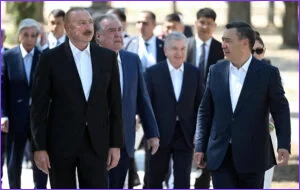
During this event, the leaders of the five Central Asian republics were joined by Azerbaijani President Ilham Aliyev. This marked the group's first assembly since November 2025, when Baku was formally welcomed as a participant at the seventh official Consultative Meeting of Heads of State of Central Asia. Despite the high-level attendance, the Cholpon-Ata meeting was categorized as an informal gathering rather than a full-fledged leaders summit. The eighth official summit is currently scheduled to take place in Turkmenistan in early October.
The distinction between an informal meeting and the established Consultative Meeting format has left some observers, including Kyrgyz political scientist Shairbek Juraev, questioning the necessity of the event. The Consultative Meeting was originally designed as a flexible arrangement to avoid the binding obligations or sovereignty-pooling associated with Western-style institutionalization. By adding an extra layer of unofficiality, the event has created confusion regarding its purpose.
While the leaders signed the Cholpon-Ata Declaration, which reportedly emphasizes mutual trust, peace, and good neighborliness, the document was not released to the public. This lack of transparency continues a trend observed since the seventh Consultative Meeting last November. During the recent discussions, Uzbek President Shavkat Mirziyoyev praised Kyrgyzstan’s election to the United Nations Security Council and advocated for strengthening the "Central Asia Plus" negotiating format. Meanwhile, Tajik President Emomali Rahmon proposed the construction of a regional oil refinery to address recent fuel shortages.
Despite the focus on trans-Caspian connectivity and regional investment, the status of Azerbaijan remains complex. Baku has not signed the Treaty of Friendship, Good-Neighborliness, and Cooperation for the Development of Central Asia in the 21st Century, and it is unclear if it will be permitted to do so. Furthermore, Aliyev is not expected to join the upcoming "C5+1" forum in Seoul on September 16-17, suggesting that rumors of a formal "C6" alliance may be premature. As regional experts note, the future of Central Asian cooperation will likely depend on the implementation of the Friendship Treaty, a process that saw little progress or discussion during the Cholpon-Ata meeting.
You have reached the limit of 2 free articles this month.
Thanks to this additional layer of unofficiality, the recent summit turned out not to be a summit, leaving some regional observers slightly unclear as to why the summit-non-summit really “needed to be convened at all,” in Juraev’s phrasing.