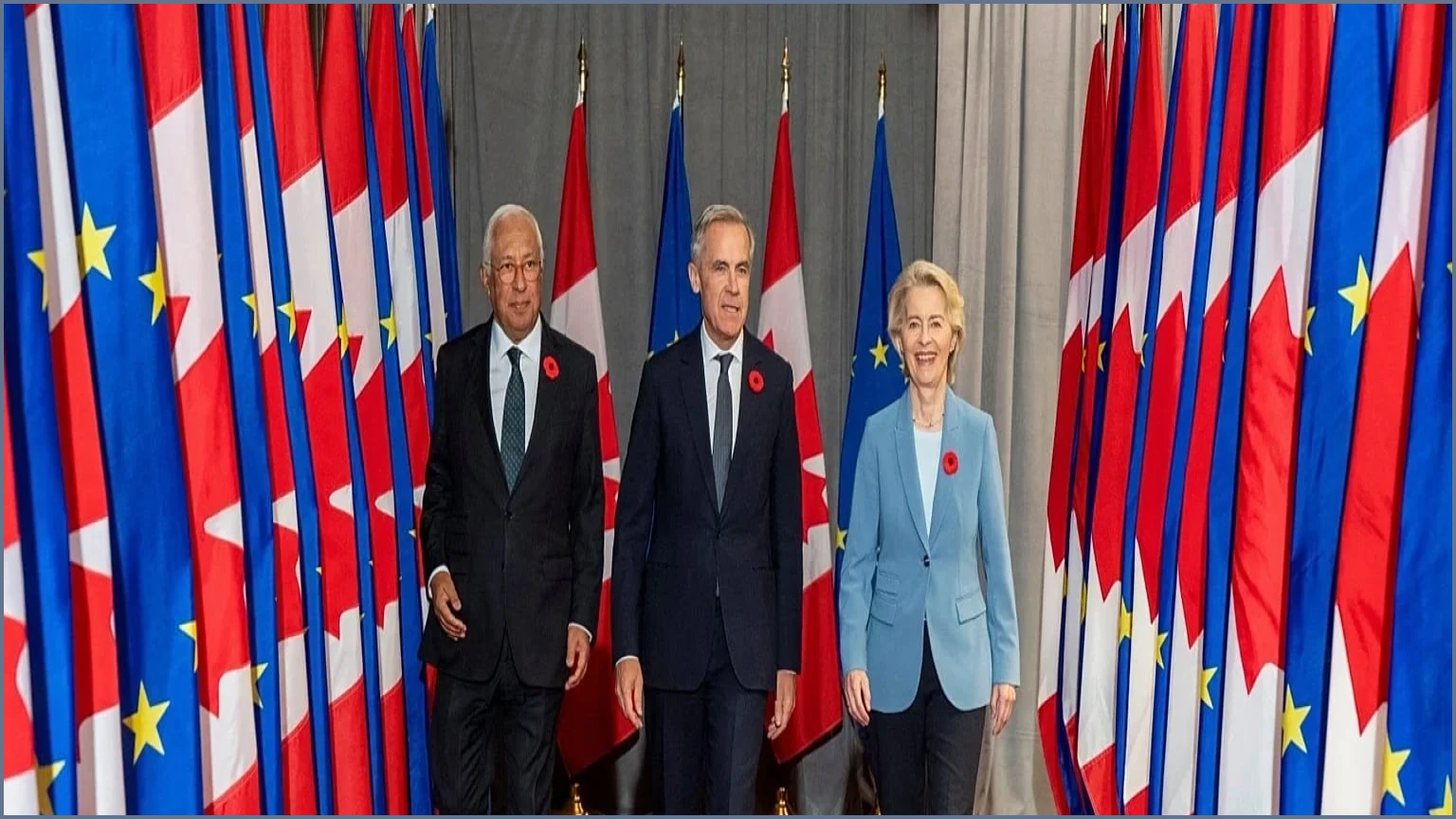
Canada is actively pursuing a goal to become the European Union's first-ever associate member by June 2027. Mark Carney, speaking at a closing press conference, described the initiative as a move toward the deepest possible partnership short of full accession, citing the nation's geography as a primary factor. While the proposed status currently has no basis in existing EU treaties, the practical implications of the arrangement remain subject to ongoing negotiations.
The proposal, which was first introduced by European Commission President Ursula von der Leyen in September, caught many EU capitals by surprise as it had not been broadly discussed with member states beforehand. Carney, who was present during the initial announcement, appeared initially hesitant due to concerns regarding Canadian sovereignty, but he defended the terminology on Friday. Von der Leyen highlighted several immediate benefits of the partnership, including Canada's full integration into the Erasmus and Horizon programs, as well as the €90 billion support loan for Ukraine. The summit also facilitated expanded cooperation in areas such as artificial intelligence, energy, digital trade, critical raw materials, satellite technology, and supercomputing.
Diplomatic friction accompanied the proposal, with Germany opposing the specific term "associate member" during negotiations for a joint declaration. The final text instead uses the phrase "ever closer association." German Chancellor Friedrich Merz had previously introduced the "associate member" concept in relation to Ukraine's own EU aspirations, though Kyiv rejected the idea, preferring full membership. Commission officials have suggested that Berlin’s resistance to von der Leyen’s initiative may stem from the fact that Merz considers the concept his own.
When asked about German opposition, von der Leyen sidestepped the issue, asserting that there is "broad support" among member states for closer ties with Canada. European Council President António Costa also avoided the "associate member" label, emphasizing that the relationship is intended to be the "closest, deepest and most unique of its kind."
The European Commission and the Canadian government are scheduled to hold a college-to-cabinet meeting in the spring to further develop the framework. Carney expects to attend an EU leaders' summit in June, where he hopes to conclude the negotiations. He has previously pledged to submit the final proposal to a vote in the Canadian parliament. Regarding the vision, von der Leyen stated, "The concept of an associate member is uncharted territory, but we have the ambition, trust and creativity to shape it together."
"And to be crystal clear: this is a partnership, not against anyone else, but for our common strength. Bilaterally, this is the highest form of partnership."
"Our relationship is so special that we want to create something new, to go beyond a simple association," Costa said.