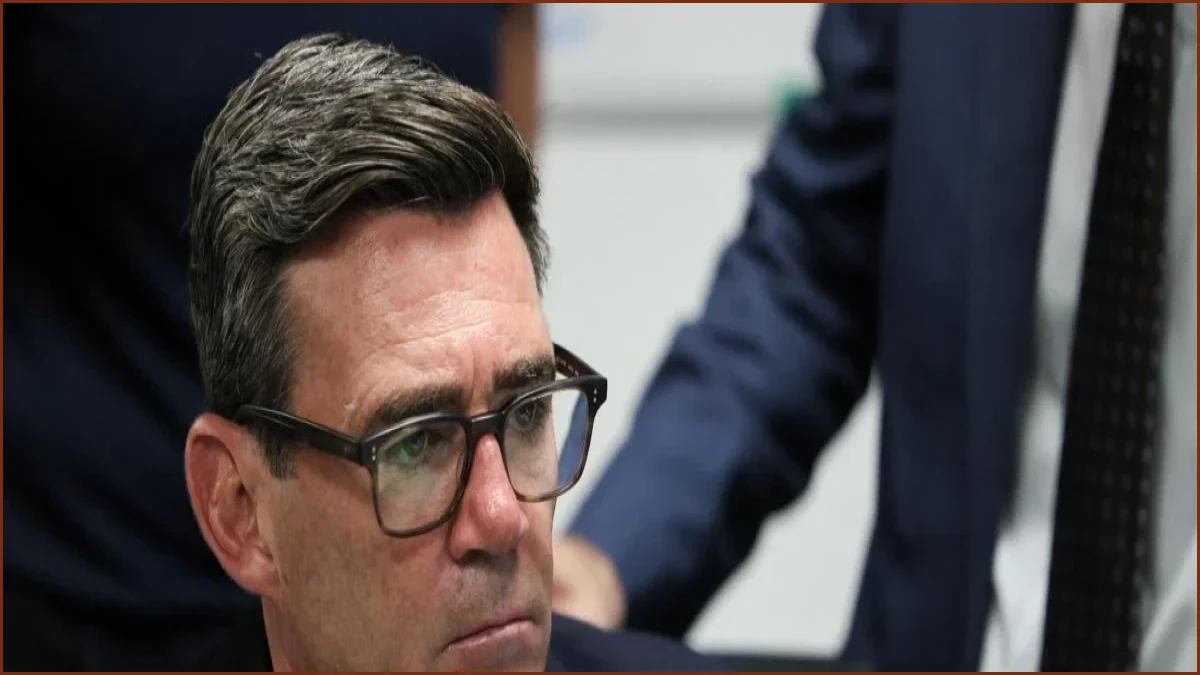
Prime Minister Andy Burnham has ordered an urgent review to identify any grooming gang members who could be eligible for early release under the government's controversial prison decongestion scheme. The direct intervention from the prime minister follows warning flags raised by Conservative leader Kemi Badenoch, who voiced deep concerns that child sex offenders might be allowed to leave prison long before their full sentences are completed.
The political row centers on the omission of "indecent assault" from the government's official list of offenses excluded from early release. Badenoch pointed out that many historical child sexual abuse cases prosecuted before 2004—including high-profile grooming cases in Rotherham and Rochdale—were charged as indecent assault under sections 14 and 15 of the Sexual Offences Act 1956. Because these specific legal sections were left off the exclusion list, prisoners convicted under them could theoretically qualify for early release.
In response to these concerns, a spokesperson for the prime minister confirmed that Burnham has instructed the Ministry of Justice (MoJ) to conduct an in-depth review of cases specifically to ensure that grooming offenses are identified and addressed. "This work is happening urgently," Burnham's spokesperson said, adding that the issue is extremely important to the prime minister. Burnham has personally intervened to ensure everything possible is done to deal with these offenders in a manner that respects the victims.
At this stage, the newly ordered review is understood to focus solely on identifying which offenders might be eligible for early release. Badenoch reacted to the announcement by calling it "another U-turn secured" and noting it was "another review from Burnham following my letter." In her correspondence to the prime minister, Badenoch argued that the government had contradicted its own public assurances. "On Tuesday, you told the country that those convicted of grooming offences would be excluded," she wrote. "Your own government has now put in writing that some of these men will be released early anyway." Branding the situation a "betrayal of victims," she urged the prime minister to publish the comprehensive list of offenses that remain eligible for early release.
Among those who could potentially benefit from the current loophole are five men jailed in October 2005 for their roles in a historical grooming-gang case in Bradford, where they were convicted of indecent assault for abusing a teenage girl in the early 2000s. Other notable cases include Ajaz Karim, a former school sports coach who was sentenced to 21 months in prison in December 2024 for indecently assaulting a 13-year-old girl, and Shahid Hussain, who received an eight-year sentence in September 2024 for indecently assaulting a 14-year-old girl in Rotherham in 2003.
Under the broader policy changes introduced by Burnham, individuals sentenced for rape, serious child sex crimes, and grooming offenses are scheduled to be barred from the early release program starting in October. However, prisoners who do not fall under the excluded categories could see their time behind bars reduced significantly, serving only a third of their custodial terms instead of the standard 40% or 50%. The government is currently planning to release approximately 5,000 offenders in England and Wales to alleviate critical overcrowding in the prison estate.
What's behind having to release some prisoners early? Defending the scope of the exclusions, Burnham explained that while he wanted to bar a wider range of offenders, the severe lack of prison space made further exemptions impossible. He warned that expanding the list of excluded offenses could lead to the complete collapse of the prison system, which would place the general public at a much greater risk. Official figures show that on August 3, the prison population in England and Wales stood at 86,495, which represents 97% of the system's usable capacity. This capacity crisis has built up over decades under successive governments, with prison construction failing to keep pace with the rising inmate population.
The early release scheme has also drawn criticism from other victims' families. The mother of PC Andrew Harper expressed that she was "devastated" to learn that two men jailed in connection with her son's death remain eligible for early release. PC Harper, a 28-year-old police officer, was killed in 2019 when he was dragged by a car down a Berkshire country road as three teenagers fled the scene of a quad bike theft. His family confirmed they received a letter from the Ministry of Justice stating that two of the offenders could be included in the release scheme.
Earlier this week, Justice Secretary Alex Norris issued an apology to the families affected by the early release policy, acknowledging that they were "carrying the can from previous failures." Norris confirmed that the number of extra releases has been revised down from an original estimate of 6,000 to approximately 5,000, which will be carried out in 10 separate batches starting in October. The phased rollout will begin with prisoners serving shorter sentences of fewer than 575 days, eventually extending to inmates serving sentences of 12 years or more, who could become eligible by June 2027. The exact number of individuals released in each batch will depend on how the prison population evolves leading up to the implementation dates.