South Africa’s African National Congress recorded its worst election performance in history during municipal polls, marking a sharp new low in its multi-year political decline as voters delivered a resounding rebuke over deteriorating public services and systemic corruption.
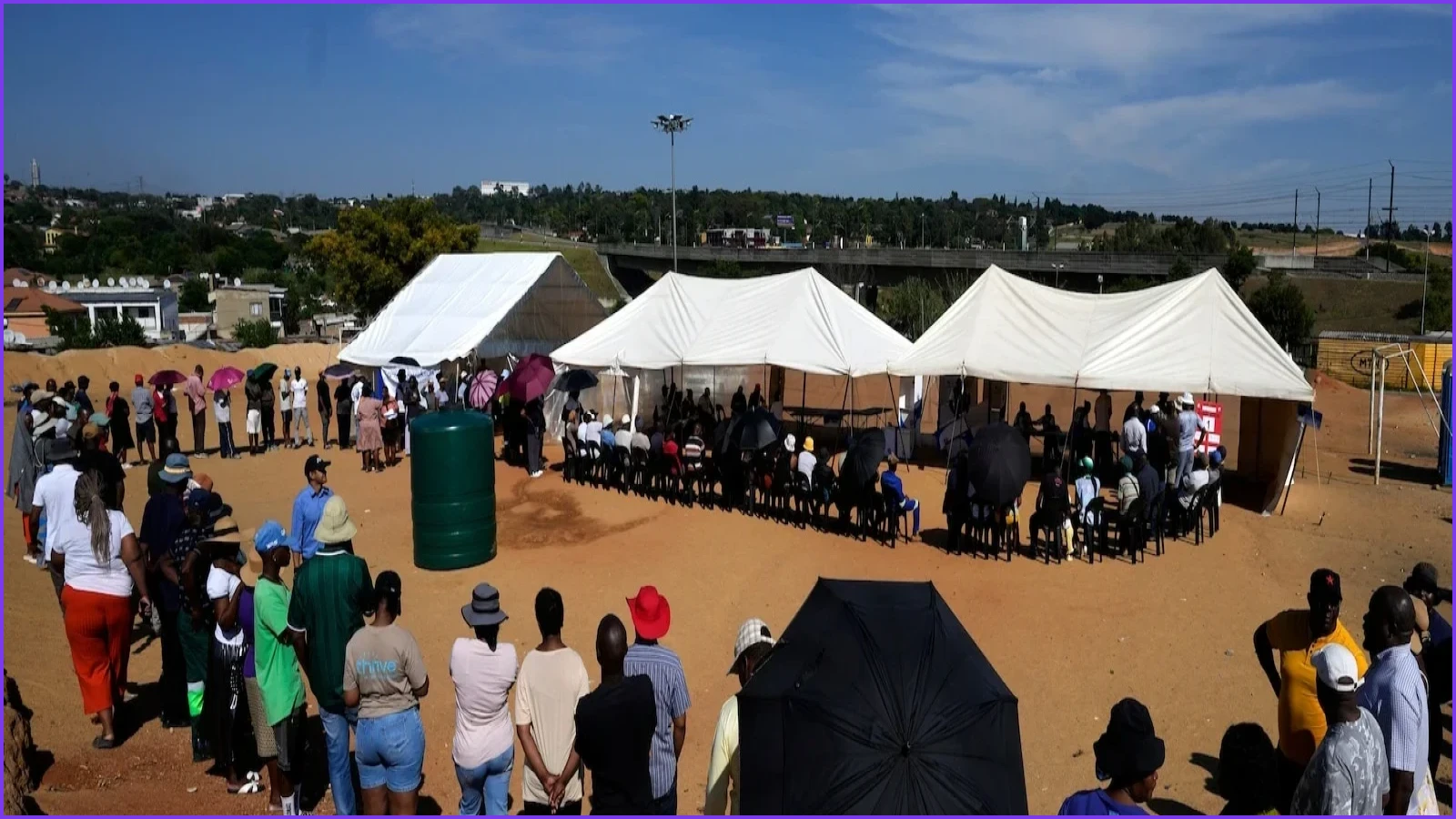
With 99 percent of the votes counted, the historic party once led by Nelson Mandela had secured approximately 30 percent of the nationwide vote in the local government elections held on Wednesday. The Independent Electoral Commission noted that final official results were expected to be released late on Sunday.
The result brings closer to reality what was once considered unthinkable in South African politics: that the ANC, which brought an end to white minority rule under apartheid and achieved democratic freedom in 1994, might eventually lose its standing as the nation's dominant political party. At its peak, the party routinely commanded around 70 percent of the vote.
Sunday's tally reflects a steep drop of about 15 percentage points compared to the last local government elections five years ago, representing a loss of roughly one-third of the party's previous municipal support. The party's political dominance has eroded over more than a decade. In the 2021 local elections, its support fell to 45 percent, marking the first time it slipped below 50 percent in any vote. That downward trajectory continued into the 2024 national election, where the ANC lost its absolute parliamentary majority for the first time, triggering a seismic political shift and forcing the creation of a national coalition government.
Facing the sharp decline, ANC Secretary-General Fikile Mbalula acknowledged the severity of the loss, describing it as a catastrophic outcome for the party. He stressed that anyone who fails to listen to the message sent by voters in this election is lost. Mbalula stated that the results demand the ANC to demonstrate humility, listen to the public, respect their decisions, and earn back their trust through tangible service delivery rather than political slogans.
Meanwhile, main opposition Democratic Alliance (DA) leader Geordin Hill-Lewis expressed optimism, asserting that his party had taken a significant step toward its goal of becoming South Africa's largest political organization. In the 2024 national election, the DA trailed the ANC by approximately 20 percentage points. However, despite the steep slide in ANC support, no single opposition party has swept past it, as votes have fragmented across numerous smaller parties at both local and national levels.
The municipal elections aimed to select local councilors tasked with governing South Africa's eight major metropolitan centers, as well as 44 district and 205 local municipalities. Widespread public anger centered on failing local government services, which have left numerous cities and towns suffering from persistent water and electricity blackouts, uncollected garbage, and crumbling streetlights and roads. Persistent frustration over ANC-linked corruption scandals further compounded voter dissatisfaction across the country.
The shift in voter sentiment was particularly visible across key urban hubs. The ANC was on track to cede its position as the largest party to the DA in the financial hub of Johannesburg, the administrative capital of Pretoria, and the major Ekurhuleni municipality situated east of Johannesburg. Simultaneously, the DA maintained its hold on South Africa's second-biggest city, Cape Town. In Johannesburg, where public service breakdowns drew heavy public criticism, the DA fielded its 75-year-old former leader, Helen Zille, as its candidate for mayor. During her campaign, Zille staged high-profile publicity stunts to draw attention to infrastructure decay, including snorkeling in a water-filled trench in the middle of a city road.
Despite the heavy losses suffered by the ANC across major urban centers, most key municipalities are expected to end up with hung councils, as no single political party managed to secure an outright majority. Consequently, forming local governments will require intricate coalition negotiations, opening the possibility that the ANC could still participate in governing alliances across several cities.