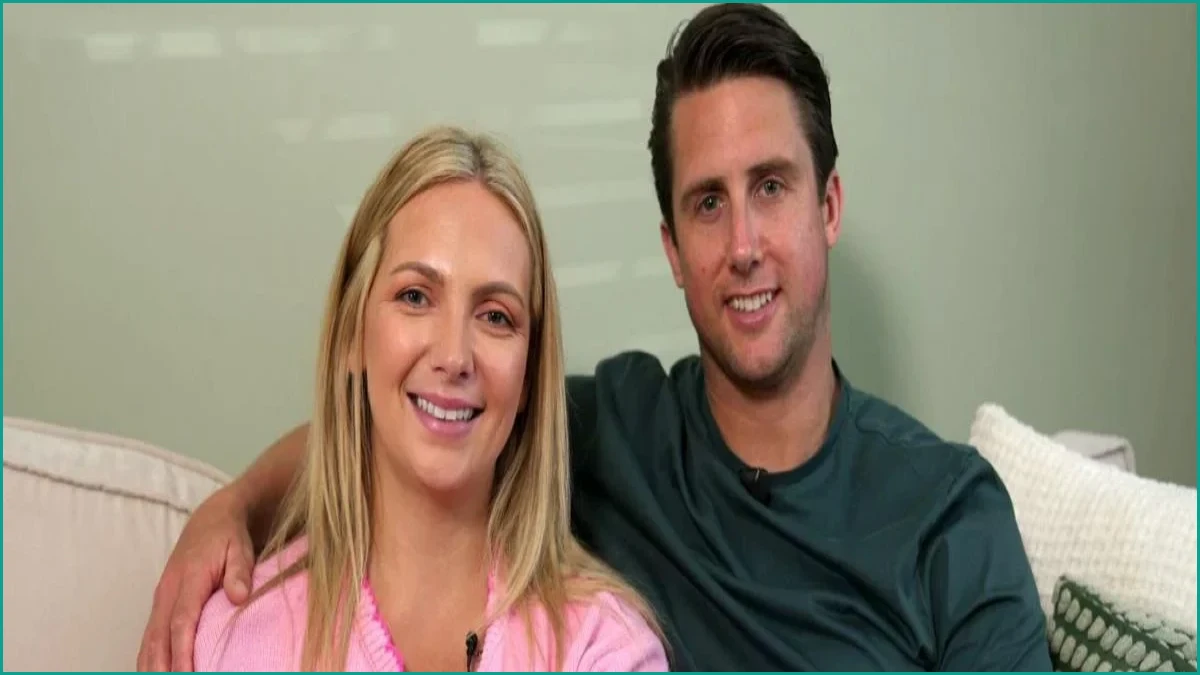
Five-month-old Theo, from London, is thriving after undergoing ground-breaking surgery while still in his mother's womb to correct a severe birth defect. His mother, Maisie Savage, 29, was 26 weeks pregnant when doctors in the US performed the pioneering procedure, making Theo the first British baby and the third worldwide to benefit from this first-of-its-kind clinical trial.
Theo was born with gastroschisis, a condition where the belly button does not develop properly, causing the intestines to grow externally. In the most complex cases, like Theo's, outcomes can be dire, often requiring up to six months in neonatal intensive care, multiple surgeries, and intravenous nutritional feeding for up to two years.
There's also a possibility of an intestinal transplant, and even with the highest level of medical care, one in 10 babies affected by the condition will die. Gastroschisis affects one in 3,000 UK babies each year.
Maisie and Theo's father, Josh French, 36, both teachers, initially had no indication that anything was wrong with their unborn child. Josh recalled their excitement for the 20-week scan, stating, "Going towards a 20-week scan, we were purely just excited to have an image of our baby. We didn't know he was going to be a 'he' at the time." The discovery of Theo's gastroschisis came as a shock and was described by Josh as "incredibly scary."
At 24 weeks gestation, specialist doctors at London's Great Ormond Street Hospital (GOSH) began preparing Maisie and Josh for the challenging first six months of Theo's life. However, upon discovering he had the more serious condition of complex gastroschisis, doctors referred them to Texas Children's Hospital in Houston.
There, a team of foetal and paediatric surgeons, led by Dr. Michael Belfort, was conducting a clinical trial to repair complex gastroschisis before birth. Dr. Belfort, the clinical lead, had previously pioneered similar in-womb surgical procedures for babies with spina bifida.
The decision for Maisie to travel to Texas immediately and remain there for the rest of her pregnancy was "a huge decision," she said. As part of the trial, she first travelled to Leuven Hospital in Belgium, where specialists administered a Botox injection through her womb into Theo's abdominal wall to relax the muscles, facilitating the repair.
The family then flew to Texas, where the operation was performed in November last year, when Maisie was 26 weeks pregnant.
Josh described the agonising wait during the surgery, saying, "The length of that day, it felt like a week. The waiting and just not knowing exactly what was going on at each and every stage." During the procedure, Maisie's womb was partially exposed to position the uterus and baby.
The amniotic fluid was drained and replaced with carbon dioxide (CO2) gas to expand the operating space. Using keyhole surgery, Theo's organs were gently pushed back inside his abdomen, which was then stitched closed.
Maisie was left with a scar twice the size of a C-section incision. Unlike other women recovering from a C-section, she still had to carry her baby for another 14 weeks. She described the recovery as "hard," noting that Theo's kicks often hit her scar, causing pain. Despite the difficulties, she affirmed, "But, it was worth it." The operation was a complete success, and Theo was carried to term, born in February by vaginal delivery in Texas.
Dr. Belfort, obstetrician and gynaecologist-in-chief at Texas Children's Hospital, expressed his satisfaction with the results so far: "The mother, the baby, the surgery, the time of the surgery, the fact that we had zero complications during the foetal surgery and after the foetal surgery, just remarkable." He also highlighted the potential for future innovations, stating, "The inside of the uterus is now a new surgical space for innovation.
And spina bifida and gastroschisis are just two, but I believe that we could actually do certain cardiac surgeries in utero, and I think we can also do some lung surgeries in utero." If the trial proves successful, Paolo de Coppi, professor of paediatric surgery at GOSH and head of stem cells and regenerative medicine at University College London, would perform the procedure in the UK.
Dr. Belfort is enthusiastic about the partnership, calling Texas Children's and GOSH a "formidable team."
Now back home in London, Maisie reports that Theo is doing "amazingly." She shared, "Everything they did just completely reversed what could have been a really horrible start to his life and he's just the best. He's a completely normal baby essentially." Josh added, "We both feel incredibly fortunate. The impact that they've had on us as a family is incredible.
They made us feel so welcome from the team at Great Ormond Street to Dr Belfort and the team. Whilst we were over there, the level of care was amazing, and they made a very traumatic time of our lives so much easier, and we've got this little man – we couldn't be happier."