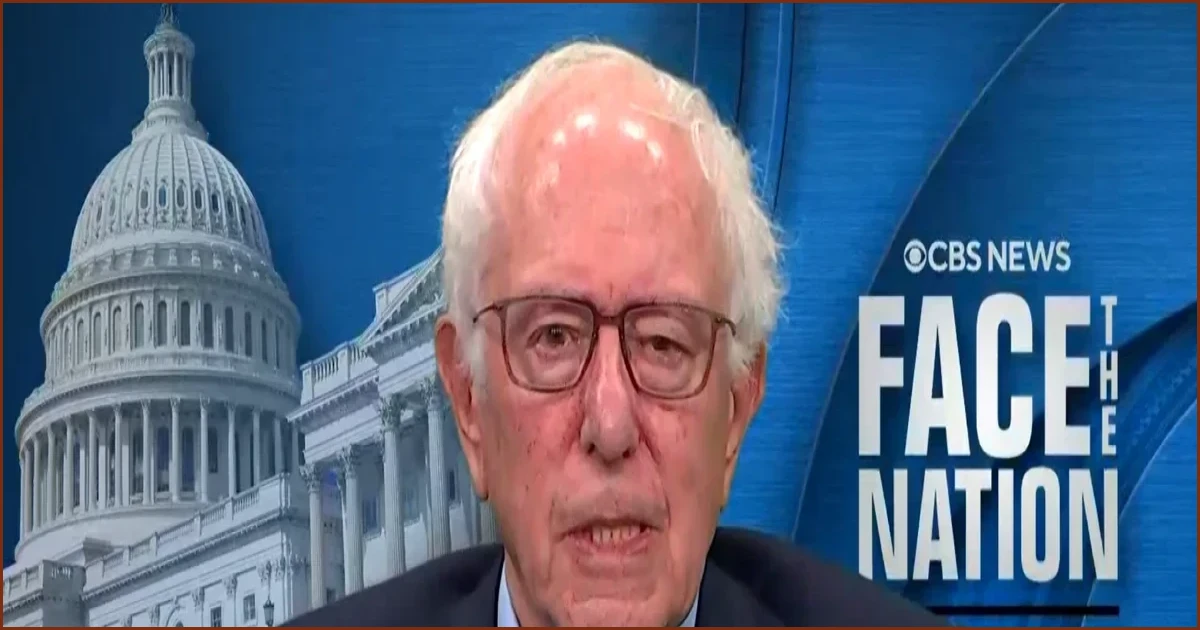
Senator Bernie Sanders, the Independent from Vermont, has issued a sharp critique of super PAC influence in democratic contests and strongly defended progressive candidates ahead of the upcoming midterm elections. Speaking in an interview on "Face the Nation" on August 9, 2026, with the midterm elections just 86 days away, Sanders expressed both deep concern and resilient optimism regarding the state of American electoral politics and the pervasive power of corporate money.
Addressing the upcoming primary in Minnesota, Sanders discussed the high-stakes matchup between progressive candidate and current Lieutenant Governor Peggy Flanagan, whom he has endorsed, and the more moderate Angie Craig. Sanders acknowledged that the race is poised to be extremely tight, noting that Flanagan is being outspent by a staggering margin of seven to one. Despite the financial disparity, Sanders expressed hope for a Flanagan victory, pointing to her strong grassroots support and robust ground game. He argued that the heavy influx of billionaire-backed super PAC money in Minnesota is a deliberate attempt by special interests to block any candidate who stands up for the working class.
Sanders connected the financial onslaught in these races to a broader national economic crisis, asserting that the American economy is fundamentally rigged against ordinary citizens. He highlighted that 60 percent of the population is currently living paycheck-to-paycheck, struggling to afford basic necessities like groceries, housing, and healthcare, while the wealthiest individuals in the country continue to grow richer. According to Sanders, working families are thoroughly exhausted by status quo politics and establishment policies, driving a widespread demand for systemic change.
When questioned about his lack of involvement in other prominent state-level races, such as the campaign of Democratic Socialist Francesca Hong in Wisconsin, Sanders clarified his political strategy. Hong, who is expected to win her Democratic primary, has garnered attention for her progressive platform, which includes free childcare, state-run grocery stores, increased healthcare subsidies, and higher income taxes on millionaires. Sanders stated that he fully supports these policies, calling the ideas of raising taxes on the wealthy and guaranteeing healthcare as a right "quite reasonable." He explained that his lack of formal endorsement for Hong is simply a matter of limited capacity, as his political operation focuses primarily on getting candidates elected to the United States Senate and the House of Representatives. Sanders noted that, with the sole exception of a long-time acquaintance in Maine who is now running for the U.S. Senate, he has not been involved in gubernatorial races.
The conversation then turned to the recent historic primary in Michigan, where progressive candidate and former public health official Dr. Abdul El-Sayed secured a narrow one-point victory. Sanders hailed El-Sayed's win as one of the most extraordinary victories in modern political history, pointing out that El-Sayed succeeded despite being outspent nine to one. Sanders detailed how $60 million in billionaire-funded super PAC money flooded the Michigan race, with half of that total coming directly from the American Israel Public Affairs Committee (AIPAC).
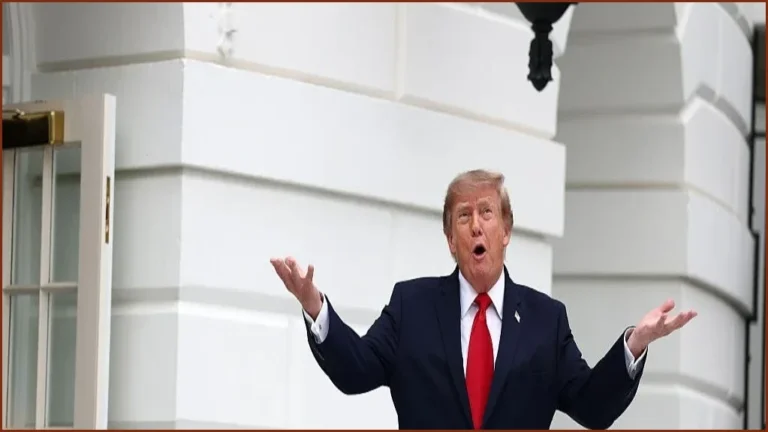
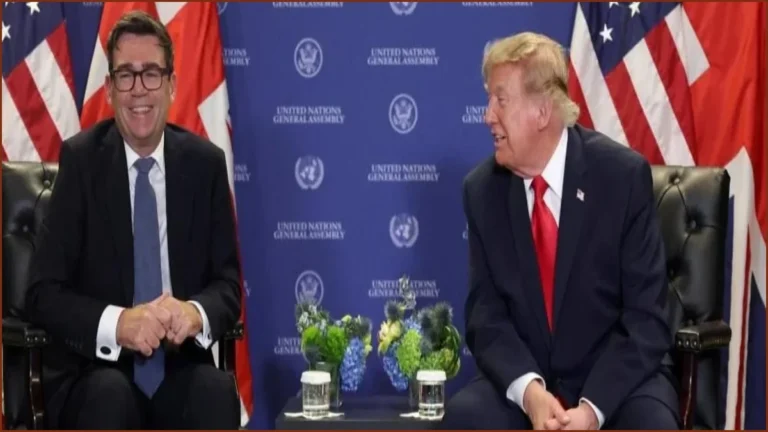
Following El-Sayed's victory, Donald Trump suggested that he was pleased with the outcome because he believes El-Sayed will be an easier candidate for Republicans to defeat in the general election. Additionally, polling published by The Economist indicated that the Democratic Party's victory probability had slipped to 48 percent, putting their chances of retaining control of the Senate at 49 percent. Sanders dismissed these projections, arguing that the path to victory lies in mobilizing working-class voters who are fed up with extreme wealth inequality and a corrupt campaign finance system. To illustrate the severity of wealth concentration, Sanders pointed out that a single individual, Elon Musk, now owns more wealth than the bottom half of American society, a reality he lamented is rarely discussed in Congress or the media.
In response to the overwhelming influence of wealthy donors, Sanders revealed he has sent a formal letter to Democratic congressional leaders and the Democratic National Committee (DNC). In the letter, he called for the implementation of public funding for elections and urged the party to prohibit political action committees (PACs) from participating in Democratic primary contests. When asked if such a move would amount to unilateral financial disarmament against a well-funded Republican party, Sanders strongly rejected the characterization.
Sanders explained that his proposal specifically targets Democratic primaries, not the general election. He acknowledged that under the current legal framework established by the Citizens United Supreme Court ruling, candidates cannot realistically allow themselves to be outspent 50 to one in a general election. However, he argued that the Democratic Party has the immediate authority to govern its own primary process and ban super PACs from interfering in internal party contests. Sanders described the current system as deeply corrupt, pointing out that special interest groups representing crypto, artificial intelligence, and other sectors are actively trying to hijack primaries to advance their corporate agendas regardless of party affiliation.
Sanders highlighted the hypocrisy of the current funding dynamics by pointing back to AIPAC's actions in Michigan. After spending $30 million in the Democratic primary in an unsuccessful bid to defeat El-Sayed, the group subsequently announced its support for Mike Rogers, the Republican candidate running in the general election. Sanders called it "insane" for the Democratic Party to allow outside entities to spend tens of millions of dollars trying to influence its primaries, only for those same entities to turn around and bankroll the opposition party once the primary concludes.
The interview also delved into the specific policy positions that have drawn criticism to progressive candidates like El-Sayed. During his campaign, El-Sayed advocated for cutting unconditional U.S. foreign aid to several nations, including Egypt—the country from which his parents immigrated—as well as Jordan, Pakistan, Saudi Arabia, and Israel. His specific criticisms regarding Israel and the war in Gaza have drawn intense scrutiny, with Donald Trump accusing him of harboring a "hate of Jewish people."
Sanders defended El-Sayed's campaign strategy and political judgment, arguing that voters across the United States are deeply concerned about spending billions of taxpayer dollars to fund foreign military operations while severe crises persist at home, such as homelessness and a lack of affordable healthcare. Sanders specifically targeted the "right-wing extremist Netanyahu government," accusing the Israeli Prime Minister's administration of committing "horrific things" against the Palestinian people. Sanders stated that he, along with many international experts, considers the ongoing actions in Gaza to be a "genocide" and argued that the U.S. must stop funding such extremist governance.
Sanders further condemned the political attacks leveled by Donald Trump and other MAGA candidates against El-Sayed. Characterizing Trump as an "authoritarian type," Sanders accused the former president of relying on blatant racism to defeat his opponents. He pointed out that the immediate response from El-Sayed's detractors after his primary victory was to highlight his faith, essentially messaging that "he is a Muslim, and we're all supposed to hate Muslims." Sanders dismissed these attacks as desperate attempts to distract from the real issues, stating that opponents resort to calling progressives "communists" and spreading nonsense because they have no viable solutions for the country's major crises.
In closing, Sanders reiterated that the current healthcare system is fundamentally broken and championed El-Sayed's advocacy for Medicare for All, noting that El-Sayed has even authored a book on the subject. Sanders expressed confidence that candidates who have the courage to stand up to the billionaire class and fight for working families represent the true future of the country. Following the segment, the program transitioned to a discussion on healthcare with Dr. Jay Bhattacharya, the head of the National Institutes of Health.
MARGARET BRENNAN: But you still are confident Flanagan is going to pull this off.
MARGARET BRENNAN: You are confident Flanagan will win?