Berlin is gearing up for a highly anticipated state parliament election on Sunday, September 20th, amid a shifting political landscape in Germany. The vote, known as the Abgeordnetenhauswahl, comes just weeks after a dramatic election in Saxony-Anhalt where the far-right Alternative for Germany (AfD) captured more than 40 percent of the vote. On the same day, voters in the northern state of Mecklenburg Western Pomerania will also head to the polls to elect their own new state parliament.
For Berlin's election, a historic change is taking place as 16 and 17-year-olds are allowed to vote in the state elections for the first time. To be eligible to cast a ballot for the state parliament, individuals must be German citizens aged 16 or older who have resided in Berlin for at least three months. Additionally, European Union citizens aged 16 and older who live in the capital are eligible to vote in the district council elections, known as the Bezirksverordnetenversammlung or BVV, which are being held concurrently. Registered voters in Berlin should have already received their official voting cards in the mail.
READ ALSO: Who can vote in Germany's state elections?
Berlin is currently governed by a grand coalition of the center-right Christian Democratic Union (CDU) and the center-left Social Democrats (SPD), led by Governing Mayor Kai Wegner of the CDU.
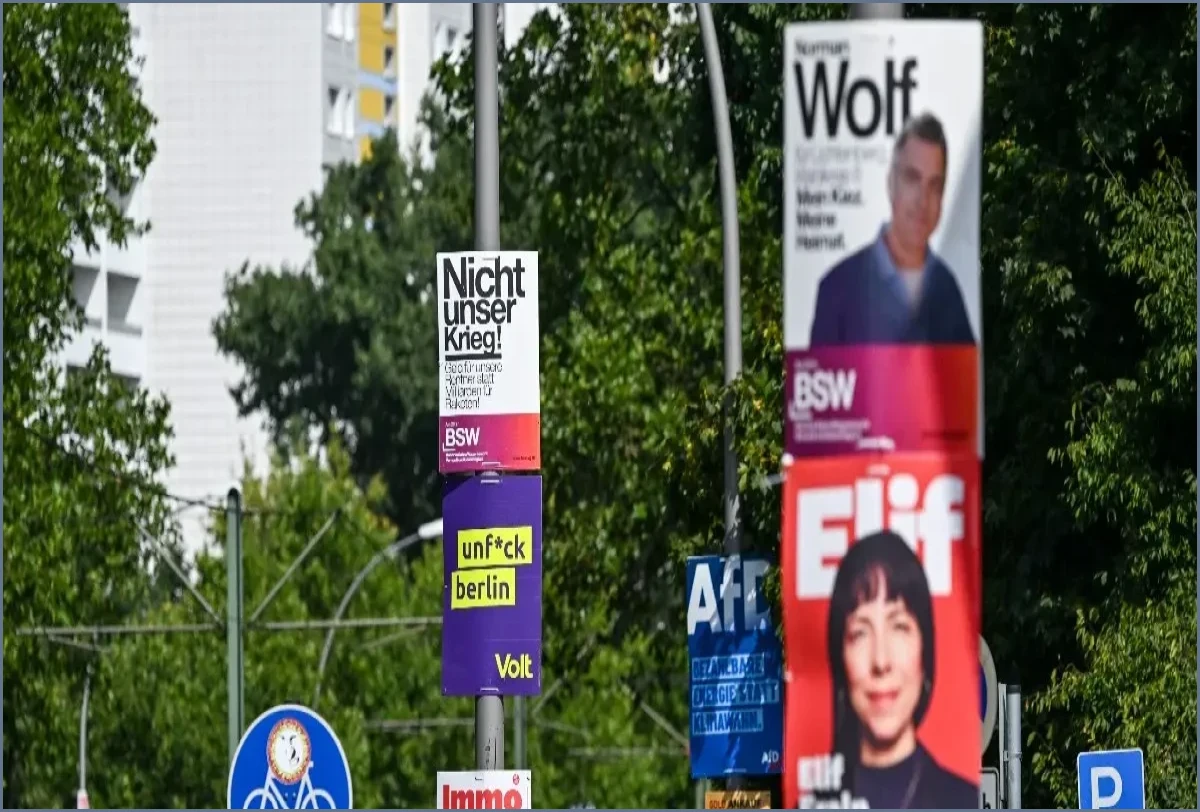
However, recent polling suggests a highly competitive race ahead. This Instagram post shows a recent poll. A recent INSA poll published on Monday by the newspaper Bild shows the CDU and Die Linke (The Left party) locked in a tight race, with both parties polling at 20 percent. The CDU's campaign is fronted by lead candidate Stefan Evers, while The Left is led by candidate Elif Eralp. The far-right AfD is closely trailing the frontrunners at 18 percent. Meanwhile, the Greens are polling at 16 percent, and the SPD has slipped to 12 percent. The newly formed BSW is hovering right at the five-percent mark, which would allow them to narrowly enter the House of Representatives, whereas the pro-business FDP is currently polling below the crucial five-percent threshold required to secure parliamentary seats.