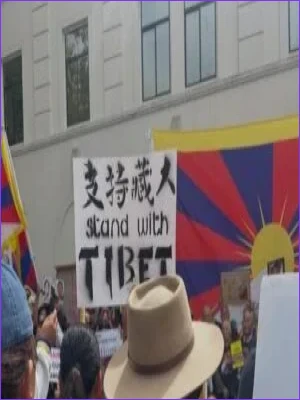
The recent self-immolation of a Tibetan protester on the steps of the United Nations served as a grim indictment of six decades of international silence. Since 1950, when Tibet first appealed to the global body, the region has sought redress through international channels. While the U.N. General Assembly passed resolutions on Tibet in 1959, 1961, and 1965—with the 1961 resolution explicitly invoking the right to self-determination—the issue vanished from the organization’s agenda after the People’s Republic of China assumed its U.N. seat in 1971. Despite global demonstrations and expressions of sympathy from the U.S. State Department and U.N. officials following the recent tragedy, the international response has largely calcified into routine, boilerplate statements.
For decades, the Central Tibetan Administration and various human rights organizations have pursued international support, achieving legislative milestones such as the Resolve Tibet Act. However, Beijing’s stance—that Tibet is an inalienable part of China—has remained rigid. The last substantive engagement, nine rounds of talks between the Dalai Lama’s envoys and Beijing between 2002 and 2010, ended without result and has been moribund for over 15 years. The strategy of relying on external pressure has effectively run its course, as no government has shown willingness to move beyond words.
Beijing, however, fears a different kind of pressure: one emanating from within the Chinese-speaking world. The CCP’s rule in Tibet relies not only on security spending but on the acquiescence of the Han majority, which has been manufactured through decades of state-sponsored propaganda. Narratives describing old Tibet as a barbaric serf society and the Dalai Lama as a slaveholder remain deeply embedded, bolstered by cultural products like the 1990s song “Sister Drum,” which Chinese internet users still cite as evidence of Tibetan savagery.
This narrative foundation is increasingly fragile. In 2025, the Tibet Autonomous Region (TAR) generated only 31.8 billion yuan in local revenue while spending 310 billion yuan. Central transfers of 253.88 billion yuan, accounting for over 80 percent of the budget, were required to fund the region's stability-maintenance apparatus and livelihood programs. As China’s economy slows, resentment is growing among Han nationalists regarding the fiscal burden and the perceived “super-citizen treatment” of ethnic minorities. The CCP can ignore international condemnation, but it is far more sensitive to a domestic public that questions the cost and purpose of its rule in Tibet.
The emergence of Han Chinese activism, such as the platform Chinese Youth Stand for Tibet, represents a significant development. The group’s founder notes that authorities view even small volunteer media projects as state security threats, as evidenced by the 2025 detention of Zhang Yadi in Changsha on suspicion of “inciting separatism.” Other individuals, including the late historian Li Jianglin and activist Zhang Yi—who was arrested in July for displaying a photograph of the Dalai Lama at Sera Monastery and formally arrested on July 28—have also faced consequences for their engagement with Tibetan history and politics.
Despite the strategic importance of this movement, these advocates often fall into an institutional blind spot. International media, foundations, and government bureaucracies frequently separate the “Tibet desk” from the “China desk,” leading to a lack of funding and coverage for Chinese-language advocacy. The author argues that for those seeking to change Tibet’s future, the most effective path forward lies in supporting and protecting the growing number of Chinese-speaking individuals who are already asking difficult questions about what Beijing’s spending in Tibet truly buys and who it benefits.