DUBAI — Azerbaijan is committed to safeguarding Christian heritage within its borders as a fundamental part of its own history, a senior official from Baku declared on Wednesday, while simultaneously warning that "revanchist forces" in Armenia and its diaspora continue to threaten the regional peace process.
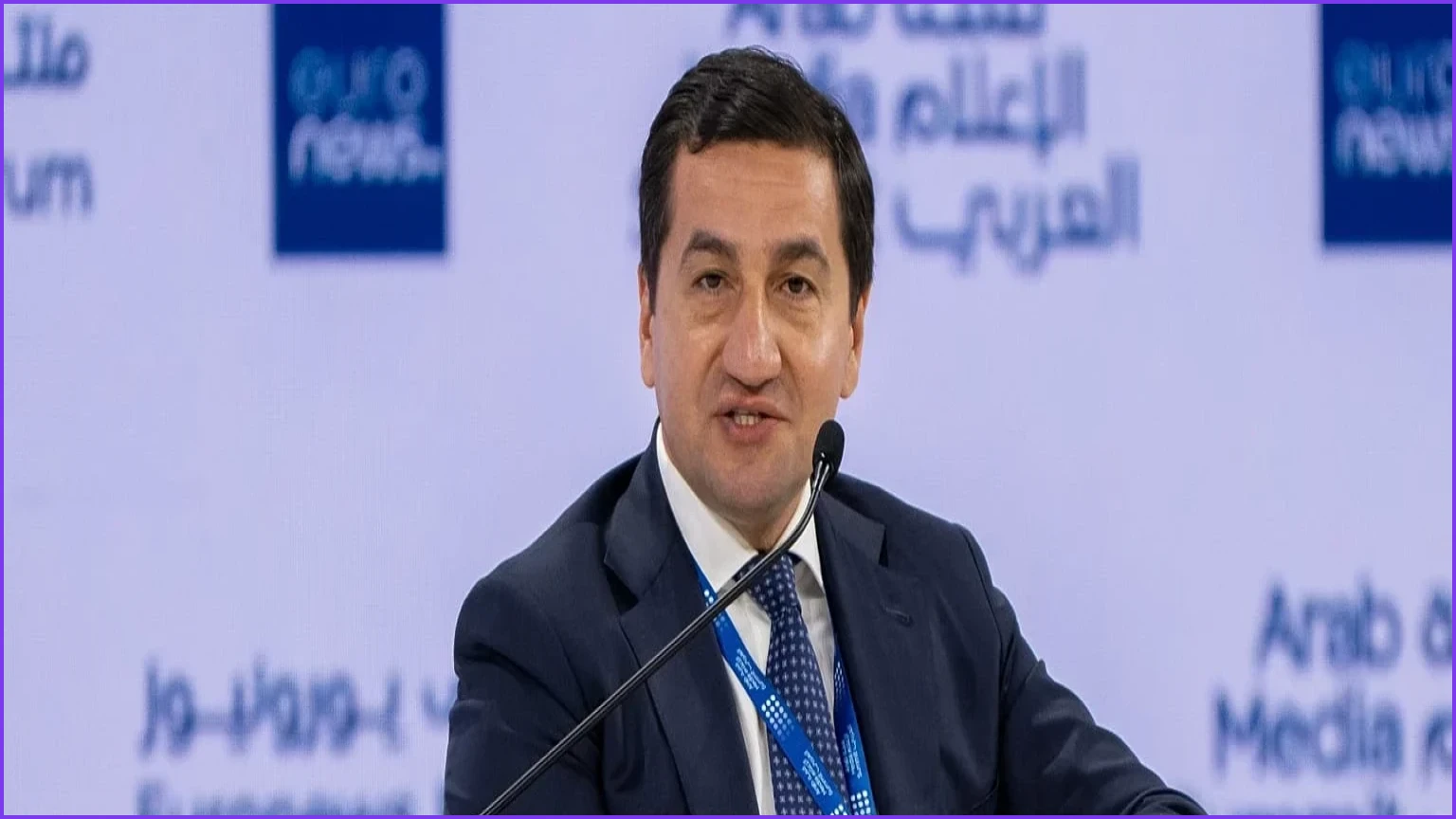
Speaking on a panel at the Arab Media Summit in Dubai, Hikmet Hajiyev, the Assistant of the President of Azerbaijan and Head of the Foreign Policy Affairs Department of the Presidential Administration, emphasized that securing a lasting peace remains a challenging endeavor. "Now we won the war, but we are also winning in peace which is an uphill struggle," Hajiyev said, urging the Armenian government and leadership to actively prepare their citizens for a peaceful future.
Hajiyev raised sharp criticisms regarding the treatment of Islamic sites during the decades-long occupation of Karabakh and Eastern Zangezur by Armenian forces. He stated that mosques and Islamic cultural landmarks faced complete destruction, alleging that pigs were even kept inside some of these sacred spaces. Despite this history, Hajiyev insisted Baku would not seek retribution. "We are not taking it as a sign of revenge, but it's our history and our heritage and we cannot forget that," he remarked.
Addressing the cultural and religious landscape of modern Azerbaijan, the presidential advisor explained that the country is home to coexisting communities of Islam, Christianity, and Judaism, with mosques, churches, and synagogues operating side by side. He affirmed Baku's dedication to "preserving the Christian heritage on the sovereign territory of Azerbaijan, regardless of their belonging, and that is a full stop because it's our cultural heritage."
To support this stance, Hajiyev pointed to the deep historical roots of multiple faiths in the region. He expressed pride in Azerbaijan being one of the earliest locations of Zoroastrianism, as well as one of the first regions to adopt Christianity in the fourth century, when it was declared the official religion of the ancient Caucasian Kingdom of Albania. This ancient kingdom, located in modern-day Azerbaijan and parts of southern Dagestan, is entirely separate from the Western Balkan nation of Albania. Hajiyev also noted that Azerbaijan was among the first countries to adopt Islam.
These assertions come amid ongoing disputes, as Armenian church authorities have accused Baku of demolishing Christian churches in Karabakh. Azerbaijan has firmly rejected these allegations. Hajiyev argued that his country continues to face a wave of disinformation from certain Western media outlets and institutions, pointing specifically to the European Parliament.
"One such institution is the European Parliament which is not part of the solution, it's part of the problem," Hajiyev stated, accusing the body of passing resolutions that humiliate Azerbaijan and undermine the regional peace agenda. He urged the European Union to abandon what he described as a "one-centric approach" in the South Caucasus, calling instead for balanced cooperation that embraces the entire region and builds a "concept of the new partnership" rather than establishing new dividing lines.
Finally, Hajiyev highlighted Azerbaijan's significant contribution to European energy security. The country currently supplies natural gas to 16 EU member states and other European nations. He suggested that strategic infrastructure initiatives, such as the Middle Corridor connectivity project, could serve to bring Azerbaijan and the European Union even closer together in the future.