An Argentine federal judge has issued an injunction requiring British and Israeli companies to immediately cease development activities on an oilfield located off the coast of the British-controlled Falkland Islands. The ruling by Judge Mariel Borruto creates a new legal challenge in the decades-old territorial dispute between Argentina and Britain, a conflict that has gained renewed focus following recent statements from Argentine President Javier Milei.
The court order specifically targets the Sea Lion oil project, situated 220 kilometers (140 miles) north of the archipelago in the South Atlantic. Under the terms of the injunction, the companies involved—Israel's Navitas Petroleum and Britain's Rockhopper Exploration—are prohibited from continuing drilling, installing offshore infrastructure, or conducting port construction. The judge stipulated that these activities must remain suspended until Argentine authorities complete an environmental review and issue a formal decision.
Despite the legal directive, the practical impact of the ruling remains uncertain. Judge Borruto acknowledged that the enforcement of the order is contingent upon international cooperation and the willingness of the two companies to comply. Both Navitas and Rockhopper have previously indicated their intent to continue with the project, regardless of threats of sanctions from the Argentine government. Rockhopper declined to comment on the ruling, and Navitas did not immediately provide a response.
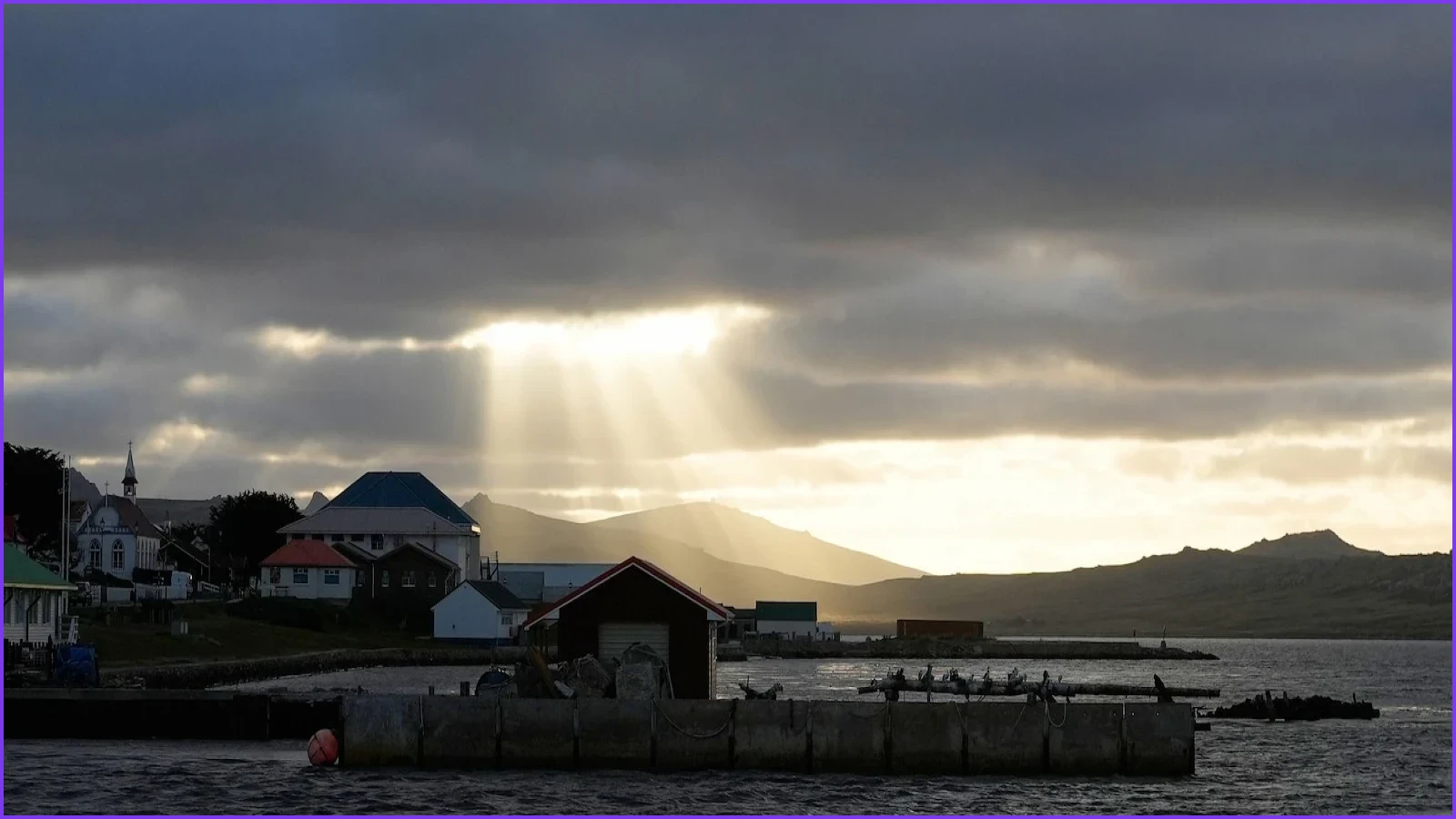
The Sea Lion project, which is projected to begin commercial oil production by 2028, is a significant point of contention in a region where Britain and Argentina fought a war in 1982. For the roughly 3,500 residents of the Falklands, the oilfield represents a potential economic shift away from the territory's traditional reliance on fishing. Conversely, Argentina—which refers to the islands as the Malvinas—maintains that the resources belong to the nation, a claim deeply embedded in its constitution and national identity.
The diplomatic landscape surrounding the dispute has grown more complex recently, with U.S. President Donald Trump suggesting that Washington could reconsider its historically neutral stance on the sovereignty of the islands. Trump’s comments, which questioned Britain’s capacity to defend the archipelago, were seized upon by President Milei. During a national address on Sept. 3, Milei announced that his administration would utilize all available legal and diplomatic tools to protect the islands, characterizing the oil projects as an urgent threat to Argentine sovereignty.
In addition to the injunction, the Argentine government is developing legislation to increase sanctions against companies involved in the region. Prosecutors have also filed three criminal complaints against Navitas and nine other companies, alleging that they violated national laws by operating without authorization. In response to these actions, the British government has remained firm, maintaining that the Falkland Islanders have the right to determine their own status, as evidenced by a 2013 referendum in which they voted to remain a British territory. A British government statement issued Tuesday reiterated that "Argentine domestic law does not apply within the Islands."
Judge Borruto’s ruling originated from a civil lawsuit filed by veterans of the 1982 war and environmental lawyers, who expressed concerns regarding potential ecological harm. The complaint highlighted risks such as chemical pollution, oil spills, underwater noise, and increased ship traffic. The judge noted that the risks were neither remote nor hypothetical, emphasizing that the potential for long-term damage to the marine ecosystem was substantial given that infrastructure work has already commenced.