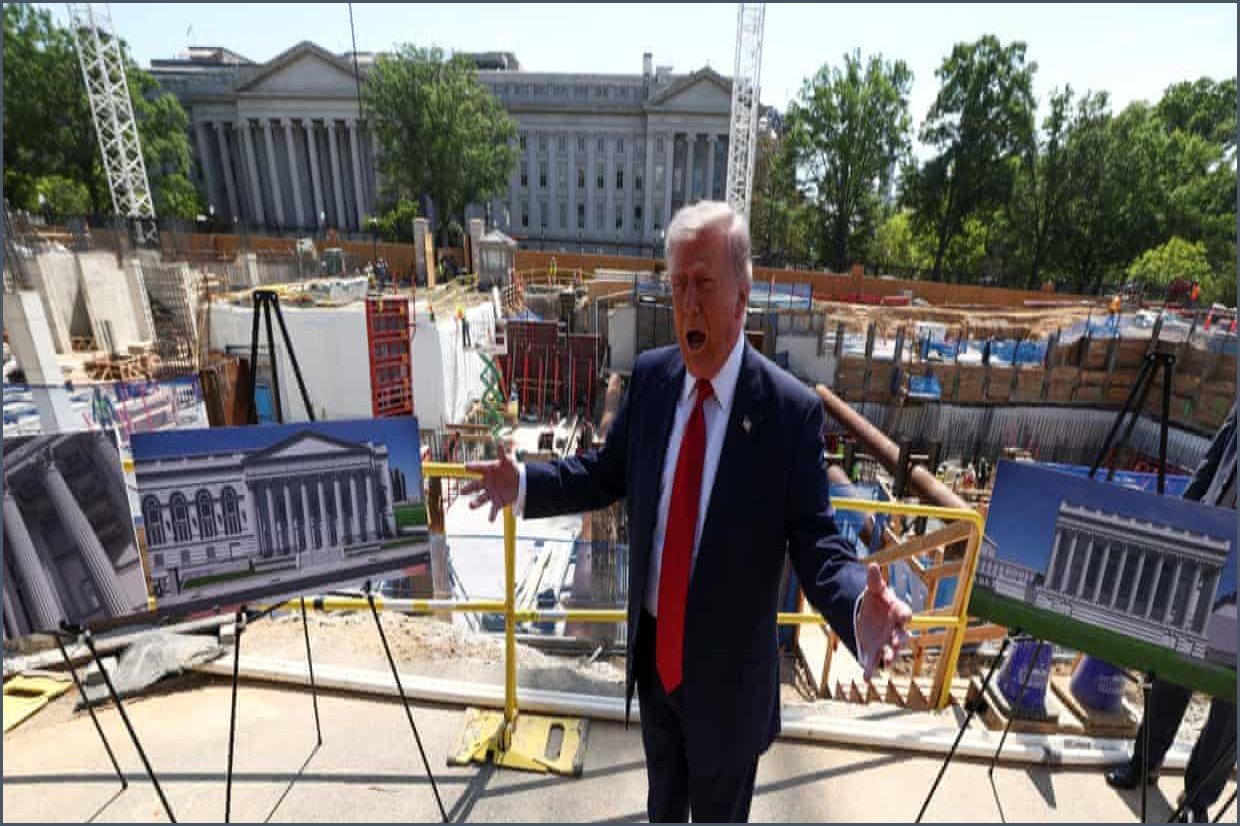
A US federal appeals court has issued a directive for the Trump administration to immediately halt construction on a $400m ballroom project at the White House. The ruling, delivered on Friday in a 2-1 decision, represents a significant legal challenge to presidential authority. While the court upheld a preliminary injunction, it allowed for a two-week stay on the order, providing the administration a window to appeal the matter to the US Supreme Court.
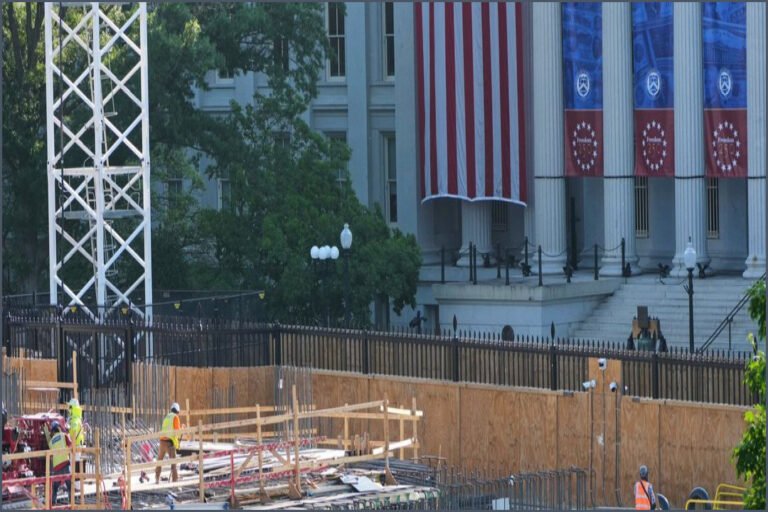
The project, which has faced intense scrutiny, involved the demolition of the historic East Wing of the White House last year. Donald Trump had previously promoted the planned 90,000-square-foot (8,360-square-meter) structure as a "gift" to the American public. However, the court's majority opinion, authored by Judges Patricia Millet and Bradley Garcia, emphasized that the president acts as a temporary tenant of the Executive Residence rather than its owner. The judges maintained that the authority to approve such a massive construction project rests with Congress, not the executive branch.
The court clarified that their decision was not a judgment on the policy desirability of the ballroom itself, but rather a constitutional requirement for legislative authorization during active litigation. "What it does mean is that the Defendants may not do so during the district court’s expeditious litigation without securing Congress’s authorization, as the constitution and laws require," the judges stated.
In a dissenting opinion, Judge Neomi Rao, who was appointed by Trump, supported the president’s position that the project fell within his executive authority. Trump, who expressed his disapproval of the court's decision on social media, labeled the ruling "totally wrong" and argued that it jeopardizes the welfare of those working at the White House. He vowed to pursue an appeal to the Supreme Court.
The legal challenge was initiated by the National Trust for Historic Preservation, which filed suit after the administration began construction without congressional approval. Trump had previously criticized the lower court judge, Richard Leon, for his role in the case, accusing him of undermining national security and delaying the project.