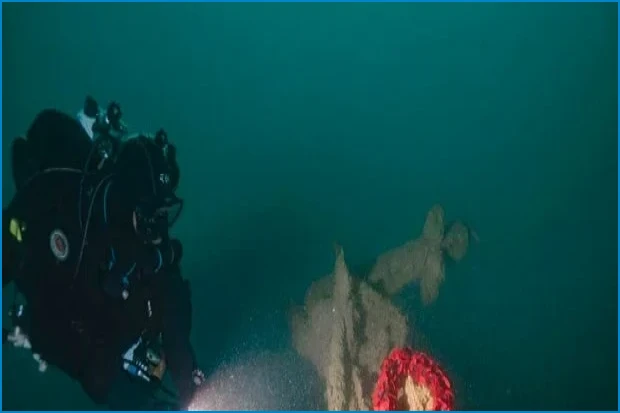
A naval vessel lost for more than a century has finally been located off the coast of the Isle of Wight. Military officials and the exploration team ProjectXplore confirmed this week that they have discovered the remains of the HMS Tiger, a 400-ton torpedo boat destroyer that sank in 1908. The ship was lost following a nighttime collision with the 10,000-ton cruiser HMS Berwick, a tragedy that resulted in the deaths of more than half of the 57 crewmembers on board. At the time of the incident, the impact was so severe that contemporary reports described the vessel as being "crushed as an eggshell," and the event prompted a telegram of sympathy from King Edward VII.
The search for the wreck had been ongoing for over a century, with the Royal Navy and various shipwreck hunters previously unable to locate the site. The breakthrough came after ProjectXplore spent five years analyzing archival data to pinpoint the resting place of the vessel. Upon examining the site, the team discovered the stern engine revolution telegraph and the rudder position indicator. These instruments provided compelling evidence that the HMS Tiger did not alter its course or reduce speed prior to the collision with the much larger HMS Berwick.
ProjectXplore co-organizers Leo Fielding and Dan McMullen noted that these details have remained undisturbed for 118 years. In addition to the navigational instruments, the expedition team recovered numerous artifacts from the wreckage, including torpedo tubes, a compass, guns, ammunition, an anchor, and the ship's bell. This discovery follows the team's successful location of the cruiser HMS Nottingham in the North Sea last year.
Under new legislation, the site of the HMS Tiger will receive a "protected place" designation, ensuring that the wreck is safeguarded from the moment of its discovery. Fielding and McMullen expressed pride in the project, stating that they hope their documentation of the ship and the memory of those associated with the tragedy will endure for future generations.