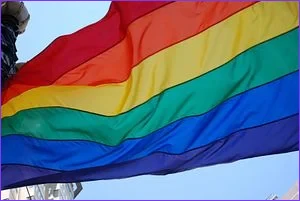
A series of violent attacks against transgender women in Indonesia has brought renewed attention to the country's increasingly hostile environment for the LGBTQ+ community. Several transphobic incidents took place during July 14-16 of this year, all of which involved mobs attacking trans women specifically. In one particular instance in the West Java city of Bogor, over 15 trans women were doused with urine, forced to strip naked, and physically beaten in an incident that was recorded and shared on social media, where it drew further harassment and calls for violence from online users. Note that you have reached the limit of 2 free articles this month.
These attacks follow an October 2025 decree issued by the government under Prabowo, which activists argue is a foundational step toward codifying anti-LGBTQ+ discrimination into federal law. The government has framed this policy through the lens of securitization, claiming it is necessary to maintain national peace and safety. According to Febi Ramadhan, a researcher at Universitas Indonesia, these hardened attitudes are not new but have intensified over the past decade, often fueled by economic instability. Febi notes that the government frequently uses the demonization of queer individuals to divert public attention from broader grievances, such as the economic stagnation and currency devaluation that triggered nationwide protests in 2025.
While Indonesia lacks explicit federal anti-LGBTQ+ laws, discriminatory frameworks persist. Transgender individuals face significant hurdles, as legal gender recognition requires sex reassignment surgery and judicial approval. Furthermore, same-sex sexual activity remains vulnerable to criminalization under various moral laws, with the province of Aceh—the only region governed by syariah law—imposing harsh penalties such as flogging and imprisonment.
The climate of repression is further reinforced by media restrictions. The Indonesian Broadcasting Commission has enforced circulars that ban television and radio stations from airing LGBTQ+ content, citing the protection of public morality. Journalist Rifki Lafayette describes a pervasive "chilling effect" within the media industry, where editors avoid queer-related stories to escape government reprisal or backlash from religious hardliners. This self-censorship has helped solidify a culture of silence, while state-sanctioned rhetoric emboldens vigilante mobs to act with impunity in public spaces.
Human rights organizations like Social Justice Indonesia (SJI) are struggling to adapt to these shifts. Cornelius, who joined the nonprofit in 2023, described one of their key purposes as “making civil society more connected to the younger Gen Z activists.” SJI focuses on social media campaigns raising awareness on difficult and troublesome issues in the Indonesian context, including the death penalty and LGBTQ+ rights. Cornelius notes that unlike the "moral panic" of 2016, which was driven by political and religious leaders, current violence is often perpetrated by random individuals, making it difficult for advocates to identify their opponents. SJI has pivoted toward collaborating with legal NGOs to combat online doxxing, as digital platforms have become a primary theater for both hate speech and community organizing.
Despite the risks, digital platforms remain a lifeline for the queer community. In the aftermath of the Bogor attacks, transgender women utilized Twitter and Instagram to raise funds for victims. These grassroots efforts have become increasingly vital, particularly following the loss of international funding after U.S. President Donald Trump defunded USAID last year, which previously supported many gender and sexuality advocacy groups. As the community faces these mounting crises, younger activists are increasingly stepping forward, seeking to mobilize and sustain long-term advocacy. As Febi Ramadhan observes, the current environment leaves the LGBTQ+ community feeling that they must rely entirely on their own efforts to fight for their rights and survival.