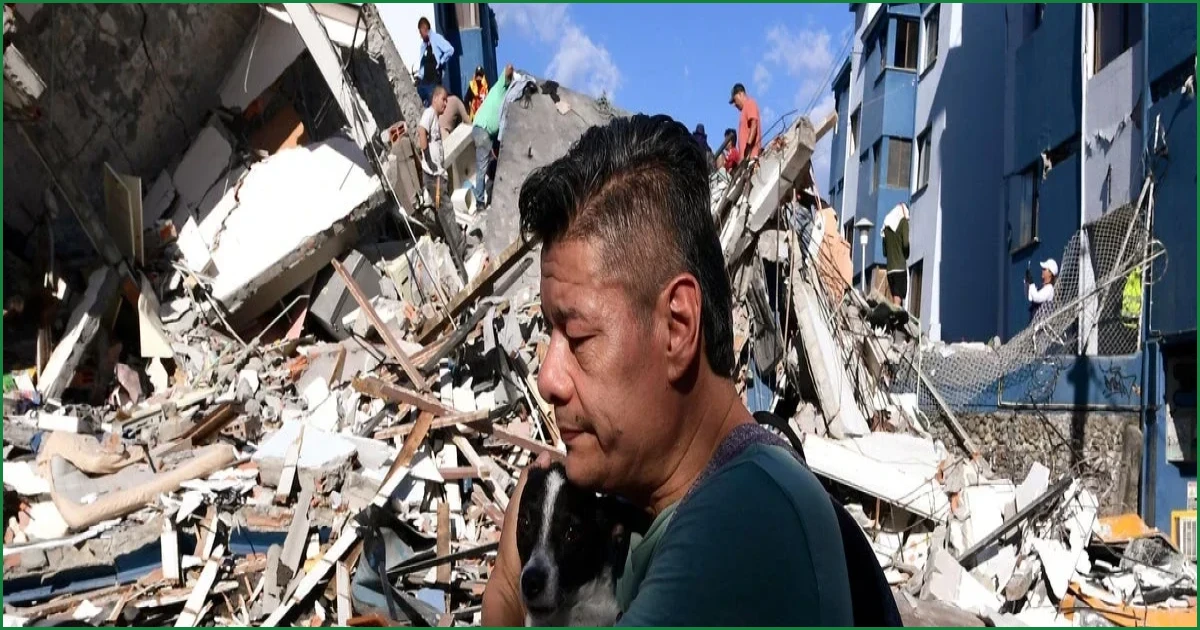
Survivors of a recent powerful earthquake in western Colombia are reliving the trauma of a devastating 1999 disaster, describing a pervasive sense of powerlessness as their communities crumble around them.
Jahir Rodríguez, an urban planner and former professor, witnessed the recent quake strike Pereira on Monday morning, recognizing the signs of destruction from his experience following the deadly 1999 earthquake in Armenia, located about 30 miles away. That earlier quake killed approximately 1,200 people. The recent 7.4-magnitude earthquake has claimed at least 265 lives and left hundreds trapped under debris across several states.
"You feel a sense of powerlessness," Rodríguez stated, recalling the shattering glass and water seeping through cracked walls of damaged buildings. Having learned to respond to earthquakes after the 1999 disaster, Rodríguez gained insights from Japanese responders who advised him, "It is a mistake to think that you will be here for days or months. You will be here for years." This sentiment reflects the long-term displacement and recovery needs of those affected, a situation he also observed after a major earthquake in Talca, Chile, in 2010.
Rodríguez noted that encampments are forming in parks across the city, a common sight after natural disasters. While the new Colombian government, which took office just days before the quake, is assisting with these encampments, Rodríguez believes this approach may be short-sighted. He emphasized that people will remain displaced for years and require permanent housing. The immediate priorities, he explained, are to account for all individuals, organize their temporary placement, and develop reconstruction plans.
He described the difficulty in persuading people to leave their uninhabitable homes. Rodríguez recounted visiting a fellow urban planner whose apartment building had collapsed, finding his friend reluctant to leave the site for fear of vandals, a concern that was prevalent after the 1999 quake. "People are here in front of the sidewalk, watching their house," Rodríguez said sadly, observing families preparing meals on the roadside and contemplating their uncertain futures.
Everardo Murillo, who developed a blueprint for long-term recovery after the 1999 earthquake under the direction of then-President Andrés Pastrana, highlighted the critical "social engineering" aspect of disaster response. Murillo, who has since consulted for governments worldwide, including Venezuela and Haiti, emphasized that people lose the fundamental structure of their lives after such events. "People lose the route of their life. It's the hardest thing for a human being," he said, questioning how to support families who have lost everything, including loved ones and belongings.
Murillo outlined the crucial first phase of disaster response: immediate needs such as food, shelter, quick financial aid, and temporary schooling for children. This is followed by longer-term assistance like government grants and loans. He advocates for employing disaster victims in recovery efforts, stating that "a new kind of leadership" and "natural leaders emerge" from those affected. Murillo also stressed the importance of solidarity and pairing individuals struggling with depression with those who are more invigorated by the challenge.
The effectiveness of government response, Murillo noted, is paramount. He pointed out that in Haiti, victims and local leaders struggled with basic requirements like identification and property documentation, issues that are often discovered only through on-site observation. However, he believes Colombia is better positioned due to established response models and systems, comparing the dozens of collapsed buildings this week to the hundreds that fell in Venezuela.
Murillo added that many structures in the affected region were built to withstand seismic activity, unlike those destroyed in 1999. Nevertheless, even those whose homes remain standing may face significant challenges, such as lost businesses without the resources to rebuild or a lack of infrastructure for community recovery. Responders face the complex task of addressing a mix of immediate and long-term issues simultaneously.
Jahir Rodríguez's 65-year-old sister, Liliana Rodríguez, lost her apartment in the recent earthquake. He sees in her eyes a reflection of the hopelessness, pain, and uncertainty he witnessed in 1999. "They are just recovering from the earthquake. They have not yet thought about tomorrow's story," he said, expressing concern about survivors facing cramped shelters, financial struggles, and the grief of their losses.
Rodríguez, who is 68 and retired, learned how to respond to earthquakes after the disaster in Colombia's coffee region at the turn of the century. He gained valuable insights from a delegation of Japanese responders who had faced a deadly quake in Osaka in 1995.
Getting people to leave their uninhabitable homes is hard, Rodríguez said. He spent the day after Monday's earthquake visiting with a friend and fellow urban planner whose apartment building toppled onto others. When he arrived, Rodríguez said, his friend would not move from the site out of fear that vandals would enter the building — something that was more prevalent after the 1999 quake.